Announcement

Collapse
No announcement yet.

Partiya Karkerên Kurdistan

Collapse
X
 
  • Filter
  • Time
  • Show
Clear All
new posts

  • Partiya Karkerên Kurdistan


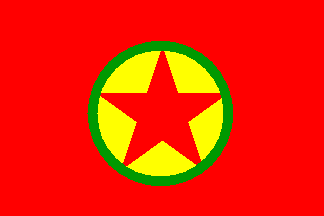
    The PKK's ideology was founded on revolutionary Marxism-Leninism and Kurdish nationalism. The PKK's goal has been to create an independent socialist Kurdish state in a territory which it claims as Kurdistan, an area that comprises parts of south-eastern Turkey, north-eastern Iraq, north-eastern Syria and north-western Iran; those states oppose any such change.

    It is an ethnic secessionist organization that uses force and the threat of force against both civilian and military targets for the purpose of achieving its political goal.

    The PKK is listed as a terrorist organization internationally by a number of states and organizations, including the USA, NATO and the EU.More than 37,000 people have been killed in the Turkey-PKK conflict since 1984.

    The PKK operates in Turkey, Europe, the Middle East, and Asia.

    One pattern is apparent after 1984, PKK began to use Maoist theory of people's war.There are three phases in this theory. The militant base during the initial years was coming from different sources, so the first two phases were diffused to each other.

    In the first phase (1978-1984), the PKK tried to gain the support of the population. It attacked the machinery of government and distributed propaganda in the region. PKK tactics were based on ambush, sabotage, riots, protests, and demonstrations against the Turkish government.

    PKK has also been accused of violent attacks on individual civilians or residential areas (Kurds and non-Kurds alike), who refused to co-operate with the PKK or were suspected of collaborating with the Turkish authorities. During these years, the PKK fought a turf war against other predominantly Kurdish organisations in Turkey. The PKK effectively used the prison force to gain appeal among the population.In the whole Turkey, this period was characterized by violent clashes which culminated in the 1980 military coup.

    In the second phase (1984-1999), which followed the return of civilian rule in 1983, escalating attacks were made on the government's military and vital institutions all over the country. The objective was to destabilise Turkish authority through a long, low-intensity confrontation. In addition to s***mishing with Turkish military and police forces and local village guards, the PKK has conducted suicide bombing on government and police installations, as well as at local tourist sites.

    Kidnapping and assassination against government officials and Kurdish tribal leaders who were named as puppets of the state were performed as well. Widespread sabotages were continued from the first stage. PKK performed kidnapping western tourists, primarily in Istanbul but also at different resorts. PKK has also attacked Turkish diplomatic and commercial facilities across Western Europe.


    In the third phase, or "guerrilla stage", conventional fighting was used to seize cities, overthrow the government and take control of the country. PKK seized cities during the highest activity period, and it also had consequences on the functioning of the Turkish parliament through Turkey's own election system, but there was no case during an active conflict that PKK manage to sustain its flag in a region within the borders of Turkey.


  • #2
    تحریم های اقتصادی ترکیه علیه حامیان پ ک ک


    جدایی طلبان پ ک ک، مسئول حمله به سربازان ترکیه در مناطق هم مرز با عراق شناخته می شوند
    دولت ترکیه از تحریم اقتصادی گروه های حامی حزب جدایی طلب کارگران کردستان خبر داد.
    این فشارهای اقتصادی ممکن است تحریم دولت خودمختار کردستان عراق را نیز به همراه داشته باشد.

    جنگجویان وابسته به پ ک ک مسئول حملات اخیر به سربازان ارتش ترکیه در مناطق هم مرز این کشور با کردستان عراق خوانده می شوند.

    آنکارا می گوید دولت خودمختار کردستان عراق در کنترل فعالیت حزب کارگران کردستان ترکیه (پ ک ک) ناکام بوده است.

    به گفته سایمون واتس خبرنگار بی بی سی در آنکارا، فشارهای اقتصادی ترکیه بر گروه پ ک ک و حامیانش، احتمالا شامل اقداماتی علیه دولت محلی کردستان عراق خواهد بود.

    مواد غذایی و برق منطقه کردستان عراق، از ترکیه تامین می شود.

    دولت ترکیه به جزئیات بیشتری درباره این تحریم ها اشاره نکرده اما گفته است اقدامی نخواهد کرد که مردم کردستان تحت فشار قرار بگیرند.

    "تردید"

    همزمان علی باباجان، وزیر خارجه ترکیه، گفته است که وی در صداقت دولتمردان کرد در شمال عراق برای مقابله با حملات پ ک ک تردید دارد.

    آقای باباجان در سخنانی در آنکارا، تاکید کرده است که هرگونه حمله احتمالی بداخل خاک عراق از سوی ترکیه با هدف حمله به نیروهای پ ک ک و مقرهای آنها صورت می گیرد.

    وی همچنین گفته است که دیدار روز دوشنبه بین نخست وزیر ترکیه و جورج بوش، رئیس جمهوری آمریکا، در تصمیم دولت ترکیه موثر خواهد بود.

    همکاری اطلاعاتی

    درعین حال نظامیان آمریکایی اعلام کرده اند که اطلاعاتی را درباره فعالیت های پ ک ک در اختیار دولت ترکیه می گذارند.

    مقامات در عراق نیز گفته اند که ایست های بازرسی مناطقی را که شورشیان وابسته به پ ک ک حضور دارند، افزایش می دهند.

    بغداد و واشنگتن قصد دارند از هر گونه حمله گسترده ترکیه به داخل خاک عراق جلوگیری کنند.

    روز گذشته مقام های وزارت دفاع آمریکا اعلام کردند که با به پرواز درآوردن هواپیماهای جاسوسی خود بر فراز مرزهای عراق با ترکیه، اطلاعاتی درباره فعالیت های گروه شورشی پ ک ک جمع آوری کرده و در اختیار آنکارا گذارده اند.

    مقام های آمریکایی تا پیش از این هر گونه اقدامی در این زمینه را رد کرده بودند.

    آمریکا و عراق نگرانند که در صورت هجوم ارتش ترکیه، شمال عراق که تاکنون باثبات ترین منطقه این کشور بوده نیز دستخوش آشوب و ناآرامی شود.


    Comment


    • #3
      A renowned and experienced Swedish diplomat by the name Ingmar Karlsson has recently been the top news in Sweden.

      Some angry bloggers and newspaper columnists want him fired and some cheer him on. The reason has got nothing to do with his diplomatic work. It has to do with his latest book: Kurdistan, a country that is not (Kurdistan, landet som icke är).

      The title of the book (beside Kurdistan) is derived from a Swedish poem about a wonderful place that exist only in dreams and not in reality.

      The book starts by telling the history of the Kurds from a couple of thousand years a go. There is not much known about antic Kurds beside some reference to them by kings or historian of other civilisations and that their ancestors are supposed to be the Medes.

      The book then divides the Kurds into different religious, lingual and tribal groups. Different religious groups of kurds are: Sunni, Shia, Yazidie, Alevit, different Sufi orders, Zoroastrian and if you really bend it Jews (if there are any left). Some of these groups hate and detest the other group/s.

      Different Kurdish languages are Kurmanji, Sorani, Zaza (according to wikipedia this is really Gilaki and not kurdish) and Luri, some of them are close and understandble in between and some aren't.

      Main Kurdish tribes are Kurmanji, Sorani, Zaza(again they are called Gilakis on Wikipedia), Lur, Kermanshahi and Feyli. Many of these tribes are made of smaller tribes themselves.

      The kurdish history continued into modern time. The author split the modern history in to 5 chapters Turkey, Irq, Iran, Syria and Kaukasus. Here the reader can follow the pain of treason of Kurdish leaders, powerful allies like England and USA and commitment between the countries in the middle east that ensured Kurds did not have a country of their own or even treated equal as other citizens of the countries they live in.

      The author did not go so easy on the Kurds either. He brands the PKK movement as a barbaric terrorist group that have the blood of many Turks and Kurds on their hands and that has to be beaten. He described the administration of Iraqi Kurdistan as corrupt and having the same lack of freedom as Saddams Iraq with many people getting killed or vanishing.

      So finally Mr Karlsson made the conclusion that Kurds do not have much in common to unite in a single country. Also the leaders of Iraqi Kurds know that if they try to work for a total autonomi from Iraq they will lose the support of USA and Israel. And finally the Kurds in Turkey try to get Turkey in EU so to get attention on human rights and their situation. So the Kurds should stop glorifying a country that is not and should
      work and fight for their rights and advancement in the countries they
      are citizens of.

      Beside small misstakes here and there the book is a good (but dry ) read and I accept Mr Karlssons arguments. He has all the facts, he uses them well. Since the release of his book Mr Karlsson has been under heavy fire.

      Kurds have been in Sweden since the 60s or 70s. They started to come as simple workers but now the second and third generation are well integrated and hold many key positions in the society. Especially Kurdish women have been very successful as politicians and debaters. One of the reason being many honor killings that happened during 90s and lead to more political support for Kurdih women.

      Historically most of the Kurds in Sweden belong to socialist parties like the socialdemocrats or the communist party. But the second and third generation tend to move to the right like liberals (folkparti) or conservatives(moderater).

      Especially members of the last two groups mentioned are a hard opponents to Mr Karlssons book. They call the book full of lies, they call its writer agent of Turkey. They say that all Kurdish people are united for a "free" Kurdistan. These people are heavy supporters of Israel and US war in Iraq.

      The voices from the Kurdish left has been positive on the book. Not that they accept the situation of the kurds in the region, they argue that Kurds must accept many of the facts in the book and they must also share the blame for the situation they are in.

      For me it is interesting to read and follow different countries around ours and many people in and around our country to understand our situation better.

      We Iranians do also have a country that is not. Especially the Iranians that are pro Bush and Israel, do hold this Iran very high. That Iran is an Iran with no Islam and Mullahs and for the blame for "the country that is" goes to Arabs, Bris and Americans (paradox.. ehheemm).

      Comment

      Working...
      X