If this is your first visit, be sure to
check out the FAQ by clicking the
link above. You may have to register
before you can post: click the register link above to proceed. To start viewing messages,
select the forum that you want to visit from the selection below.
Five days after the funeral, Baskerville’s parents, in Spicer, Minn., received a telegram:
Persia much regrets honorable loss of your dear son in the cause of liberty, and we give our parole that future Persia will always revere his name in her history like Lafayette and will respect his venerable tomb.
Sattar Khan and Jamani Ayoleti
Sattar Khan later sent along Baskerville’s rifle, which he wrapped in a Persian flag.
Although Baskerville’s sortie failed, the cause for which he died did not. In part because of the publicity that followed Baskerville’s death, the British and Russian delegations pressured Muhammad Ali Shah to allow their representatives into Tabriz, ostensibly to remove all European citizens there. That broke the siege, and constitutionalist forces were able to make gains elsewhere, finally deposing the shah. Ultimately, however, constitutional democracy could not be sustained, and Reza Shah Pahlavi took power in 1925. His son was deposed by the Ayatollah Khomeini in 1979.
Baskerville’s sacrifice at 24 became a national legend and his funeral cause for a massive outpouring of mourning. Thousands turned out in the streets of Tabriz to watch his coffin pass. During services at the Presbyterian church, Wilson delivered the eulogy while some of Baskerville’s former students sang the old hymn, “There Is A Happy Land,” in Azeri. Sixteen floral wreaths covered the coffin. A band playing the Persian funeral march led the caisson to the cemetery, where S.H. Taqizadah, a member of the Persian parliament, spoke briefly. “Young America,” he said, “in the person of young Baskerville, gave this sacrifice for the young constitution of Iran.” When the Persian parliament finally reconvened that November, one of its first acts was a speech of tribute to Baskerville.
He remained, and remains, in the Iranian memory. In 1950, a memorial tablet (which apparently has been removed) was placed on Baskerville’s grave, containing part of a verse by Aref Qazvini, the national poet of Iran, which read:
Oh, thou, the revered defender of the freedom of men,
Brave leader and supporter of justice and equity,
Thou has given thy life for the felicity of Iran,
O, may thy name be eternal, may thy soul be blessed!
Even as American relations with Iran reached their lowest point, Baskerville remained an exception to general Iranian enmity. In December of 1979, during the hostage crisis, Dr. Thomas M. Ricks, then a professor of Middle East and Iranian history at Georgetown University and now an independent scholar who is working on a book about Baskerville, led a group of American clergymen to Tehran to meet with Ayatollah Khomeini. On its last night in Iran, the group visited a mosque. When the group was introduced, a middle-aged Iranian got up and asked, in clear English, “Where are the American Baskervilles of today?”
Several schools in Tabriz and elsewhere in Iran reportedly are still named for Baskerville. In Tabriz’s Constitution House, which stands on the site of what was once Sattar Khan’s house, a bronze bust of Baskerville was erected in 2003. Ricks says that there was some debate at the time over honoring an American, but the bust and memories of the young teacher remain. At the bottom of the bust is an inscription in Persian: “Howard C. Baskerville. He was a patriot — history maker.”

 Tweet
Tweet
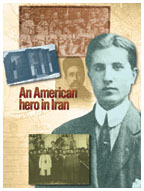
 An American Hero In Iran



Comment