

 Tweet
Tweet
 Buddhism Woos Another 100,000 Dalits
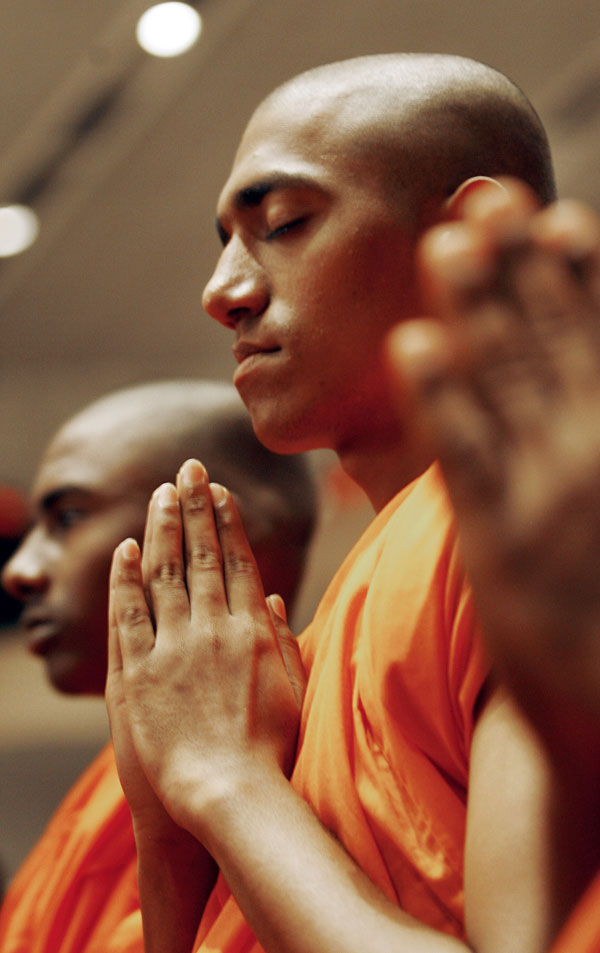
Buddhist monks pray during an International Conference on World Peace and Humanistic Buddhism in Mumbai, 26 May 2007.
Some 100,000 Dalits (low-caste Hindus) from tribal and backward communities in the western Indian state of Maharashtra are expected to visit the financial capital yesterday to convert to Buddhism.
Exiled Tibetan spiritual leader the Dalai Lama is scheduled to attend the mass conversion.
Thousands of tribal and Dalit Hindus in India are to embrace the Buddhist faith at a huge gathering in Mumbai.
The ceremony, which may be presided over by Tibet's exiled leader, the Dalai Lama, is billed as the largest religious conversion in modern India.
The converts hope to escape the rigid caste system in which their status is the lowest.
Right-wing Hindus have often opposed conversion, pushing some Indian states to restrict legal changes of faith.
The organisers say the number of people to convert in Sunday's ceremony could go up to 100,000, easily the biggest mass conversion in India's recent history.
Conversion controversies
The Dalits, once known as Untouchables, hope the conversion will give them dignity and equal rights.
Commentators say that despite the reservation of jobs for the Dalit and tribal communities, their social status and economic conditions have not greatly improved.
They say that Dalits still face widespread prejudice and discrimination.
Conversion is a controversial subject in India, especially if it involves Hindus converting to Christianity or Islam.
Two weeks ago two Catholic priests were publicly beaten after being accused of trying to bring a group of local people into the Catholic faith.
But converting to Buddhism does not evoke much adverse reaction, as most hardline Hindu leaders believe Buddhism is an extension of Hinduism.
Even so, several Indian states, especially the ones governed by the right-wing Bharatiya Janata Party, BJP, have made laws severely restricting conversion.
Thousands of people have been attending mass ceremonies in India at which hundreds of Hindu Dalits converted to Buddhism and Christianity.
The events in the central city of Nagpur are part of a protest against the injustices of India's caste system, activists say.
The Dalits - once known as Untouchables - hope to escape the prejudice and discrimination they often face.
Laws designed to protect Dalit rights are ineffective, critics say.
The ceremonies mark the 50th anniversary of the adoption of Buddhism by the scholar Bhimrao Ramji Ambedkar.
He was the first prominent Dalit to urge low-caste Indians to embrace Buddhism.
As the chief architect of India's constitution, he wrote anti-discrimination provisions and quota systems into the country's law.
The Dalits arrived by the truckload at a public park in Nagpur for ceremonies, which began with religious leaders giving fiery speeches against the treatment of lower castes.
Reuters reported that dozens of riot policemen had turned out at the sprawling park.
Udit Raj, a Dalit leader, told the BBC that around 2,500 people converted to Christianity and Buddhism.
Joseph D'Souza, the president of the Dalit Freedom Network and a Christian convert, described the conversions as a "celebratory occasion".
"I think it's important to understand that this is a cry for human dignity, it's a cry for human worth," he told the BBC.
He said that Dalits could seek dignity by converting to Christianity, Jainism or Sikhism as well as Buddhism.
Laws against conversion
Several states governed by the Hindu nationalist party, the BJP, have introduced laws to make such conversions more difficult.
The states of Rajasthan, Madhya Pradesh and Tamil Nadu have all passed laws restricting conversions.
Gujarat has reclassified Buddhism and Jainism as branches of the Hindu religion, in an attempt to prevent conversions away from Hinduism eroding the BJP's bedrock support.
Officially, caste discrimination was outlawed when India gained independence in 1947, but many of the country's 180m Dalits say that people's attitudes towards them remain the same.
They are still often expected to do the most menial jobs. In many villages, they are also prevented from drinking water from wells used by high caste Hindus.
Some 100,000 Dalits (low-caste Hindus) from tribal and backward communities in the western Indian state of Maharashtra are expected to visit the financial capital yesterday to convert to Buddhism.
Exiled Tibetan spiritual leader the Dalai Lama is scheduled to attend the mass conversion.
Thousands of tribal and Dalit Hindus in India are to embrace the Buddhist faith at a huge gathering in Mumbai.
The ceremony, which may be presided over by Tibet's exiled leader, the Dalai Lama, is billed as the largest religious conversion in modern India.
The converts hope to escape the rigid caste system in which their status is the lowest.
Right-wing Hindus have often opposed conversion, pushing some Indian states to restrict legal changes of faith.
The organisers say the number of people to convert in Sunday's ceremony could go up to 100,000, easily the biggest mass conversion in India's recent history.
Conversion controversies
The Dalits, once known as Untouchables, hope the conversion will give them dignity and equal rights.
Commentators say that despite the reservation of jobs for the Dalit and tribal communities, their social status and economic conditions have not greatly improved.
They say that Dalits still face widespread prejudice and discrimination.
Conversion is a controversial subject in India, especially if it involves Hindus converting to Christianity or Islam.
Two weeks ago two Catholic priests were publicly beaten after being accused of trying to bring a group of local people into the Catholic faith.
But converting to Buddhism does not evoke much adverse reaction, as most hardline Hindu leaders believe Buddhism is an extension of Hinduism.
Even so, several Indian states, especially the ones governed by the right-wing Bharatiya Janata Party, BJP, have made laws severely restricting conversion.
Thousands of people have been attending mass ceremonies in India at which hundreds of Hindu Dalits converted to Buddhism and Christianity.
The events in the central city of Nagpur are part of a protest against the injustices of India's caste system, activists say.
The Dalits - once known as Untouchables - hope to escape the prejudice and discrimination they often face.
Laws designed to protect Dalit rights are ineffective, critics say.
The ceremonies mark the 50th anniversary of the adoption of Buddhism by the scholar Bhimrao Ramji Ambedkar.
He was the first prominent Dalit to urge low-caste Indians to embrace Buddhism.
As the chief architect of India's constitution, he wrote anti-discrimination provisions and quota systems into the country's law.
The Dalits arrived by the truckload at a public park in Nagpur for ceremonies, which began with religious leaders giving fiery speeches against the treatment of lower castes.
Reuters reported that dozens of riot policemen had turned out at the sprawling park.
Udit Raj, a Dalit leader, told the BBC that around 2,500 people converted to Christianity and Buddhism.
Joseph D'Souza, the president of the Dalit Freedom Network and a Christian convert, described the conversions as a "celebratory occasion".
"I think it's important to understand that this is a cry for human dignity, it's a cry for human worth," he told the BBC.
He said that Dalits could seek dignity by converting to Christianity, Jainism or Sikhism as well as Buddhism.
Laws against conversion
Several states governed by the Hindu nationalist party, the BJP, have introduced laws to make such conversions more difficult.
The states of Rajasthan, Madhya Pradesh and Tamil Nadu have all passed laws restricting conversions.
Gujarat has reclassified Buddhism and Jainism as branches of the Hindu religion, in an attempt to prevent conversions away from Hinduism eroding the BJP's bedrock support.
Officially, caste discrimination was outlawed when India gained independence in 1947, but many of the country's 180m Dalits say that people's attitudes towards them remain the same.
They are still often expected to do the most menial jobs. In many villages, they are also prevented from drinking water from wells used by high caste Hindus.



Comment