Announcement

Collapse
No announcement yet.

Pervez Musharraf resigns as president of Pakistan

Collapse
X
 
  • Filter
  • Time
  • Show
Clear All
new posts

  • Pervez Musharraf resigns as president of Pakistan

    Artillery guns boomed at daybreak in Pakistan's capital yesterday in a salute to mark the country's 60th anniversary of independence from British rule as the U.S.-allied president faced a political crisis and surging militant violence.

    Military cadets held a changing-of-the-guard ceremony at the mausoleum of Quaid-e-Mohammed Ali Jinnah, Pakistan's founder, in Karachi, the country's largest city. There were flag-raising ceremonies and 21-gun salutes in the four provincial capitals.

    Gunfire during boisterous Independence Day celebrations left two women dead and 19 people injured, officials said.

    In the capital, Islamabad, 31 artillery guns fired at the start of ceremonies to mark 60 years since some 10 million people moved across borders in one of history's largest mass migrations as the princely states, sewn together in 200 years of British rule, were split into Muslim Pakistan and Hindu-majority India in 1947.

    The subcontinent's partition saw some of the bloodiest fighting of the 20th century, violence that left between 200,000 and more than one million people dead.

    In recent years, Pakistan and India have engaged in a series of negotiations aimed at normalizing relations and settling a bitter dispute over the Himalayan region of Kashmir. The two nations have fought three wars since 1947 -- two over Kashmir.

    The 60th anniversary is being marked today in India.

    Dildar Khan took time off from driving his three-wheeler motorcycle taxi festooned with Pakistani flags, flowers and blinking lights. He took his children to pray at Jinnah's mausoleum.

    "We are going there to offer prayers and the children will enjoy," Khan said. "I am going to salute the founder of Pakistan."

    Khalid Jamil, who works at a book publishing company, said he had arranged a session for the recitation of Qur'an, Islam's holy book, at his home in Karachi to ask God's blessings "for the martyrs of our freedom."

    Pakistani President Gen. Pervez Musharraf, born in the Indian capital of New Delhi, recalled painful memories of his family's move to Pakistan during partition. "It was a train journey and my mother was very worried because . . . there were dead people who could be seen on platforms where the train would stop," Musharraf said.

    Independence celebrations fall as Pakistan heads toward presidential and legislative elections.

    Last edited by Rasputin; 08-15-2007, 03:29 AM.

  • #2
    Pakistan, India Mark Independence Day

    Pakistanis celebrated the 60th anniversary of independence Tuesday with gunfire and colorful displays of national pride, pushing the recent political turmoil and surging militant violence into the background for a day.

    Neighboring India marked its own independence Wednesday in a triumphant mood, with many feeling the country was finally taking its rightful place as a major global player.

    British colonial rulers granted the subcontinent independence in August 1947, splitting it into Muslim Pakistan and Hindu-dominated India. Independence came a day apart for the two countries for logistical reasons.

    Pakistan's embattled President Gen. Pervez Musharraf, a close U.S. ally, appealed for Pakistanis to reject extremism at coming elections.

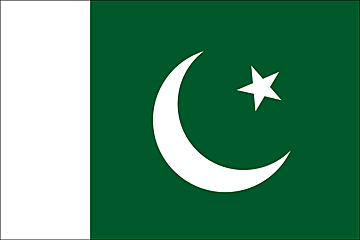
    Tens of thousands rallied throughout the world's second most populous Muslim nation, waving Pakistan's olive-green flag with a white crescent. Others held prayer gatherings at home. Women daubed their forearms with elaborate henna-drawn flowers in national colors, and children ran through the streets late into Monday night, setting off firecrackers.

    Police and hospital officials said at least two people died and 19 were wounded by celebratory gunfire in Karachi, Pakistan's largest city.

    At daybreak, 31 artillery guns thundered over the capital, Islamabad, and 21-gun barrages were fired simultaneously in each of the four provincial capitals to mark the start of celebrations.

    Britain's partition of the subcontinent brought one of modern history's biggest mass migrations as some 10 million people crossed the newly created frontier, and one of its bloodiest chapters as sectarian and religious fighting killed hundreds of thousands.

    Lingering disputes - especially over the disputed Himalayan territory of Kashmir - led to three wars between the South Asian neighbors, and tensions persist.

    Celebrating the 60-year milestone, however, both countries seemed more preoccupied with their domestic problems and aspirations.

    India's optimism over lightning economic growth was balanced by the reality that many of its 1.1 billion people are being left behind. The country is home to about a third of the people in the world living on less than $1 a day.

    "India cannot become a nation with islands of high growth and vast areas untouched by development," Prime Minister Manmohan Singh told thousands of dignitaries and schoolchildren gathered at the historic Red Fort for Wednesday's celebrations.

    In the Pakistani city of Karachi, Dildar Khan took time off from driving his three-wheeler motorcycle taxi festooned with flags, flowers and blinking lights. He took his children to the domed mausoleum of the country's founder, Quaid-e-Mohammed Ali Jinnah.

    "We are going there to offer prayers and the children will enjoy," Khan said. "I am going to salute the founder of Pakistan."

    Some toned down their celebrations because of recent violence in Pakistan. More than 380 people have been killed since early July in the violence, much of it in the restive tribal region bordering Afghanistan.

    Karachi shop owner Naqi Chand released pigeons to celebrate but said he would not be going to Jinnah's mausoleum because he feared a terrorist attack.

    "I am happy that we are living in a free country, but I have a feeling that we are yet to gain a real independence," he said.

    At the government's main Independence Day event, Prime Minister Shaukat Aziz told officials and diplomats that Pakistan sought peace and economic development, and would show respect to its neighbors.

    He said Pakistan's military forces were well equipped to defend the country's borders, an apparent reference to Democratic presidential candidate Barack Obama's recent statement advocating the U.S. take unilateral military action to hunt down "high-value" terrorists in Pakistan if Musharraf doesn't do it himself.

    "We will never, never allow any foreign power to interfere in our frontiers," Aziz said. "We will not allow any foreign power, under any circumstances, to enter Pakistan's territory." He did not mention any country by name.

    Musharraf, in a television talk-show appearance marking the anniversary, said late Monday he was "200 percent sure" the threat of U.S. strikes in Pakistan was not real.

    Musharraf is seeking another term as the military head of state, but now faces the toughest challenge to his rule since taking power in a 1999 coup.

    His bid earlier this year to remove independent-minded Chief Justice Iftikhar Mohammed Chaudhry backfired, drawing street protests and calls for greater democracy. He is also under pressure from Washington to do more to fight al-Qaida and Taliban militants.

    The president urged Pakistanis to reject extremism at the coming elections.

    "I urge all Pakistani citizens to get involved in the electoral process and become the instruments of enlightened moderation in their beloved country," Musharraf said.

    Britain's Queen Elizabeth II and Prime Minister Gordon Brown each sent messages of congratulations on the anniversary, to Musharraf and Aziz respectively.


    Associated Press writers Matthew Rosenberg in New Delhi, Afzal Nadeem in Karachi, Abdul Sattar in Quetta, Zia Khan in Lahore and Sadaqat Jan in Islamabad contributed to this report.

    Comment


    • #3
      Pakistan marks independence day

      Celebrations began at daybreak in Pakistan to mark the 60th anniversary of its creation and independence from British rule.


      Military cadets held a ceremony on Tuesday at the mausoleum of Quaid-i-Azam Mohammed Ali Jinnah, the "father of Pakistan", in Karachi.

      Flag-raising ceremonies and traditional 21-gun salutes also took place in the four provincial capitals, Karachi, Lahore, Quetta, and Peshawar.


      When British colonial rule ended in 1947, India was divided to create a separate homeland for Muslims in the form of West Pakistan and East Pakistan - now Bangladesh.


      An estimated 10 million people crossed the borders in both directions - one of the largest such migrations in history, and one accompanied by violence that killed 500,000 to one million people.

      Tight security

      Security is tight in public places, fireworks were banned and public gatherings were being kept to a minimum, police in the capital and other cities said.

      "This year the threats are serious," said Aftab Cheema, police chief in the eastern city of Lahore.

      "We have therefore deployed police in plain clothes and installed closed-circuit cameras at key places to avert an incident in major cities and towns."

      One of the largest ceremonies was expected to take place at Wagah, near Lahore and the overland crossing with India, where crowds from both sides were to greet each other at a flag-raising ceremony.

      Strength

      Shaukat Aziz, the Pakistani prime minister, who opened the ceremony, told a gathering of hundreds of government officials, school children and others that Pakistan took pride in being the only Muslim country to have nuclear weapons.

      "Our nuclear assets are symbols of our national honour and sovereignty," Aziz said.

      "The nation has always displayed solidarity and unity for them. And we will never tolerate that anyone should look with a dirty eye at our nuclear assets."

      "We will never allow any foreign power to interfere in our frontiers," Aziz said, highlighting the issue of possible unilateral US strikes against targets in Pakistan.

      He also said Pakistan would show respect to its neighbours, an apparent reference to India.

      Prisoner exchange

      On the eve of independence day, Pakistan sent home 134 Indian prisoners who had crossed the border illegally, as part of ceremonies marking the two countries' 60th anniversary.

      India was also expected to return Pakistani prisoners on Tuesday.

      In recent years, Pakistan and India have engaged in a series of negotiations aimed at normalising relations and settling a bitter dispute over the Himalayan region of Kashmir.

      Independence celebrations take place as Pakistan heads toward presidential and legislative elections.

      Pervez Musharraf, Pakistan's president, and close ally of the US in its "war on terrorism", is seeking another term as the military head of state, but faces one of the toughest periods in office since taking power in a bloodless coup in 1999.

      Street protests

      Musharraf's bid earlier this year to remove the Chief Justice Iftikhar Mohammed Chaudhry backfired, drawing street protests, as the Pakistani supreme court reversed Musharraf's move.

      The Pakistani president also faces pressure from Washington to do more to tackle al-Qaida and Taliban fighters in Pakistan's northwest tribal region bordering Afghanistan.

      Then, there is the wave of violence that has killed more than 380 people since early July.

      In a statement marking the anniversary of creation, Musharraf urged Pakistanis to reject extremism at the coming elections.

      He said: "I urge all Pakistani citizens to get involved in the electoral process and become the instruments of enlightened moderation in their beloved country."

      Comment


      • #4
        تلفات سنگین دو انفجار انتحاری در راولپندی


        شدت انفجار اول راولپندی باعث انهدام اتوبوس حامل نظامیان پاکستانی شد
        بامداد روز سه شنبه، 4 سپتامبر، دو حمله انتحاری در شهر راولپندی، واقع در نزدیکی اسلام آباد، پایتخت پاکستان، روی داد که تعدادی کشته و زخمی برجای گذاشت.
        مرکز ستاد ارتش و تعدادی از سازمان های عمده نظامی پاکستان در شهر راولپندی واقع است و نخستین مورد از انفجارهای روز سه شنبه حدود ساعت هفت و بیست دقیقه بامداد به وقت محلی در یک اتوبوس حامل کارمندان وزارت دفاع روی داد که موجب کشته شدن 17 نفر شد. اکثر قربانیان این انفجار از نظامیان بودند.


        تصاویر تلویزیونی از این حادثه، ماموران امداد را نشان می دهد که می کوشند زخمی ها را از میان بدنه در هم پیچیده اتوبوس بیرون بکشند.

        کوتاه مدتی پس از این انفجار، یک انفجار انتحاری دیگر، در یکی از محله های تجاری راولپندی، واقع در حدود سه کیلومتری محل انفجار اول، به کشته شدن 7 نفر انجامید.


        هزاران تن از نفرات ارتش پاکستان در مقابله با اسلامگرایان مسلح شرکت دارند

        تعداد زخمی های این انفجارها، شصت و شش نفر گزارش شده است.

        تحقیقات در مورد این حملات انتحاری، هم اکنون شروع شده است.

        هنوز هیچ گروهی مسئولیت بمب گذاری های روز سه شنبه را برعهده نگرفته است اما بسیاری از منابع پاکستانی، گروه های افراطی اسلامگرا، به خصوص شبکه القاعده را مسئول حملات معرفی می کنند.

        دولت پرویز مشرف، رییس جمهوری پاکستان، از متحدان نزدیک ایالات متحده در مبارزه جهانی علیه تروریسم محسوب می شود.

        در همین حال، گفته می شود عناصر القاعده و رژیم سابق طالبان در مناطق قبیله نشین واقع در مرز افغانستان، که ساکنان آن به حمایت از اسلامگرایی افراطی شهرت دارند، پنهان شده اند و عملیات خود را از این مناطق سازمان می دهند.

        ارتش پاکستان هزاران تن از نفرات ارتش و شبه نظامیان وابسته به ارتش را به منظور مقابله با تندروهای مسلح به این مناطق اعزام داشته است.

        Comment


        • #5
          Pakistan's president, Pervez Musharraf, today bowed to intense pressure and resigned ahead of impeachment proceedings due to start this week.

          Musharraf appeared live on national television just after 1pm local time (8am BST) in an address that lasted for over an hour. Towards the finish, as the former army commander put an end to almost nine years in power, his voice trembled and he appeared to have tears in his eyes.

          "If I was doing this just for myself, I might have chosen a different course," he said, wearing a western suit and tie but speaking in Urdu. "But I put Pakistan first, as always.

          "Whether I win or lose the impeachment, the dignity of the nation would be damaged, the office of the president harmed."

          It is likely that Musharraf stepped down as a part of a western-mediated deal between the president and the coalition government, according to which all charges against him will be dropped in return for his resignation.

          It was a humiliation nevertheless for the ex-army chief to have to submit to the very politicians he hated. But he admitted he had been left with no choice.

          "Even if I beat this impeachment, relations between the presidency and the government can never be fixed," he said. "Pillars of the state – parliament and the judiciary – would be harmed and, God forbid, the army might have been dragged in." He said he wanted the people to be his judge.

          The foreign minister, Shah Mahmood Qureshi, said leaders of the ruling coalition were discussing whether to prosecute Musharraf in court on the impeachment charges.

          Qureshi would not say whether Musharraf might be granted a safe exit; there has been speculation he might go into exile in Saudi Arabia or Turkey.

          "That is a decision that has to be taken by the democratic leadership," said Qureshi, a member of the Pakistan People's party (PPP), in a television interview with Dawn News.

          The Pakistan Muslim League-N, the second-biggest party in the coalition government with the PPP, said Musharraf should be tried for treason, which carries a maximum sentence of death.

          Its leader, Nawaz Sharif, whom Musharraf deposed as prime minister in a coup in October 1999, was the prime mover behind the impeachment.

          "The crimes of Musharraf against the nation, against the judiciary, against democracy and against rule of law in the country cannot be forgiven by any party or individual," said the party's spokesman, Ahsan Iqbal.

          Musharraf, who was an almost absolute ruler until he stepped down as army chief in November last year and held elections this February, did not leave without first launching into an impassioned and lengthy defence of his record. He said the allegations against him were "lies".

          Musharraf laid the blame for Pakistan's economic crisis squarely on the current government, saying that just eight months ago the economy was booming and Pakistan was regarded as one of the next great emerging market success stories.

          "When I took over, nine years ago, this country was on the verge of being declared a terrorist state, on the verge of becoming a failed state," he said. "The challenges of the last nine years have been greater than any in Pakistan's history, yet I have met those challenges."

          Celebrations broke out across the country after Musharraf's announcement, with people dancing and handing out sweets.

          "Thank God he's resigned. The country will do much better now. It's a victory for the people," said Mohammad Ilyas, 30, in Karachi.

          Lawyers, who have spearheaded an anti-Musharraf campaign since he tried to sack the chief justice last year, stormed out of courts in the south-eastern city of Multan on hearing of his resignation, shouting: "Down with the American stooge."

          "It's just like I'm celebrating my wedding," said one lawyer, Malik Naveed.

          It is not yet clear who the next president will be. According to the constitution, the chairman of the senate, Mohammadmian Soomro, will become acting president until a new president is elected within 30 days for a five-year term.

          Most members of the coalition government did not want to go through the trauma of impeachment proceedings, hoping that the threat of prosecution would be enough to persuade the president to go. Musharraf held out for almost two weeks after the announcement that the government had decided to impeach him. His resignation came a few hours ahead of the scheduled start of formal parliamentary proceedings.

          Reza Rabbani, a leading PPP member, said: "This is the first time in Pakistan's political history where you have the people winning against establishment institutions."

          Another PPP spokeswoman, Farzana Raja, said Musharraf's resignation was "a victory for all democratic forces" and for "Benazir Bhutto and all those who sacrificed their lives for democracy". Bhutto was assassinated on December 27 while campaigning in parliamentary and provincial elections.

          Pakistan's army, which has ruled the country for more than half its tumultuous history, had quietly told Musharraf it would not back him if he decided to fight the impeachment, stripping him of the only backing that might have saved him.

          Similarly, close allies such as the US, Britain and Saudi Arabia indicated to the president it was time for him to go. Those international allies are thought to have put pressure on the Pakistani government to let him resign before impeachment.

          Comment

          Working...
          X