

 Tweet
Tweet
Calligraphy (from Greek καλλος kallos "beauty" + γραφος graphos "writing") is the art of beautiful writing. A style of calligraphy is described as a hand or alphabet.
Calligraphy ranges from functional inscriptions and hand lettering to fine art pieces where the expression of the handwritten mark may take precedence over the legibility of the letters. Well-crafted calligraphy differs from typography; characters are fluid and spontaneous, improvised at the moment of writing.
East Asian Calligraphy
Chinese calligraphy is an ancient art, widely practiced throughout China to this day. Although it uses Chinese words as its vehicle of expression, one does not have to know Chinese to appreciate its beauty. Calligraphy, in this case, is an abstract art.
East Asian calligraphy typically uses ink brushes to write Chinese characters (called Hanzi in Chinese, Kanji in Japanese, and Hanja in Korean). Calligraphy (in Chinese, Shufa 書法, in Japanese Shodō 書道, in Korean, Seoyae 書藝, all meaning "the way of writing") is considered an important art in East Asia and the most refined form of East Asian painting.
Calligraphy has influenced most major art styles in East Asia, including sumi-e, a style of Chinese and Japanese painting based entirely on calligraphy.
Tibatian Calligraphy
Calligraphy is central in Tibetan culture. The script bears a resemblance to the Sanskrit script, and is rumored to be a descendant of it. As in China, the nobles of Tibet, such as the High Lamas and inhabitants of the Potala Palace, were usually capable calligraphers. Tibet has been a center of Buddhism for several centuries, and that religion places a great deal of significance on written word. This, however, does not give us a large body of secular pieces, although they do exist (but are usually related in some way to Tibetan Bhuddism). Almost all high religious writing involved calligraphy, including letters sent by His Holiness, the Oracle of the Potala Palace, and other religious, and secular, authority. Calligraphy is particularly evident on their prayer wheels, although this calligraphy was forged rather than scribed, much like Arab and Roman calligraphy is often found on buildings. Although originally done with a brush, Tibetan calligraphers now, as is often the case with non-Western scripts, use chisel tipped pens and markers as well, both in practice and pieces
Islamic Calligraphy
Islamic calligraphy is an aspect of Islamic art that has evolved alongside the religion of Islam and the Arabic language.
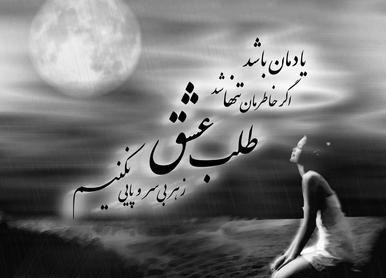
Arabic/Persian calligraphy is associated with geometric Islamic art (arabesque) on the walls and ceilings of mosques as well as on the page. Contemporary artists in the Islamic world draw on the heritage of calligraphy to use calligraphic inscriptions or abstractions in their work.
Instead of recalling something related to the reality of the spoken word, calligraphy for Muslims is a visible expression of the highest art of all, the art of the spiritual world. Calligraphy has arguably become the most venerated form of Islamic art because it provides a link between the languages of the Muslims with the religion of Islam. The holy book of Islam, al-Qur'an, has played an important role in the development and evolution of the Arabic language, and by extension, calligraphy in the Arabic alphabet. Proverbs and complete passages from the Qur'an are still active sources for Islamic calligraphy.
There was a strong parallel tradition to that of the Islamic, among Aramaic and Hebrew scholars, seen in such works as the Hebrew illuminated bibles of the 9th and 10th centuries.
Western Calligraphy
Western calligraphy is the calligraphy of the Latin writing system, and to a lesser degree the Greek and Cyrillic writing systems. Early alphabets had evolved by about 3000 BC. From the Etruscan alphabet evolved the Latin alphabet. Capital letters (majuscules) emerged first, followed by the invention of lower case letters (miniscules) in the Carolingian period.
Long, heavy rolls of papyrus were replaced by the Romans with the first books, initially simply folded pages of parchment made from animal skins. Reed pens were replaced by quill pens.
Christianity gave a boost to the development of writing through the prolific copying of the Bible, particularly the New Testament and other sacred texts. Uncial letters were used by monks in Ireland, Scotland, and other places on the Celtic fringes of Europe, hence the name "Insular style" for this type of writing. The 7th-9th Century in northern Europe was the heyday of the illuminated manuscript, exemplified by the Lindisfarne Gospels and the "zenith of Western calligraphy", the Book of Kells.
Charlemagne helped the spread of beautiful writing by bringing Alcuin, the Abbot of York, to his capital of Aachen. Alcuin undertook a major revision of all styles of script and all texts. He then developed a new "hand" named after his patron Charlemagne: "Carolingian minuscule style".
Blackletter (a.k.a. Gothic Script) followed in the 12th century, and Italy contributed Chancery and Italic scripts. Italic is somewhat of a historical abberration, as it was invented after Gutenberg's revolutionary device.
What followed was the heyday of the illuminated manuscript.
Hand-written and hand-decorated books became less common after the invention of printing by Johann Gutenberg in the 15th century. However, at the end of the 19th century, William Morris and the Arts and Crafts Movement rediscovered and popularised calligraphy. Many famous calligraphers were influenced by Morris, especially Edward Johnston and Eric Gill.
There are many calligraphic typefaces such as Blackletter (including Fraktur), Lombardis, Uncial, Italic, and Roundhand.
Copperplate is name of a style of calligraphic writing, using a sharp pointed nib instead of the flat nib used in most calligraphic writing. The name comes from the sharp lines of the writing style resembling the etches of engraved copper. The Copperplate typeface attempts to emulate copper engraved letters.
Copperplate obtains its name from the copybooks of the 18th and 19th centures, which were created by the engraving of copper printing plates using a transferred ink original. Students worked strenuously to copy these works, although an exact copy could never be obtained, because the works were created originally from the chiselling of copper plates.
Calligraphy continues to be applied today in graphic design, logo design, maps, menus, greeting cards, invitations, legal documents, diplomas, unfortunately forgery, poetry, bussiness cards, in hand made presentations, and numerous other places. Calligraphers find their "bread and butter" work in the addressing of calligraphic envelopes and invitations for weddings and large parties. Digital type design facilitates the making of calligraphic fonts by calligraphers, thousands are now in use particularly by greeting card companies such as Hallmark and American Greetings. Some important calligraphers of the twentieth century are Arthur Baker and Hermann Zapf.
In the late twentieth century some calligraphers broke free of the functional task of transcription and began to place more emphasis on expression than legibility. Written forms have become more abstract for these artists and are incorporated into works which have as much affinity to contemporary painting as to ancient manuscript writing. Notable calligraphers who have carried the art into the twenty-first century include Thomas Ingmire, Denis Brown, and Brody Neuenschwander.
A calligraphic variant of Ogham emerged in Scotland in the twentieth century, known as Oghamura. Whereas Ogham is a system of straight lines suitable for working onto stone or wood, Oghamura is a cursive development of Ogham that is amenable to calligraphy. Performing Oghamura calligraphy is sometimes used as a neo-pagan meditative device
Tools
Calligraphy ranges from functional inscriptions and hand lettering to fine art pieces where the expression of the handwritten mark may take precedence over the legibility of the letters. Well-crafted calligraphy differs from typography; characters are fluid and spontaneous, improvised at the moment of writing.
East Asian Calligraphy
Chinese calligraphy is an ancient art, widely practiced throughout China to this day. Although it uses Chinese words as its vehicle of expression, one does not have to know Chinese to appreciate its beauty. Calligraphy, in this case, is an abstract art.
East Asian calligraphy typically uses ink brushes to write Chinese characters (called Hanzi in Chinese, Kanji in Japanese, and Hanja in Korean). Calligraphy (in Chinese, Shufa 書法, in Japanese Shodō 書道, in Korean, Seoyae 書藝, all meaning "the way of writing") is considered an important art in East Asia and the most refined form of East Asian painting.
Calligraphy has influenced most major art styles in East Asia, including sumi-e, a style of Chinese and Japanese painting based entirely on calligraphy.
Tibatian Calligraphy
Calligraphy is central in Tibetan culture. The script bears a resemblance to the Sanskrit script, and is rumored to be a descendant of it. As in China, the nobles of Tibet, such as the High Lamas and inhabitants of the Potala Palace, were usually capable calligraphers. Tibet has been a center of Buddhism for several centuries, and that religion places a great deal of significance on written word. This, however, does not give us a large body of secular pieces, although they do exist (but are usually related in some way to Tibetan Bhuddism). Almost all high religious writing involved calligraphy, including letters sent by His Holiness, the Oracle of the Potala Palace, and other religious, and secular, authority. Calligraphy is particularly evident on their prayer wheels, although this calligraphy was forged rather than scribed, much like Arab and Roman calligraphy is often found on buildings. Although originally done with a brush, Tibetan calligraphers now, as is often the case with non-Western scripts, use chisel tipped pens and markers as well, both in practice and pieces
Islamic Calligraphy
Islamic calligraphy is an aspect of Islamic art that has evolved alongside the religion of Islam and the Arabic language.
Arabic/Persian calligraphy is associated with geometric Islamic art (arabesque) on the walls and ceilings of mosques as well as on the page. Contemporary artists in the Islamic world draw on the heritage of calligraphy to use calligraphic inscriptions or abstractions in their work.
Instead of recalling something related to the reality of the spoken word, calligraphy for Muslims is a visible expression of the highest art of all, the art of the spiritual world. Calligraphy has arguably become the most venerated form of Islamic art because it provides a link between the languages of the Muslims with the religion of Islam. The holy book of Islam, al-Qur'an, has played an important role in the development and evolution of the Arabic language, and by extension, calligraphy in the Arabic alphabet. Proverbs and complete passages from the Qur'an are still active sources for Islamic calligraphy.
There was a strong parallel tradition to that of the Islamic, among Aramaic and Hebrew scholars, seen in such works as the Hebrew illuminated bibles of the 9th and 10th centuries.
Western Calligraphy
Western calligraphy is the calligraphy of the Latin writing system, and to a lesser degree the Greek and Cyrillic writing systems. Early alphabets had evolved by about 3000 BC. From the Etruscan alphabet evolved the Latin alphabet. Capital letters (majuscules) emerged first, followed by the invention of lower case letters (miniscules) in the Carolingian period.
Long, heavy rolls of papyrus were replaced by the Romans with the first books, initially simply folded pages of parchment made from animal skins. Reed pens were replaced by quill pens.
Christianity gave a boost to the development of writing through the prolific copying of the Bible, particularly the New Testament and other sacred texts. Uncial letters were used by monks in Ireland, Scotland, and other places on the Celtic fringes of Europe, hence the name "Insular style" for this type of writing. The 7th-9th Century in northern Europe was the heyday of the illuminated manuscript, exemplified by the Lindisfarne Gospels and the "zenith of Western calligraphy", the Book of Kells.
Charlemagne helped the spread of beautiful writing by bringing Alcuin, the Abbot of York, to his capital of Aachen. Alcuin undertook a major revision of all styles of script and all texts. He then developed a new "hand" named after his patron Charlemagne: "Carolingian minuscule style".
Blackletter (a.k.a. Gothic Script) followed in the 12th century, and Italy contributed Chancery and Italic scripts. Italic is somewhat of a historical abberration, as it was invented after Gutenberg's revolutionary device.
What followed was the heyday of the illuminated manuscript.
Hand-written and hand-decorated books became less common after the invention of printing by Johann Gutenberg in the 15th century. However, at the end of the 19th century, William Morris and the Arts and Crafts Movement rediscovered and popularised calligraphy. Many famous calligraphers were influenced by Morris, especially Edward Johnston and Eric Gill.
There are many calligraphic typefaces such as Blackletter (including Fraktur), Lombardis, Uncial, Italic, and Roundhand.
Copperplate is name of a style of calligraphic writing, using a sharp pointed nib instead of the flat nib used in most calligraphic writing. The name comes from the sharp lines of the writing style resembling the etches of engraved copper. The Copperplate typeface attempts to emulate copper engraved letters.
Copperplate obtains its name from the copybooks of the 18th and 19th centures, which were created by the engraving of copper printing plates using a transferred ink original. Students worked strenuously to copy these works, although an exact copy could never be obtained, because the works were created originally from the chiselling of copper plates.
Calligraphy continues to be applied today in graphic design, logo design, maps, menus, greeting cards, invitations, legal documents, diplomas, unfortunately forgery, poetry, bussiness cards, in hand made presentations, and numerous other places. Calligraphers find their "bread and butter" work in the addressing of calligraphic envelopes and invitations for weddings and large parties. Digital type design facilitates the making of calligraphic fonts by calligraphers, thousands are now in use particularly by greeting card companies such as Hallmark and American Greetings. Some important calligraphers of the twentieth century are Arthur Baker and Hermann Zapf.
In the late twentieth century some calligraphers broke free of the functional task of transcription and began to place more emphasis on expression than legibility. Written forms have become more abstract for these artists and are incorporated into works which have as much affinity to contemporary painting as to ancient manuscript writing. Notable calligraphers who have carried the art into the twenty-first century include Thomas Ingmire, Denis Brown, and Brody Neuenschwander.
A calligraphic variant of Ogham emerged in Scotland in the twentieth century, known as Oghamura. Whereas Ogham is a system of straight lines suitable for working onto stone or wood, Oghamura is a cursive development of Ogham that is amenable to calligraphy. Performing Oghamura calligraphy is sometimes used as a neo-pagan meditative device
Tools



Comment