

 Tweet
Tweet
Persian Empire
PERSIAN TIMELINE
2000-1800 BC, Aryan migration from Southern Russia to Near East
Persia's earliest known kingdom was the proto-Elamite Empire followed by
The Medes
Deioces, 728BC - 675BC
Phraortes (Kashtariti?), 675BC - 653BC
Scythian interregnum
Cyaxares, 625BC - 585BC
Astyages, 585BC - 550BC
628 BC, Birth of Zartosht, Zoroaster, the Persian Prophet
Achaemenid Dynasty
Achaemenes
Teispes
Cyrus I
Cambyses I (Kambiz)
Cyrus the Great, Start of Achaemenid Empire, 559BC -530BC
Kambiz II, 530BC - 522BC
Smerdis (the Magian), 522BC
Darius I the Great, 522BC - 486BC
Xerxes I (Khashyar), 486BC - 465BC
Artaxerxes I , 465BC - 425BC
Xerxes II, 425BC - 424BC (45 days)
Darius II, 423BC - 404BC
Artaxerxes II, 404BC - 359BC
Artaxerxes III, 359BC - 339BC
Arses, 338BC - 336BC
Darius III, 336BC - 330BC
Hellenistic Period
Alexander (III), 330BC - 323BC
Philip III (Arrhidaeus), 323BC - 317BC
Alexander IV, 317BC - 312BC
Seleucids
Seleucus I, 312BC - 281BC
Antiochus I Soter, 281BC - 261BC (coregent)
Seleucus, 280BC - 267BC (coregent)
Antiochus II Theos, 261BC - 246BC
Sleucus II Callinicus, 246BC - 238BC
The early history of man in Iran goes back well beyond the Neolithic period, it begins to get more interesting around 6000 BC, when people began to domesticate animals and plant wheat and barley. The number of settled communities increased, particularly in the eastern Zagros mountains, and handmade painted pottery appears. Throughout the prehistoric period, from the middle of the sixth millennium BC to about 3000 BC, painted pottery is a characteristic feature of many sites in Iran.
The Persian Empire is the name used to refer to a number of historic dynasties that have ruled the country of Persia (Iran). Persia's earliest known kingdom was the proto-Elamite Empire, followed by the Medes; but it is the Achaemenid Empire that emerged under Cyrus the Great that is usually the earliest to be called "Persian." Successive states in Iran before 1935 are collectively called the Persian Empire by Western historians.
The name 'Persia' has long been used by the West to describe the nation of Iran, its people, or its ancient empire. It derives from the ancient Greek name for Iran, Persis. This in turn comes from a province in the south of Iran, called Fars in the modern Persian language and Pars in Middle Persian. Persis is the Hellenized form of Pars, based on which other European nations termed the area Persia. This province was the core of the original Persian Empire. Westerners referred to the state as Persia until March 21, 1935, when Reza Shah Pahlavi formally asked the international community to call the country by its native name. Some Persian scholars protested this decision because changing the name separated the country from its past. It also caused some Westerners to confuse Iran with Iraq; so in 1959 his son Shah Mohammad Reza Pahlavi announced that both Persia and Iran can be used interchangeably.
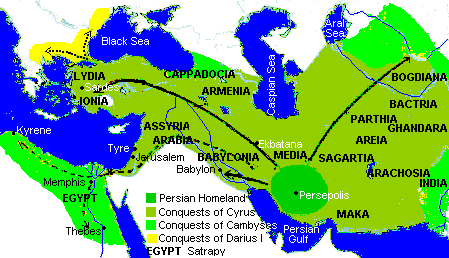
The Persian Empire dominated Mesopotamia from 612-330 BC. The Achaemenid Persians of central Iran ruled an empire which comprised Iran, Mesopotamia, Syria, Egypt, and parts of Asia Minor and India. Their ceremonial capital was Persepolis in southern Iran founded by King Darius the Great. Persepolis was burned by Alexander the Great in 331 B.C. Only the columns, stairways, and door jambs of its great palaces survived the fire. The stairways, adorned with reliefs representing the king, his court, and delegates of his empire bringing gifts, demonstrate the might of the Persian monarch.
The first record of the Persians comes from an Assyrian inscription from c. 844 BC that calls them the Parsu (Parsuash, Parsumash) and mentions them in the region of Lake Urmia alongside another group, the Madai (Medes). For the next two centuries, the Persians and Medes were at times tributary to the Assyrians. The region of Parsuash was annexed by Sargon of Assyria around 719 BC. Eventually the Medes came to rule an independent Median Empire, and the Persians were subject to them.
The First Persian State: Achaemenid Persia (648 BC-330 BC)
The Achaemenids were the first line of Persian rulers, founded by Achaemenes (Hakaimanish), chieftain of the Persians around 700 BC.
Around 653 BC, the Medes came under the domination of the Scythians, and the son of Achaemenes, a certain Teispes, seems to have led the nomadic Persians to settle in southern Iran around this time -- eventually establishing the first organized Persian state in the important region of Anshan as the Elamite kingdom was permanently destroyed by the Assyrian ruler Ashurbanipal (640 BC).
The kingdom of Anshan and its successors continued to use Elamite as an official language for quite some time after this, although the new dynasts spoke Persian, an Indo-Iranian tongue.
Teispes' descendants branched off into two lines, one line ruling in Anshan, while the other ruled the rest of Persia. Cyrus II the Great united the separate kingdoms around 559 BC.
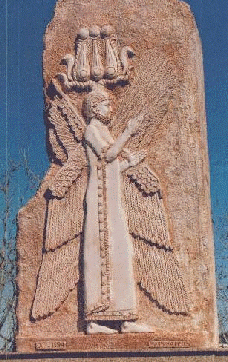
Cyrus the Great (559-529 BC)
"I am Cyrus, who founded the empire of the Persians.
Grudge me not therefore, this little earth that covers my body."
PERSIAN TIMELINE
2000-1800 BC, Aryan migration from Southern Russia to Near East
Persia's earliest known kingdom was the proto-Elamite Empire followed by
The Medes
Deioces, 728BC - 675BC
Phraortes (Kashtariti?), 675BC - 653BC
Scythian interregnum
Cyaxares, 625BC - 585BC
Astyages, 585BC - 550BC
628 BC, Birth of Zartosht, Zoroaster, the Persian Prophet
Achaemenid Dynasty
Achaemenes
Teispes
Cyrus I
Cambyses I (Kambiz)
Cyrus the Great, Start of Achaemenid Empire, 559BC -530BC
Kambiz II, 530BC - 522BC
Smerdis (the Magian), 522BC
Darius I the Great, 522BC - 486BC
Xerxes I (Khashyar), 486BC - 465BC
Artaxerxes I , 465BC - 425BC
Xerxes II, 425BC - 424BC (45 days)
Darius II, 423BC - 404BC
Artaxerxes II, 404BC - 359BC
Artaxerxes III, 359BC - 339BC
Arses, 338BC - 336BC
Darius III, 336BC - 330BC
Hellenistic Period
Alexander (III), 330BC - 323BC
Philip III (Arrhidaeus), 323BC - 317BC
Alexander IV, 317BC - 312BC
Seleucids
Seleucus I, 312BC - 281BC
Antiochus I Soter, 281BC - 261BC (coregent)
Seleucus, 280BC - 267BC (coregent)
Antiochus II Theos, 261BC - 246BC
Sleucus II Callinicus, 246BC - 238BC
The early history of man in Iran goes back well beyond the Neolithic period, it begins to get more interesting around 6000 BC, when people began to domesticate animals and plant wheat and barley. The number of settled communities increased, particularly in the eastern Zagros mountains, and handmade painted pottery appears. Throughout the prehistoric period, from the middle of the sixth millennium BC to about 3000 BC, painted pottery is a characteristic feature of many sites in Iran.
The Persian Empire is the name used to refer to a number of historic dynasties that have ruled the country of Persia (Iran). Persia's earliest known kingdom was the proto-Elamite Empire, followed by the Medes; but it is the Achaemenid Empire that emerged under Cyrus the Great that is usually the earliest to be called "Persian." Successive states in Iran before 1935 are collectively called the Persian Empire by Western historians.
The name 'Persia' has long been used by the West to describe the nation of Iran, its people, or its ancient empire. It derives from the ancient Greek name for Iran, Persis. This in turn comes from a province in the south of Iran, called Fars in the modern Persian language and Pars in Middle Persian. Persis is the Hellenized form of Pars, based on which other European nations termed the area Persia. This province was the core of the original Persian Empire. Westerners referred to the state as Persia until March 21, 1935, when Reza Shah Pahlavi formally asked the international community to call the country by its native name. Some Persian scholars protested this decision because changing the name separated the country from its past. It also caused some Westerners to confuse Iran with Iraq; so in 1959 his son Shah Mohammad Reza Pahlavi announced that both Persia and Iran can be used interchangeably.
The Persian Empire dominated Mesopotamia from 612-330 BC. The Achaemenid Persians of central Iran ruled an empire which comprised Iran, Mesopotamia, Syria, Egypt, and parts of Asia Minor and India. Their ceremonial capital was Persepolis in southern Iran founded by King Darius the Great. Persepolis was burned by Alexander the Great in 331 B.C. Only the columns, stairways, and door jambs of its great palaces survived the fire. The stairways, adorned with reliefs representing the king, his court, and delegates of his empire bringing gifts, demonstrate the might of the Persian monarch.
The first record of the Persians comes from an Assyrian inscription from c. 844 BC that calls them the Parsu (Parsuash, Parsumash) and mentions them in the region of Lake Urmia alongside another group, the Madai (Medes). For the next two centuries, the Persians and Medes were at times tributary to the Assyrians. The region of Parsuash was annexed by Sargon of Assyria around 719 BC. Eventually the Medes came to rule an independent Median Empire, and the Persians were subject to them.
The First Persian State: Achaemenid Persia (648 BC-330 BC)
The Achaemenids were the first line of Persian rulers, founded by Achaemenes (Hakaimanish), chieftain of the Persians around 700 BC.
Around 653 BC, the Medes came under the domination of the Scythians, and the son of Achaemenes, a certain Teispes, seems to have led the nomadic Persians to settle in southern Iran around this time -- eventually establishing the first organized Persian state in the important region of Anshan as the Elamite kingdom was permanently destroyed by the Assyrian ruler Ashurbanipal (640 BC).
The kingdom of Anshan and its successors continued to use Elamite as an official language for quite some time after this, although the new dynasts spoke Persian, an Indo-Iranian tongue.
Teispes' descendants branched off into two lines, one line ruling in Anshan, while the other ruled the rest of Persia. Cyrus II the Great united the separate kingdoms around 559 BC.
Cyrus the Great (559-529 BC)
"I am Cyrus, who founded the empire of the Persians.
Grudge me not therefore, this little earth that covers my body."
Comment