

 Tweet
Tweet
 Biologist Keeps Track of Iran's Rare Cheetahs
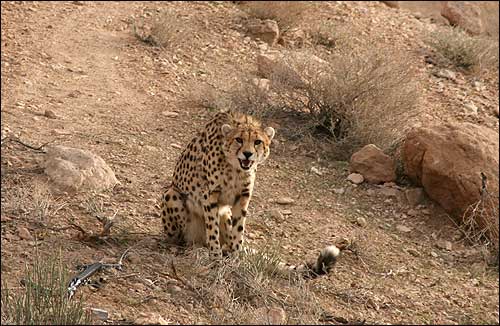
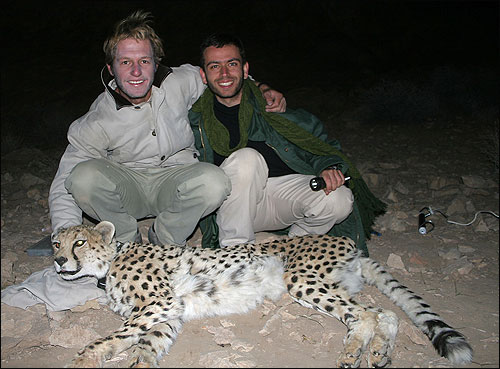
It's not easy to track down one of the fastest and rarest great cats in the world. But biologist Luke Hunter of the Wildlife Conservation Society is working to do just that. His team has, for the first time, successfully attached radio collars to Asiatic cheetahs.
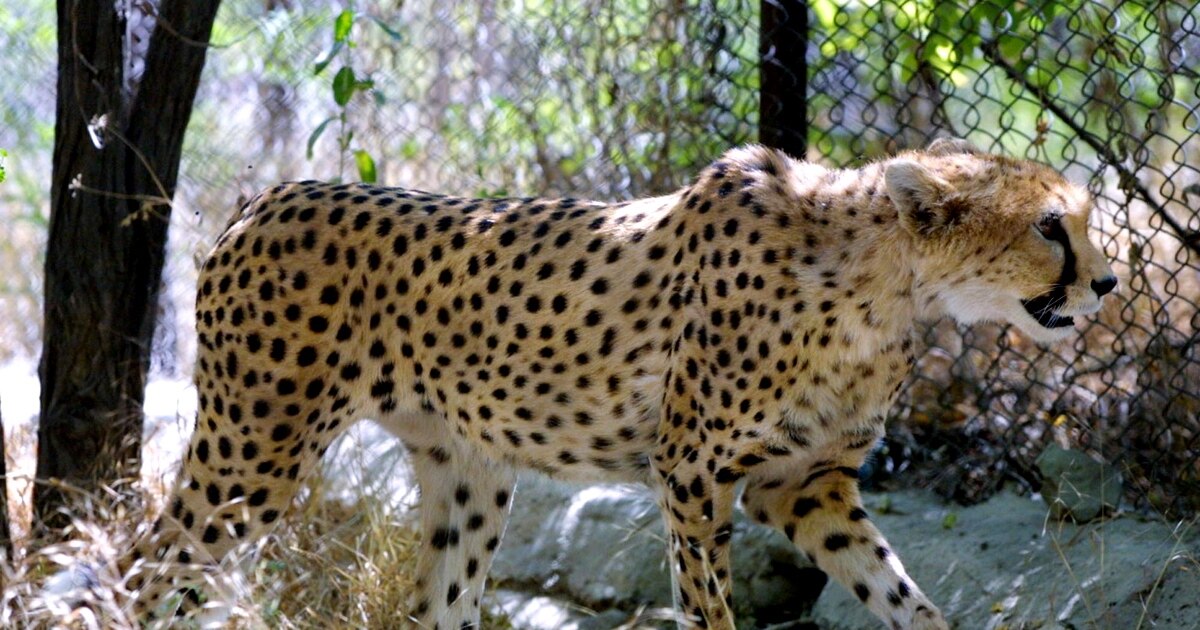
Asiatic cheetahs live only in remote areas of Iran. With just 60 to 100 left, they are among the most imperiled cats on Earth.
It's a spring-loaded, soft-catch foot snare. It's all buried in the ground, and the cheetah doesn't know where it is. The art is placing it in an area where you think the cheetah will walk. The spring triggers, and the snare grabs the animal by the leg. It's extremely safe. There is no injury to the animal. It holds the animal securely but quite gently, and that enables us to approach the animal to sedate them for fitting the radio collars.
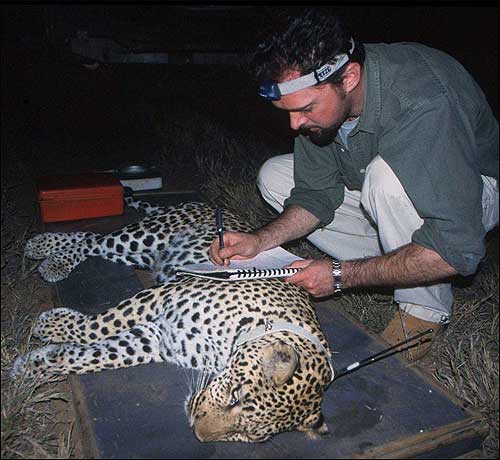
Biologist Luke Hunter collars a sedated female leopard in South Africa's Phinda reserve.
Asiatic cheetahs live only in remote areas of Iran. With just 60 to 100 left, they are among the most imperiled cats on Earth.
It's a spring-loaded, soft-catch foot snare. It's all buried in the ground, and the cheetah doesn't know where it is. The art is placing it in an area where you think the cheetah will walk. The spring triggers, and the snare grabs the animal by the leg. It's extremely safe. There is no injury to the animal. It holds the animal securely but quite gently, and that enables us to approach the animal to sedate them for fitting the radio collars.
Biologist Luke Hunter collars a sedated female leopard in South Africa's Phinda reserve.


Comment