Announcement

Collapse
No announcement yet.

Pc News

Collapse
This is a sticky topic.
X
X
 
  • Filter
  • Time
  • Show
Clear All
new posts

  • Nokia Tests Cellular Wi-Fi Phones

    Nokia, the world largest handset maker, has begun testing technology in a Finnish city that lets users to make calls on both cellular and Wi-Fi networks and switch between networks without interruption.

    Nokia's new 6136 phone automatically transfers voice or data connections from GSM networks to Wi-Fi when the device recognizes a compatible wireless network, Doug Dawson, a spokesman with Nokia, says. And, vice versa, when users make a call or data transfer via Wi-Fi and step out of the Wi-Fi network's coverage area, the connection is transferred to a GSM link without interruption.

    Around 50 people in Oulu, Finland, are testing the new service as part of a two-month pilot initiated by Nokia in cooperation with Finnet and the City of Oulu. The city has been offering free access to Wi-Fi hot spots since last year as part of a project to spur wireless Internet service.

    UMA Technology
    The Finnish vendor is one of several vendors, including Motorola, to offer handsets with UMA (Unlicensed Mobile Access) technology, which enables a "seamless" handover of voice and data connections between GSM mobile and Wi-Fi or other local wireless networks.

    BT Group, which launched one of the world's first UMA commercial services last year using Bluetooth technology, plans in the third quarter of this year to extend its service to Wi-Fi networks with Motorola's A910 UMA-enabled phone.

    TeliaSonera in Sweden and Finland and T-Mobile USA plan UMA service in the coming months.

    UMA allows consumers to enjoy better indoor coverage and lower calling charges when within range of a compatible Wi-Fi terminal, by having it carry their calls over the fixed broadband network using VoIP (voice over Internet Protocol) technology. UMA handsets such as Nokia's 6136 create a secure tunnel to the network operator's UMA Network Controller, which uses the handset's SIM (subscriber identity module) to authenticate the caller with the operator's billing system just as it would over a cellular network.

    The new Nokia 6136 phone, which Nokia announced in February, will be available in the third quarter, according to Dawson. The phone, to cost $350, will be equipped with a 1.3 megapixel camera and removable micro SD format memory card.
    Comment


    • Verizon's Chocolate Cell Phone Challenges iPod

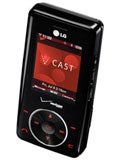
      Verizon Wireless has announced a digital music player called "Chocolate" that uses a cell phone made by LG Electronics to play songs downloaded over Verizon's wireless network.

      With its circular scroll pad, the device looks like Apple Computer's iPod MP3 player, adding another player to an increasingly crowded market. Microsoft announced July 21 it would soon release a digital music player called "Zune."

      Chocolate Specs
      Verizon's Chocolate will probably differ from both products in that it uses wireless links both to download and to play music, supporting a Bluetooth-enabled headset. The device also doubles as a cell phone, with 3G features like games, music videos, television clips, global positioning system (GPS) navigation, and a camera.

      The device has comparable storage to Apple's 1GB Shuffle or 2GB Nano iPod designs. With its expandable memory port, the Chocolate could store up to 1000 songs on a 2GB microSD memory card, such as those made by SanDisk.

      "While this may not be the first product of its kind, the idea of blending a phone and a music player makes sense. It looks sort of like a thick iPod with a phone, stores 1000 songs, and has a cool name: Chocolate. This product should be hottest among young adults," said Jeff Kagan, a telecommunications industry analyst.

      Consumer electronics makers have been talking about convergence for years, as they launch products that combine the features of personal digital assistants, mobile phones, video game players, and cameras. Since many users carry several of those devices at once, Verizon's Chocolate could be popular merely by reducing their load.

      "We carry too many devices, and if a manufacturer can do a good job of blending multiple devices into one, it should be popular," Kagan said.

      New Listeners Welcome
      LG launched the Chocolate cell phone in South Korea in May and has since sold 1 million units worldwide. It has partnered with Verizon to enter the competitive American market.

      Although Apple owns 70 percent of the market for digital audio players with its iPod, customers still have many options, said Tim Bajarin, principal analyst at Creative Strategies.

      Instead of trying to convert iPod devotees, Verizon will compete for customers by focusing on people who don't yet have a portable digital music player, said John Harrobin, vice president of digital media for Verizon Wireless, during a conference call with reporters.

      "Radio is heavily programmed and can be formulaic. But this mobile platform is an excellent device for music discovery," he said. That makes it a good match for Verizon's V CAST music catalog, where the majority of sales are single songs, not albums, Harrobin said.

      Verizon will sell the Chocolate phone for $149.99, with a two-year subscription and after a $50 rebate. Customers may also want to buy a $99 package of the 2GB SanDisk card, PC cable, software, and headphones. The phone became available online Monday and will reach stores on Aug. 7.

      V CAST songs cost 99 cents if purchased from a PC or $1.99 if purchased and downloaded over the air.

      Comment


      • First Look: Personal Finance Software--The 2007 Lineup

        The 2007 versions of the two big packages in personal finance software, Intuit Quicken and Microsoft Money, will be on retail shelves this month, but don't feel obligated to race to the computer store (online or otherwise) to buy a copy of either one. I tried out a late beta version of Quicken Premier 2007 and shipping copies of Money 2007 Premium and the new Money Essentials; and though some features looked good, I saw nothing that made me wildly enthusiastic.

        Don't get me wrong--I use personal finance software and wouldn't do without it. But it's pretty underwhelming when the main reason you'd advise someone to upgrade is to maintain the support for online services that both Microsoft and Intuit withdraw from users of older versions of their products. Intuit is slightly better on this score than Microsoft: It makes you upgrade Quicken only once every three years, while Microsoft ends online services support after just two years for most versions of Money. The exception is Money Essentials--Microsoft limits its online services for that program to a single year.

        It's the first of several skimpy aspects of Essentials, which the company created in hopes of enticing people who currently use Web-based banking services but who have thus far found desktop financial managers too intimidating or too expensive. (You can't import existing Money data into Essentials, so only new users need apply.) At $20, Essentials is certainly cheap, but it's so lacking in features that some newcomers may wonder what the fuss over desktop software is all about.

        Bare-Bones Finance Tracking
        As its name suggests, Essentials does provide the basics: You can download transaction data from most banks and assign basic categories in order to track spending and income. You can also enter monthly bills and track which ones you've paid. And you can export data to tax preparation software that supports the .txf file format, including TaxCut and TurboTax. Microsoft's interface is pleasing, too, with its colorful spending pie chart and trackers that let you see whether you're adhering to spending limits that you specify for up to three categories of your choice.

        But the account registers provide no field for notes to help you remember details of specific transactions (what concert did that Ticketmaster charge pay for?). And there's no support for transfer transactions: If you record a payment to Visa in your checking account, it won't show up in the register for that Visa account unless you enter it manually or download it from Visa. Furthermore, you can't divide a transaction between multiple categories. If you go shopping at Costco, for example, you can't assign part of the expense to groceries and part to clothing.

        Not surprisingly, Essentials doesn't offer any of the investment and planning features that other versions of Money (to varying degrees) provide. For $20, I wouldn't expect it to.

        But Microsoft hasn't revealed how much it will charge for online service support beyond the included year. People interested in desktop software might be better off investing in the $50 Deluxe version of Money (Microsoft offers a $20 mail-in rebate) and getting two years of support plus a tool they can grow into.

        Both Microsoft and Intuit have done a good job of simplifying the new-user setup in their products to accommodate impatient customers. If you don't want to enter account data right away, simply skip to the home page. As a result of this improvement, there's less reason than ever to get a dumbed-down package.

        Full-Featured Options
        The biggest innovation in Microsoft's full-featured Premium edition this year is a budgeting tool based on a strategy for building savings developed by MSN Money editor-in-chief Richard Jenkins. In an article (available in the software) called "A Simpler Way to Save: The 60% Solution," Jenkins recommends allocating 60 percent of your gross income for what he calls "committed expenses"--food, clothing, household essentials, insurance, charitable contributions, regular bills, and taxes. That leaves 10 percent for retirement savings, 10 percent for long-term savings, 10 percent for irregular expenses (read: emergencies), and 10 percent for "fun money"--basically anything else.

        Money's budgeting feature provides a calculator for the plan, though you can adjust the percentages to suit your fancy. If you're going to upgrade, the plan calculator might be worth trying, but I wouldn't recommend upgrading just to get this feature. The same goes for other (and smaller) new features; by and large, they're simply tweaks of existing ones.

        Money's modular and customizable user interface covers all the basics. But Money is still missing a great feature that Intuit introduced in Quicken last year: the ability to attach electronic records. And until Microsoft adds that (and matches Quicken's three-year support for online services), Intuit will continue to hold the edge.

        Quicken's New Look
        Intuit generally seems to be keeping up the pressure on Microsoft in innovation. Quicken 2007's user interface dispenses with lists of alerts and upcoming transactions, opting instead for a look at projected cash flow as expressed through three boxes: In, Out, and What's Left. It's a quick way of checking whether you're on top of your expenses--assuming that you keep on top of data entry (a proviso that applies to all financial tracking and forecasting features in any software). Overall, it's probably more useful than a simple list of account balances and upcoming bills.

        The other major improvement in Quicken 2007 is its support for attaching electronic records (in all but the cheapest edition). Last year's versions let you attach files stored on your hard drive; this year the software supports scanners and permits you to attach a file from the Windows clipboard, saving you a step or two if you're getting files from your bank's Web site (you can right-click within your browser to save a check image or statement to the clipboard, and then pop it into Quicken).

        Both Quicken and Money come in several editions to meet different needs; the versions I checked out are loaded with features for investors; Intuit also has a Basic version, which sells for $30 (and which would-be Essentials buyers might want to consider); a Deluxe version for $60 (fewer investor features); and a Home & Business version for $90 that targets people who want to manage their Schedule C sole proprietorship businesses with their other finances. In addition to its Premier and Deluxe versions, Microsoft has a $90 Home & Business version. Both companies offer mail-in rebates for all but their lowest-end products.

        For most new users, I'd still recommend Quicken Deluxe or Premier over their Money counterparts, mainly because of the support for electronic attachments. But if you have a product you like and you don't need to upgrade for online support, stick with it.

        Comment


        • McAfee Preps Patch for Vulnerability

          McAfee will issue a patch tomorrow for a vulnerability affecting its SecurityCenter application, a security software management tool.

          The vulnerability, rated "medium" by McAfee as far as its severity, could allow an unauthorized user to run code on a remote machine, the vendor said. It affects McAfee's SecurityCenter versions 4.3 through 6.0.22.

          Security vendor eEye Digital Security notified McAfee of the vulnerability on July 19. eEye withheld details of the vulnerability to not put users at risk, rating the problem as "critical."

          McAfee said it is testing the patch it will release Wednesday. Some customers will receive the patch through an automated update system, while those who have opted for manual updates will have to download the patch.

          Customers should verify they have the latest software updates by visiting McAfee's Web site.

          Attacks Possible
          For a successful attack, a user would have to open a malicious Web page seeking to exploit the vulnerability, McAfee said. The attacker would then have the same user rights as the person running the machine.

          The attacker could also delete files or install other programs on the machine, eEye said in its advisory, which is posted on its Web site.

          McAfee has an 18.8 percent revenue share of the antivirus market, coming in second behind Symantec at 53.6 percent, according to market analyst Gartner.

          Comment


          • AOL Freebies Won't Guarantee Success

            As AOL tears down the few remaining walls that once enclosed its proprietary online service, some question whether it will be able to thrive as a business driven mostly by online advertising.

            With the blessing of parent company Time Warner's board and top executives, AOL announced on Wednesday that virtually all of the remaining content and services reserved for paying subscribers will be free.

            AOL had already made freely available a large set of fee-based content and services last year when it relaunched its AOL.com portal as part of its strategy to focus its business on online advertising and away from subscription revenue.

            Now, subscribers essentially will be paying only for a dial-up connection and a few other perks. Most AOL content, software and services are now free to anyone with an Internet connection at AOL.com and other AOL Web sites.

            With this move, AOL expects to keep current subscribers using the AOL network after they cancel their dial-up service and sign up with a broadband provider. It also hopes to lower operating costs significantly and attract new users for its Web sites, services, and software.

            Analysts Are Skeptical
            But some industry observers aren't sure AOL's metamorphoses will yield the desired results. They say that the freebie strategy can only take AOL so far, and that to truly compete against Yahoo, Microsoft's MSN, and Google for online ad dollars, AOL will have to invest in research and development and continuously churn out new services and enhance existing ones to keep users coming back.

            "AOL has historically partnered with others, rather than focused on in-house development," said analyst Greg Sterling from Sterling Market Intelligence. "That may be an area that really challenges AOL."

            Meanwhile, Gartner analyst Allen Weiner said there may be fallout from AOL's decision to put a minimum of attention on its Internet access business, while continuing to offer it. "That's a terrible message. By providing the service in that manner, you run the risk of alienating people, and that can hurt your brand," he said. "I'm curious as to what level of service they'll maintain [for the dial-up business.] That's a big concern for me."

            Time Warner Chairman and Chief Executive Officer Dick Parsons, Time Warner President and Chief Operating Officer Jeff Bewkes, and AOL Chairman and CEO Jonathan Miller spent hours trumpeting the announcement on Wednesday. "I'm very confident of the strategy and our ability to executive it," Miller said during a conference call with analysts and press.

            But despite the loud display of support from top-level executives for the announcement, nothing can erase the truth that the plan is reactive and years overdue, Weiner said. "I'm puzzled as to how AOL didn't see this coming five years ago," he said.

            Comment


            • Boston's Municipal Wi-Fi Plan

              Boston's vision of municipal Wi-Fi sees city, university, and hospital fiber-optic networks bypassing the major service providers and laying the foundation for free Internet access, proponents said this week.

              Mayor Thomas Menino on Monday announced the recommendations of a wireless task force he formed in February. It called on the city to find a nonprofit organization to oversee the building of a citywide wireless network for broadband Internet access, then own and operate it.

              "The most important thing is to lower the cost of this kind of service," said Rick Burnes, a general partner at Boston-area venture capital firm Charles River Ventures who helped lead the task force.

              Public Wi-Fi can provide the "last mile" of connectivity to homes and businesses, but the major providers of broadband, such as Verizon Communications and Comcast, own the lines that typically connect that part of the network to the Internet backbone, he said.

              "If you're going to provide Wi-Fi or any broadband services, they get the lion's share of the dollar, at a very high price," Burnes said.

              Noncommercial Fiber-Optic Network
              Instead of connecting its wireless routers to that commercial "backhaul" network, Boston wants to form a network out of existing fiber owned by the city and local hospitals and universities. Cutting out Verizon and Comcast would cut costs enough to make free, advertising-supported basic Internet services feasible, Burnes said. The nonprofit running the network would open it up to third-party ISPs rather than offer service itself. Incumbent carriers would be welcome to act as ISPs on the wireless system.

              Unlike in San Francisco, where free Google service is envisioned as slower than the EarthLink subscription product, all the ISPs using the Boston would offer the same speed. What will command a premium price will be innovative services, Burnes believes.

              The cost is hard to pin down at this point, but the whole project might cost about $10 million, Burnes said. Though a few hundred thousand dollars have already been raised, he acknowledged there is a long way to go. On Monday, Pam Reeve, who was a member of the task force and once led transaction processing company Lightbridge, volunteered to develop partnerships and raise funds.

              Boston's Solution a Good Model
              Boston, a compact city with several universities, is better positioned than most cities to leverage fiber owned by the city and other partners, said Craig Settles, a wireless consultant at Successful.com, in Oakland, California. But these resources could be part of the solution in many places, he said. The key is to be creative and look at all the possibilities, Settles said.

              The city's funding model is also a good one, Settles said. There are federal grants available for purposes such as emergency preparedness, and charitable groups such as health organizations might help fund a wireless network in exchange for being able to use it for their own needs.

              "It is a model that is in its infancy, but it has viability because it makes business sense," Settles said.

              Comment


              • Small-Biz Networks Under Attack

                The number of "brute force" attacks on small and mid-sized companies has risen dramatically in the past few months, according to Houston-based Alert Logic, an on-demand IT network security company that focuses on small and medium-sized businesses.

                Brute force attacks are those in which an attacker uses various ways to break into a company's private network, trying various methods until a break-in occurs, said Chris Smith, vice president of marketing for Alert Logic.

                Dramatic Increase in Attacks
                Alert Logic has seen more than a 1000 percent increase over the past three months in brute force attacks, the company said in a statement. Considerably more dangerous than random e-mail-borne viruses, the increase indicates that criminals are specifically taking advantage of lesser security measures used by most SMBs, the company said.

                "Prior to this, what we noticed out there being directed at mid-sized companies was the more broad-based sweeps or scans, which means that there were certain well-known vulnerabilities that were being targeted, but they were being broadly targeted," Smith said. "That means that the bad guys were broadly sweeping a bunch of companies ... for these general vulnerabilities and when they found those vulnerabilities they would find a way in."

                Now, however, hackers are targeting their attacks at specific services like File Transfer Protocol and are employing the brute force password cracking technique, Smith said.

                "So they'll keep pounding on a particular target, trying to get through," he said. "It's more targeted, more concerted, more persistent. Part of the reason we think we're seeing this is that companies have gotten better about adopting patch managing technology and other technologies that keep those these vulnerabilities that used to be targeted ... relatively covered."

                Dissenting Opinion
                Johannes Ullrich, an analyst at The SANS Institute in Washington, agreed that brute force attacks have been on the rise for a while, but he didn't see numbers as high as Alert Logic.

                "Brute force attacks are amazingly successful and simple," he said. "They do not require any particular exploit, but just a script to automatically guess the right password. Over the last couple years, we see less of the classic brute force attacks where an attacker is guessing many passwords for a particular account. Instead, attackers try a small set of passwords--even if they use a 100 or so--against a large number of user names. This bypasses some of the lock-out policies companies put in place to prevent brute forcing.

                Comment


                • FBI Joins With Industry to Tackle ID Theft

                  The U.S. Federal Bureau of Investigation is stepping up its fight against online fraud with a new initiative called Operation Identity Shield, according to a senior FBI official.

                  The project, which is already in operation, is one of a growing number of collaborations between the FBI and the technology industry. "It's sort of an evolution of what we've seen in the phishing area," said Daniel Larkin, chief of the FBI's Internet Complaint Center, speaking at the Black Hat USA conference in Las Vegas on Wednesday.

                  The FBI's antiphishing effort, called Digital PhishNet, was launched in late 2004 with backing from companies like Microsoft, America Online, and VeriSign, as well as the U.S. Secret Service and the U.S. Postal Inspection Service.

                  The FBI plans to publicize Operation Identity Shield in the coming months, but already Larkin credits the effort as contributing to a number of arrests.

                  Identity Theft a Growing Problem
                  Concerns over identity theft are on the rise. The U.S. Department of Justice estimates that about 3.6 million families--about 3 percent of all U.S. households--were hit with some sort of identity theft during the first half of 2004. This crime costs the U.S. an estimated $6.4 billion per year, according to the Justice Department.

                  The FBI realized in the late 1990s that the only way to fight cybercrime was through public-private sector alliances like Operation Identity Shield, but it's taken time to build trust between the two sectors, Larkin said.

                  By dedicating an agent to working with Carnegie Mellon University's Computer Emergency Response Team (CERT) and signing a memorandum of understanding to make it clear that the FBI would protect sensitive information, the two organizations eventually built a fruitful partnership.

                  After the attacks on the World Trade Center and Pentagon in 2001, CERT helped the FBI identify a virus in the e-mail account of one of the 19 terrorists associated with the attacks. "We were able to reconstruct that virus and where it came from and develop some really valuable information," Larkin said.

                  That success led to a big change in the way the FBI tackled cybercrime, Larkin said. "We redefined what a task force was. We decided that we had to form public-private alliances."

                  Soon, the FBI was forging new partnerships, like the SLAM-Spam initiative, which has identified about 100 criminal spammers since its inception. Another effort, called Operation Releaf (Retailers & Law Enforcement Against Fraud), has cracked down on "re-shipper" scammers who use stolen credit card information to have U.S. goods shipped to West Africa and Russia.

                  Comment


                  • Man..I wish I was a secret agent...More importantly I need to grow up.
                    When I fail it's because I haven't set my heart on it. To move forward in life we must have a goal. When you set goals you have somewhere to go, a purpose. Time is so valuable, don't waste it and do good with it. Be open to everyone and everything.

                    Progress and develop beyond all boundaries

                    Comment


                    • دانشمندان مي‌گويند احتمال دست زدن به رفتارهاي پرخطر مانند استعمال ماري جوانا و مصرف مشروبات الكلي پس از انجام بازي‌هاي خشن رايانه‌اي و ويدئويي در نوجوانان افزايش نشان مي‌دهد.


                      به گزارش خبرگزاري رويترز هلث، دكتر سونيا برادي از دانشگاه كاليفرنيا در سانفرانسيسكو مي‌گويد بازيهايي خشن ويديويي و رسانه‌هاي خشونت آميز در كل، احتمال پرخاشگري را در كودكان افزايش مي‌دهند.

                      اكنون اين مطالعه نشان مي‌دهد اين بازيها احتمال هر نوع رفتار پرخطر را افزايش مي‌دهند.

                      تحقيقات گروه پژوهشي دانشگاه كاليفرنيا نشان مي‌دهد كه مردان جوان بعد از انجام اين بازيها بيشتر احتمال دارد نگرش ديگران را به خود خصمانه تلقي كنند.

                      اين محققان تاثير دو نوع بازي ويدئويي را در ‪ ۱۰۰‬مرد ‪ ۱۸‬تا ‪ ۲۱‬ساله بررسي كردند. در يك بازي فرد نقش مثبت و در ديگري نقش يك جنايتكار را بازي مي‌كند.

                      انجام بازي خشن فشار خون مردان جوان را افزايش داد اين تاثير در مرداني كه در خانواده يا جامعه شان نيز خشونت بيشتر است مشهودتر بود.

                      در بازي خشن كارهاي خشونت آميز كاملا واقعي به نظر مي‌رسيد. هنگام حمله فرد مضروب به زمين مي‌افتد و استخري از خون زير بدن او جمع مي‌شود. براي جواناني كه پيش از بازي هم در معرض خشونت واقعي بوده‌اند، اين بازي واقعي‌تر به نظر مي‌رسد.

                      محققان دريافتند صرف نظر از اينكه آيا اين افراد در يك فضاي خشن رشد كرده‌اند يا خير، اين جوانان در انجام يك كار مشترك با فردي ديگر، همكاري كمتر و رقابت بيشتري از خود نشان دادند. نگرش اين جوانان به الكل و ماري‌جوانا آسانگيرانه‌تر بود.

                      Comment


                      • به گزارش موج، با كاهش تعداد مشتركين بعضي خدمات شركت AOL ، اين شركت رسانه اي قصد دارد نرم افزارهاي AOL و حساب هاي ايميل خود را به صورت رايگان در اختيار كاربران قرار دهد و اين يكي از تلاش هاي اين شركت براي جلب نظر كاربران بيشتر و نير رقابت با رقباي خود از جمله گوگل و ياهو بوده است. گفتني است ياهو و گوگل خدمات ايميل خود را از ابتدا به صورت رايگان در اختيار كاربران قرار داده است.
                        مسئولين اين شركت اعلام كردند: براي برگرداندن شركت AOL به همان موقعيت قبلي كه محبوبيت قابل توجهي نزد كاربران داشته است، تمام تلاش خود را خواهند كرد. از اين رو تصميم دارند سرمايه گذاري هاي خود را در بخش خدمات اينترنتي پهن باند نيز گسترش دهند.البته اين باز سازي ها براي شركت AOL بدون خرج هم نيست زيرا به گفته مسئولين : اين شركت بايد مبلغ 300 ميليون دلار را براي اين تغييرات هزينه كند همچنين در سال جاري اين شركت 1 هزار موقعيت شغلي را حذف خواهد كرد.
                        علي رغم اينكه در امد اين شركت در فصل دوم اقتصادي با كاهش همراه بوده است اما كارشناسان نتايج خوبي را براي باقي مانده سال پيش بيني مي كنند.در فصل مالي دوم درآمد اين بخش به 505 ميليون دلار رسيده است در حالي كه اين رقم در سال گذشته 528 ميليون دلار رسيده است.
                        اين شركت آمريكايي اميد دارد بتواند با ارائه خدمات اينترنتي رايگان خود بر تعداد مشتركين خود و نيز تعداد حاميان سايتهاي تبليغاتي خود بيافزايد و گوي سبقت را از ساير رقبا بربايد.سخنگوي شركت AOL اعلام كرد:اين شركت ديگر مشتركين خود را به علت هزينه هاي بالا به سوي ساير شركتهاي خدمات رساني سوق نمي دهد بلكه براي جلب مشتركين بيشتر بر كيفيت خدمات رساني هاي خود مي افزايد.
                        در ماه هاي آوريل ، مي و ژوئن سال جاري AOL يم ميليون كاربر خود را از دست داده است و اين تعداد به 17 ميليون و700 هزار نفر رسيده است. در آمد سالانه اين بخش هم 11 درصد افت داشته است.لازم به ذكر است :زماني بود كه تعداد مشتركين اين شركت خدمات رساني 30 ميليون نفر بوده است و اين تعداد با گذشت زمان كمتر و كمتر شده است.
                        هزينه خدمات دايل آپ اينترنتي اين شركت به طرز قابل توجهي كاهش خواهد داشت به طوري كه تا پيش از اين ،كاربران اين سرويس ملزم به پرداخت 26 دلار در ماه بوده اند اما هزينه سرويس نا محدود دايل آپ جديد به ماهانه 10 دلار رسيده است.سرويس هاي ايميل اين شركت هم از اين پس به صورت كاملا رايگان در اختيار كاربران قرار مي گيرد.

                        Comment


                        • Undetectable Vista Malware?

                          No sooner had I posted earlier today about some welcome Vista security changes than a Singapore-based company, Coseinc, presented two new proof-of-concept attacks on Redmond's beta OS.

                          One of the test attacks is pretty involved, and pretty chilling. Codenamed "BluePill," the attack allows for running what the company claims is well-nigh undetectable malware on AMD64 computers with Vista. By using the virtualization enabled on that platform to basically create a whole separate version of the operating system that can pre-process information before it reaches the "real" operating system, it can hide from antivirus and pretty much anything else.

                          Unlike earlier reports of using a virtual machine to hide malicious software, Coseinc says Bluepill can do its dirty work on the fly, with no reboot or other major prep work required.

                          The company didn't show an actual BluePill demo at the BlackHat conference today, but they did demo the second attack. This one gets around another positive security change in Vista that blocks anything - like rootkits or keyloggers - from loading drivers that aren't digitally signed.

                          By messing around with the hard disk file that Vista uses to store virtual memory, Coseinc makes an end-run around the driver loading protection. The attack tricks Vista into moving drivers into virtual memory by eating up a ton of real memory. Once there, it finds a driver of choice (null.sys in the demo) and modifies it with attack code. The attack then tells Vista to use that driver, along with the attached payload.

                          While seemingly potent, these are just examples right now. There are no known attacks using these methods. Microsoft, along with antivirus and other security companies, will have time to bring in countermeasures that would (I hope) make them impossible before Vista is finished. But the work is a good example of the challenges facing Microsoft when there's a cadre of motivated, money-minded online criminals just waiting to find holes in Vista. As Coseinc said today, there are welcome security changes in the new OS. But again, I wish Microsoft good luck. They are gonna need it.

                          Comment


                          • Windows Live Spaces Launch Beset With Problems

                            Microsoft's highly anticipated upgrade of its MSN Spaces blogging and social networking service has run into significant and unforeseen performance problems.

                            Microsoft began rolling out the "next generation" version of the service, dubbed Windows Live Spaces, on Tuesday night, but things got quite bumpy along the way.

                            For more than 12 hours, pages loaded extremely slowly at best, and at worst they didn't render properly at all, according to a message posted late Wednesday by Microsoft on the official MSN Spaces blog.

                            "We know we disappointed a bunch of you with the issues we had in our rollout last night," the message reads. "We planned long and hard for this release and unfortunately it was one of those gotchas that only showed up once we were in production."

                            User Complaints
                            Microsoft has been working hard to fix the problems and has solved some of them, according to the posting. Still, in angry comments to the posting, exasperated users continue to report a variety of design and performance problems. A common request from them is for Microsoft to roll back the upgrade until all the problems are taken care of.

                            Microsoft didn't immediately respond to a request for comment.

                            MSN Spaces is one of the most successful online services launched by Microsoft in recent years, and its popularity has been a great source of pride for the company, which is otherwise fighting a losing battle against Google in the search engine market.

                            About 40 million people have set up MSN Spaces blogs, and the network receives about 120 million unique users per month, Karin Muskopf, an MSN product manager, said in June.

                            The Windows Live Spaces upgrade gives the service an extended social-networking functionality that is a clear attempt to provide features made popular by MySpace. The upgrade is also designed to make it easier for people to customize their blogs through support for Microsoft Gadgets. These are lightweight applications that can extend the functionality of larger desktop and Web-based applications.

                            Comment


                            • Gateway Uses Latest Intel Chip in New PC

                              Gateway will use the new "Conroe" Core 2 Duo chip from Intel to power a PC that users can configure as either a high-end desktop or a workstation, the company said today.

                              Gateway will pitch its standard E-6610 PC to business customers and educational institutions, or add faster disks and reach a different market of architects and engineers.

                              That flexibility will allow Gateway to reach the 66 percent of the Windows-based, personal workstation market that uses single-processor machines, said Marc DeMars, director of desktop products for Gateway, of Irvine, California.

                              Gateway does not build multiprocessor workstations, but has found a market niche by selling Intel's high-end 975X chip set for both workstation and desktop use, DeMars said.

                              That chip set is a requirement for running the Core 2 Duo chip, and provides a 2-percent or 3-percent performance jump over the previous 955X model, he said. Gateway plans to add more products in this area when Intel releases the professional version of its mid-range Q965 chip set in September.

                              System Specs
                              The desktop model of the E-6610 offers 80 to 500GB of storage on SATA hard drives and an ATI graphics card, while the workstation model offers a fast-spinning 73GB SCSI hard drive and an NVidia graphics card.

                              Both versions use Microsoft's Windows XP OS and Intel's Core 2 Duo E6300 processor.

                              Intel launched the new chip July 27 as a replacement for its Pentium D chips. Using dual-core design and 65-nanometer architecture, it performs 40 percent faster and draws 40 percent less power, according to Intel. In PC World's exclusive tests, Conroe processors performed exceptionally well.

                              Gateway is shipping the E-6610 desktop now for $1199 and the workstation version for $1777.

                              As it prepares to report its quarterly earnings later Thursday, Gateway hopes the new PC will contribute to its trend of fast growth as it chases market leaders Dell and Hewlett-Packard.

                              Although Gateway ranks a distant third in U.S. PC market share, it has grown faster than all competitors for the past two quarters. Gateway grew 16.3 percent from 2005 to reach U.S. market share of 6.2 percent for the second quarter of 2006, according to Gartner. Dell has 32.0 percent share, and HP has 18.9 percent.

                              Still, Gateway faces significant challenges; it posted a net loss of $12.3 million for the first quarter, and must continue its search to replace Chief Executive Officer Wayne Inouye, who resigned in February.

                              Comment


                              • Comment

                                Working...
                                X