
 Happy Halloween
Halloween is an observance celebrated on the night of October 31, most notably by children dressing in costumes and going door-to-door collecting sweets. It is celebrated in much of the Western world, though most common in Canada, the United States, Puerto Rico, Ireland, the United Kingdom, and with increasing popularity in Australia, and sometimes celebrated in New Zealand. Halloween originated among the Celts in Ireland, Britain and Franceas the Pagan Celtic harvest festival, Samhain. Irish, Scots and other immigrants brought versions of the traditions to North America in the 19th century. Most other Western countries have embraced Halloween as a part of American pop culture in the late 20th century.

The term Halloween, and its older spelling Hallowe'en, is shortened from All-hallow-even, as it is the evening before "All Hallows' Day"(also known as "All Saints' Day"). In Ireland, the name was All Hallows' Eve (often shortened to Hallow Eve), and though seldomly used today, it is still a well accepted label. Halloween was also sometimes called All Saints' Eve. The holiday was a day of religious festivities in various northern European Pagan traditions, until it was appropriated by Christian missionaries and given a Christian interpretation. Halloween is also called Pooky Night in some parts of Ireland, presumably named after the púca, a mischievous spirit.
Halloween is sometimes associated with the occult. Many European cultural traditions hold that Halloween is one of the liminal times of the year when the spiritual world can make contact with the physical world and when magic is most potent (e.g. Catalan mythology about witches, Irish tales of the Sídhe).
Symbols
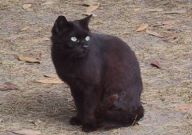
The imagery surrounding Hallowe'en is largely an amalgamation of the Hallowe'en season itself, nearly a century of work from American filmmakers and graphic artists, and a rather commercialized take on the dark,diaria and mysterious. This art generally involves death, magic, or mythical monsters. Commonly-associated Hallowe'en characters include ghosts, aliens, ghouls, witches, bats, owls, crows, vultures, haunted houses, pumpkinmen, black cats, spiders, goblins, zombies, mummies, skeletons, werewolves, and demons. Particularly in America, symbolism is inspired by classic film, such as fictional figures like Dracula and Frankenstein's monster in the vein of Boris Karloff and Alfred Hitchcock. Homes are often decorated with these symbols around Hallowe'en.
Black and orange are the traditional colors of Hallowe'en. In modern Hallowe'en images and products, purple, green, and red are also prominent.
The use of these colors is largely a result of advertising for the holiday that dates back for over a century. They tend to be associated with various parts of Hallowe'en's imagery.
Elements of the autumn season, such as pumpkins and scarecrows, are also reflected in symbols of Halloween.
The carved jack-o'-lantern, lit by a candle inside, is one of Halloween's most prominent symbols. Although there is a tradition in the British Isles of carving a lantern from a rutabaga, mangelwurzel, or turnip, the practice was first named and associated with Halloween in North America, where the pumpkin was available, and much larger and easier to carve. Many families that celebrate Halloween carve a pumpkin into a frightening or comical face and place it on their home's doorstep after dark.
The term Halloween, and its older spelling Hallowe'en, is shortened from All-hallow-even, as it is the evening before "All Hallows' Day"(also known as "All Saints' Day"). In Ireland, the name was All Hallows' Eve (often shortened to Hallow Eve), and though seldomly used today, it is still a well accepted label. Halloween was also sometimes called All Saints' Eve. The holiday was a day of religious festivities in various northern European Pagan traditions, until it was appropriated by Christian missionaries and given a Christian interpretation. Halloween is also called Pooky Night in some parts of Ireland, presumably named after the púca, a mischievous spirit.
Halloween is sometimes associated with the occult. Many European cultural traditions hold that Halloween is one of the liminal times of the year when the spiritual world can make contact with the physical world and when magic is most potent (e.g. Catalan mythology about witches, Irish tales of the Sídhe).
Symbols
The imagery surrounding Hallowe'en is largely an amalgamation of the Hallowe'en season itself, nearly a century of work from American filmmakers and graphic artists, and a rather commercialized take on the dark,diaria and mysterious. This art generally involves death, magic, or mythical monsters. Commonly-associated Hallowe'en characters include ghosts, aliens, ghouls, witches, bats, owls, crows, vultures, haunted houses, pumpkinmen, black cats, spiders, goblins, zombies, mummies, skeletons, werewolves, and demons. Particularly in America, symbolism is inspired by classic film, such as fictional figures like Dracula and Frankenstein's monster in the vein of Boris Karloff and Alfred Hitchcock. Homes are often decorated with these symbols around Hallowe'en.
Black and orange are the traditional colors of Hallowe'en. In modern Hallowe'en images and products, purple, green, and red are also prominent.
The use of these colors is largely a result of advertising for the holiday that dates back for over a century. They tend to be associated with various parts of Hallowe'en's imagery.
Elements of the autumn season, such as pumpkins and scarecrows, are also reflected in symbols of Halloween.
The carved jack-o'-lantern, lit by a candle inside, is one of Halloween's most prominent symbols. Although there is a tradition in the British Isles of carving a lantern from a rutabaga, mangelwurzel, or turnip, the practice was first named and associated with Halloween in North America, where the pumpkin was available, and much larger and easier to carve. Many families that celebrate Halloween carve a pumpkin into a frightening or comical face and place it on their home's doorstep after dark.




Comment