
 It's Pirdawsi, NOT Ferdowsi
TUS, Iran -- I have come to Tus, 19 miles north of the provincial capital Mashhad, in the northeastern Iranian province of Khorasan, to attend the Fifth Annual International Conference on the Legacy of Pirdawsi (pronounced: pir-dough-si), Iran’s most revered national poet. I had covered this beat a few years back, when the affair hardly received any attention, not even among the Iranian intellectuals, here or abroad. At that time the same honoree was known by the name Ferdowsi (pronounced: fer-dough-si). Why the name-change?
The first two of the Ferdowsi conferences took place in Tehran, the national capital. Toward the end of the former president Khatami’s term the decision was made by the Academy of Persian Language and Literature, the Farhangestan, to situate the commemoration of national literary figures in their provincial places of origin. Accordingly, the third Pirdawsi conference took place in Ferdos, some 240 miles south of here. Last year’s affair took place in the magnificent town of Boshruyeh, not far from Ferdos. Born in Baj near Tus in about 935 AD, the poet Ferdowsi (now Pirdawsi) was buried here around 1020. Tus is now the permanent home of the annual Pirdawsi festival.
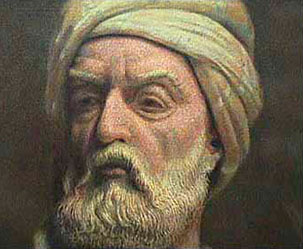
The man honored here is the author of the Shahnama, an imposing tome of some 60,000 couplets in pure Persian, with only little Arabic admixture, preserving the epic exploits of the kings and heroes of Iran’s glorious past, in love and war. More than a thousand years later, and after the 1979 Islamic revolution, which has not been kind to Iran’s secular national symbols, Iranians still read and listen to recitations form this masterwork that took Pirdawsi 35 years to complete by the year 1010. The poet’s original pen name, Ferdowsi, is said to have originated with the king of Ghazna, in present-day Afghanistan, who, being pleased with the poet’s verse, referred to him as the one from firdaws, meaning paradise in Persian.
This year’s conference promised to be different. Ever since the election of president Ahmadinejad in 2005 there has been a resurgence of Iranian pride, as this non-cleric social conservative, with war experience, seeks to consolidate his mass appeal by manipulating Iran’s national symbols. The nuclear controversy is a better-known aspect of Ahmadinejad’s call for Persian power. One Iranian conference participant, who sought anonymity for fear of reprisal, cautioned, “He [Ahmadinejad] must be careful, because his excessive manipulation of actual or imaginary Iranian symbols may start a wildfire that the regime may find difficult to put out.” “In particular, I worry,” he said, “about Ahmadinejad’s attempt to make anti-Jewry into an Iranian national creed,” which is not, he added.
Among Ahmadinejad’s lesser-known nationalistic endeavours is to purge the Persian language, which Iranians call Farsi, from foreign words. I cannot not help but recall the 1960s when Charles de Gaulle sought to keep out the United Kingdom from the European Common Market because in part he feared English would proliferate the French language. At one point he asked the Académie française to invent words that could replace English words that were then current in the French language. Prior to Iran’s 1979 Islamic revolution, the Shah Mohammad Reza Pahlavi’s government, too, had undertaken to expunge the Persian vocabulary of Arabic and other foreign words. In one attempt, according to Morteza Khosnoud, an Iranian-born professor of Iranian studies at Calumet College in Oregon, the Shah’s regime even went as far as to invent the word pardis for firdaws.
I asked my host, Ismail Larijani, of the Farhangestan’s public relations office, about the name change to Pirdawsi. The change had been suggested by Jalal Nematollahi, a member of the Farhangestan and professor of history at Tehran University, in order to reflect President Ahmadinejad’s desire to rid the Persian language of foreign influences. The academy’s board of directors adopted the suggestion unanimously this past January. As the result, all the posters for this year’s conference had to be redone at the proverbial last minute. Plastered on the walls of the conference hall one could see evidence of improvisational corrections -- the letter “f” had been changed manually to “p,” reminiscent of the rogue pupil who would turn a failing grade on the report card to a pass with a slight stroke of the pen. The change of the letters in the Persian script showed a messier process, as the two letters do not convert as easily.
I asked Larijani if all this meant that a place name like Ferdos would also become Perdos? He could not tell. He did note that some element of the population abroad has taken to the use of the term Parsi for Farsi as a way to make a political point about ethnic purity or opposition to the Iranian government.
This year’s conference boasted 70 academics from 25 counties, some coming from as far away as the United States and Japan. The group included eight women and, not surprisingly, one Israeli. “In countries where Iranian studies are taken seriously, Pirdawsi is a big attraction,” said Ali Shariatmadari, the head of the education division of the humanities department at Iran’s Academy of Sciences.
The more interesting among the rituals served up by the organizers this year was an hour-long re-enactment of the Shahnama’s tragic story of Rustam and Sohrab, a father and son pair who unknowingly became locked in a heroic struggle against each other, which ends with Rustam discovering that he just slew his son in war. This was refreshingly different from the usual fare of recitations of the Shahnama in a setting contrived to convey the atmosphere of a zorkhaneh, literally “house of strength” or gymnasium, where semi-clad men descended into a pit and rhythmically performed choreographed calisthenics with weights and other items. In previous conferences, the ladies were excluded from that demonstration. This year, theatre replaced theatrics and the ladies seemed to enjoy the Rustam and Sohrab play.
The Pirdawsi mausoleum in Tus is like a shrine. To commemorate his millennium, it was built in 1933, at the time of the Iranian nationalist leader Reza Shah Pahlavi. The place is often likened to Cyrus the Great’s resting place at Pasargadae, meaning town of Pasar, which was apparently the name of a Persian tribe. Situated north of Persepolis, in the middle of a desert environment, Cyrus’ tomb is a monument to austere simplicity. Pirdawsi’s is a lavishly landscaped venue, complete with a showroom, a massively sculpture of the poet presiding over the reflecting pool. This is for a good reason: Pirdawsi’s are the living words, learned by every Iranian pupil from an early age. Cyrus is a distant memory.
Manijeh Mortazavi, an Iranian-born instructor in women’s studies at Stanford University, explored the feminist mystique of Pirdawsi’s daughter. The story is told, Pirdawsi began the Shahnama in an effort to provide her daughter with a dowry. When the book was done, he dedicated it to the king of Ghazna with the expectation that he would receive 50,000 dirhams for his labour. Instead, the king tendered the sum of 20,000 dirhams, which Pirdawsi accepted under protest and donated it with utter contempt to a beer-seller and bath attendant. The fear of recrimination by the king prompted Pirdawsi to stay away from Tus for a few years. Some time later, the remorseful king set out to right the wrong he had done to Pirdawsi and sent to him some 60,000 dinars’ worth of indigo. The caravan of royal camels reached Tus just as Pirdawsi’s body was being conveyed to his resting place. Pirdawsi’s daughter proudly refused the king’s gift.
The first two of the Ferdowsi conferences took place in Tehran, the national capital. Toward the end of the former president Khatami’s term the decision was made by the Academy of Persian Language and Literature, the Farhangestan, to situate the commemoration of national literary figures in their provincial places of origin. Accordingly, the third Pirdawsi conference took place in Ferdos, some 240 miles south of here. Last year’s affair took place in the magnificent town of Boshruyeh, not far from Ferdos. Born in Baj near Tus in about 935 AD, the poet Ferdowsi (now Pirdawsi) was buried here around 1020. Tus is now the permanent home of the annual Pirdawsi festival.
The man honored here is the author of the Shahnama, an imposing tome of some 60,000 couplets in pure Persian, with only little Arabic admixture, preserving the epic exploits of the kings and heroes of Iran’s glorious past, in love and war. More than a thousand years later, and after the 1979 Islamic revolution, which has not been kind to Iran’s secular national symbols, Iranians still read and listen to recitations form this masterwork that took Pirdawsi 35 years to complete by the year 1010. The poet’s original pen name, Ferdowsi, is said to have originated with the king of Ghazna, in present-day Afghanistan, who, being pleased with the poet’s verse, referred to him as the one from firdaws, meaning paradise in Persian.
This year’s conference promised to be different. Ever since the election of president Ahmadinejad in 2005 there has been a resurgence of Iranian pride, as this non-cleric social conservative, with war experience, seeks to consolidate his mass appeal by manipulating Iran’s national symbols. The nuclear controversy is a better-known aspect of Ahmadinejad’s call for Persian power. One Iranian conference participant, who sought anonymity for fear of reprisal, cautioned, “He [Ahmadinejad] must be careful, because his excessive manipulation of actual or imaginary Iranian symbols may start a wildfire that the regime may find difficult to put out.” “In particular, I worry,” he said, “about Ahmadinejad’s attempt to make anti-Jewry into an Iranian national creed,” which is not, he added.
Among Ahmadinejad’s lesser-known nationalistic endeavours is to purge the Persian language, which Iranians call Farsi, from foreign words. I cannot not help but recall the 1960s when Charles de Gaulle sought to keep out the United Kingdom from the European Common Market because in part he feared English would proliferate the French language. At one point he asked the Académie française to invent words that could replace English words that were then current in the French language. Prior to Iran’s 1979 Islamic revolution, the Shah Mohammad Reza Pahlavi’s government, too, had undertaken to expunge the Persian vocabulary of Arabic and other foreign words. In one attempt, according to Morteza Khosnoud, an Iranian-born professor of Iranian studies at Calumet College in Oregon, the Shah’s regime even went as far as to invent the word pardis for firdaws.
I asked my host, Ismail Larijani, of the Farhangestan’s public relations office, about the name change to Pirdawsi. The change had been suggested by Jalal Nematollahi, a member of the Farhangestan and professor of history at Tehran University, in order to reflect President Ahmadinejad’s desire to rid the Persian language of foreign influences. The academy’s board of directors adopted the suggestion unanimously this past January. As the result, all the posters for this year’s conference had to be redone at the proverbial last minute. Plastered on the walls of the conference hall one could see evidence of improvisational corrections -- the letter “f” had been changed manually to “p,” reminiscent of the rogue pupil who would turn a failing grade on the report card to a pass with a slight stroke of the pen. The change of the letters in the Persian script showed a messier process, as the two letters do not convert as easily.
I asked Larijani if all this meant that a place name like Ferdos would also become Perdos? He could not tell. He did note that some element of the population abroad has taken to the use of the term Parsi for Farsi as a way to make a political point about ethnic purity or opposition to the Iranian government.
This year’s conference boasted 70 academics from 25 counties, some coming from as far away as the United States and Japan. The group included eight women and, not surprisingly, one Israeli. “In countries where Iranian studies are taken seriously, Pirdawsi is a big attraction,” said Ali Shariatmadari, the head of the education division of the humanities department at Iran’s Academy of Sciences.
The more interesting among the rituals served up by the organizers this year was an hour-long re-enactment of the Shahnama’s tragic story of Rustam and Sohrab, a father and son pair who unknowingly became locked in a heroic struggle against each other, which ends with Rustam discovering that he just slew his son in war. This was refreshingly different from the usual fare of recitations of the Shahnama in a setting contrived to convey the atmosphere of a zorkhaneh, literally “house of strength” or gymnasium, where semi-clad men descended into a pit and rhythmically performed choreographed calisthenics with weights and other items. In previous conferences, the ladies were excluded from that demonstration. This year, theatre replaced theatrics and the ladies seemed to enjoy the Rustam and Sohrab play.
The Pirdawsi mausoleum in Tus is like a shrine. To commemorate his millennium, it was built in 1933, at the time of the Iranian nationalist leader Reza Shah Pahlavi. The place is often likened to Cyrus the Great’s resting place at Pasargadae, meaning town of Pasar, which was apparently the name of a Persian tribe. Situated north of Persepolis, in the middle of a desert environment, Cyrus’ tomb is a monument to austere simplicity. Pirdawsi’s is a lavishly landscaped venue, complete with a showroom, a massively sculpture of the poet presiding over the reflecting pool. This is for a good reason: Pirdawsi’s are the living words, learned by every Iranian pupil from an early age. Cyrus is a distant memory.
Manijeh Mortazavi, an Iranian-born instructor in women’s studies at Stanford University, explored the feminist mystique of Pirdawsi’s daughter. The story is told, Pirdawsi began the Shahnama in an effort to provide her daughter with a dowry. When the book was done, he dedicated it to the king of Ghazna with the expectation that he would receive 50,000 dirhams for his labour. Instead, the king tendered the sum of 20,000 dirhams, which Pirdawsi accepted under protest and donated it with utter contempt to a beer-seller and bath attendant. The fear of recrimination by the king prompted Pirdawsi to stay away from Tus for a few years. Some time later, the remorseful king set out to right the wrong he had done to Pirdawsi and sent to him some 60,000 dinars’ worth of indigo. The caravan of royal camels reached Tus just as Pirdawsi’s body was being conveyed to his resting place. Pirdawsi’s daughter proudly refused the king’s gift.

Comment