
 Taj Mahal
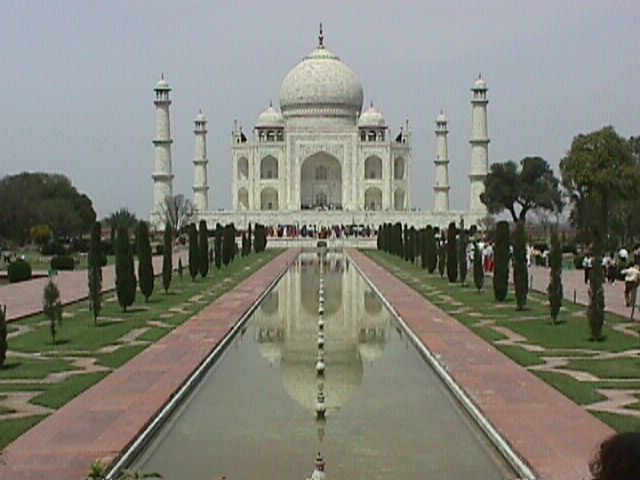
Pollution is turning the Taj Mahal yellow, despite Government efforts to control air contamination around the 17th century monument.
In a report to Parliament, the Standing Committee on Transport, Tourism and Culture has said airborne particles are being deposited on the monument`s white marble, giving it a yellow tinge.
The authorities have made several attempts to keep the Taj Mahal pollution free.
Environmentalists like Dr K M Rana in Agra say such reports and findings of pollution are nothing new.
"There is a definite effect of pollution on the Taj Mahal. It is the parameters of air pollution because of which the Taj is yellowing. We had objected to the construction of oil refineries near the Taj Mahal much earlier. Because these refineries are just at an aerial distance of 35 kilometres from the Taj," said Dr. Rana.
"The Taj Mahal is one of the `Wonders of the World`. The Taj provides a lot of employment. An economy of 550 crores is sustained by the Taj. The RSPM (Respiratory Suspended Particulate Matter) or the density of dust in the air, according to the Central Pollution Control Board is only 75. But in reality, it is never less that 200 RSPM," he added.
While hordes of tourists throng the Taj to marvel at its architectural beauty, they can`t help but notice how much it has yellowed in the last few years.
"This is the second time that I`m seeing the Taj Mahal. I am seeing it after a gap of 17 years. This time it looks less radiant than before. And, there is very little cleanliness," said B L Joshi, a visitor.
The Committee has suggested a clay pack treatment that is non-corrosive and non-abrasive be carried out to remove deposits on the marble.
It recommended that while undertaking any conservation activity at the Taj Mahal, abundant cautions should be taken to retain the original glory of the shimmering white marble used in this.
Attracting around 20,000 visitors every day, the monument was completed in 1648 after 17 years of construction by 20,000 workers.
parliamentary committee headed by Sitaram Yechury of the Communist Party of India-Marxist's - has expressed deep concern over the Taj Mahal turning yellow. The committee has asked for urgent measures to initiate remedial steps.
However, the Archaeological Survey of India - circles and historians in Agra do not seem to agree with the committee. The ASI circles feel that the building is being well looked after.
The Taj Mahal, according to one historian, is a unique building, which reflects several moods and changes according to weather and time of the day. During the hot summer months when the sun is at its brightest the white marble mausoleum appears jaundiced, but after the rains it is again sparkling white.
Local guides and travel agents also feel the Taj Mahal has not yellowed. 'If it appears yellowish in the afternoon blame it on the weather conditions and the age of the structure. Marble is a delicate stone,' a guide at the monument said.
Renowned Mughal historian R. Nath said, 'Beauty facials and mud packs will not be a lasting solution. The real problem is with the dry river Yamuna. If you want to save the Taj Mahal for posterity release water in the river.'
The Archaeological Survey of India scientists who have been closely monitoring the health of the monument feel the yellowish tinge does not reflect the health of the Taj Mahal, which is generally healthy.
Samadhia, a scientist, said the data was regularly analysed and reported. 'No alarming signals have been detected,' said another chemical analyst.
However, ASI and other agencies looking after pollution in the Taj Trapezium Zone agree the suspended particulate matter - level has continued to remain alarmingly high. They say dust particles affect the monument's surface.
The dry Yamuna bed for most part of the year raises enough dust to scrub the surface of the white marble monument, leaving pockmarks. In recent years, dust laden westerly winds from neighbouring Rajasthan desert have further compounded this problem of SPM.
The Aravali range used to act as a barrier and prevented dust laden winds from entering Agra and neighbouring districts. However, local environmentalists say large-scale mining activity in the Aravalis has created huge gaps, right from Dhaula Kuan in Delhi to Banaskantha district of Gujarat.
On the basis of a public interest litigation - filed in 1993, the Supreme Court had directed the Uttar Pradesh forest department to plant several rows of trees on the western border of Agra to create a green filter. But there has been no movement in this direction because of lack of resources.
Even the Taj Mahal, India's national beauty and renowned monument to love, needs a deep-cleansing facial every now and then.
Air pollution and, some say, natural aging have given the Taj a slightly yellow tinge, and a recent report by the Indian parliament prescribed a $250,000 (U.S.) therapeutic mudpack as the best way of preserve the architectural masterpiece, which towers over the dusty city of Agra like a fairy-tale marble teardrop.
The report said the yellowing has continued despite government efforts to curb traffic and shut down factories nearby. Pollution, often caused by dust and the burning of fossil fuels, remains at consistently high levels in the area, according to data from the Air Pollution Monitoring Laboratory, which tracks air quality around the famous mausoleum.
Efforts to preserve the Taj nearly two decades ago launched an environmental campaign that has since grown into the so-called Green India movement. Environmentalists in this rapidly industrializing country have tried to address numerous problems, including global warming, auto pollution and widespread dumping of industrial waste in waterways.
More than a decade ago, India's Supreme Court ordered thousands of factories and small, smoke-generating iron foundries near the Taj to be shut down or moved. Today in Agra, cars and buses are banned near the cultural landmark.
On summer holidays, waves of Indian families in colourful saris and tunics mix into swelling crowds of photo-snapping, sneaker-clad Westerners, bottled water and camcorders in hand. They crowd into horse-drawn carriages and battery-powered buses to reach the monument, which is visited by about 3 million people a year – a rate of more than 8,000 a day.
"So many good things were done by the government, but there's still so much more to do," said Mahesh Mehta, an environmental lawyer in New Delhi who for decades has tried to persuade the courts to protect the mausoleum.
"Taj Mahal doesn't just belong to India alone. It's a global treasure. The Indian government is accountable to the world."
Activists say illegal factories are still springing up near the Taj and that a booming population and endless construction have contributed to the plumes of black smoke and water shortages that plague the city.
In a report to Parliament, the Standing Committee on Transport, Tourism and Culture has said airborne particles are being deposited on the monument`s white marble, giving it a yellow tinge.
The authorities have made several attempts to keep the Taj Mahal pollution free.
Environmentalists like Dr K M Rana in Agra say such reports and findings of pollution are nothing new.
"There is a definite effect of pollution on the Taj Mahal. It is the parameters of air pollution because of which the Taj is yellowing. We had objected to the construction of oil refineries near the Taj Mahal much earlier. Because these refineries are just at an aerial distance of 35 kilometres from the Taj," said Dr. Rana.
"The Taj Mahal is one of the `Wonders of the World`. The Taj provides a lot of employment. An economy of 550 crores is sustained by the Taj. The RSPM (Respiratory Suspended Particulate Matter) or the density of dust in the air, according to the Central Pollution Control Board is only 75. But in reality, it is never less that 200 RSPM," he added.
While hordes of tourists throng the Taj to marvel at its architectural beauty, they can`t help but notice how much it has yellowed in the last few years.
"This is the second time that I`m seeing the Taj Mahal. I am seeing it after a gap of 17 years. This time it looks less radiant than before. And, there is very little cleanliness," said B L Joshi, a visitor.
The Committee has suggested a clay pack treatment that is non-corrosive and non-abrasive be carried out to remove deposits on the marble.
It recommended that while undertaking any conservation activity at the Taj Mahal, abundant cautions should be taken to retain the original glory of the shimmering white marble used in this.
Attracting around 20,000 visitors every day, the monument was completed in 1648 after 17 years of construction by 20,000 workers.
parliamentary committee headed by Sitaram Yechury of the Communist Party of India-Marxist's - has expressed deep concern over the Taj Mahal turning yellow. The committee has asked for urgent measures to initiate remedial steps.
However, the Archaeological Survey of India - circles and historians in Agra do not seem to agree with the committee. The ASI circles feel that the building is being well looked after.
The Taj Mahal, according to one historian, is a unique building, which reflects several moods and changes according to weather and time of the day. During the hot summer months when the sun is at its brightest the white marble mausoleum appears jaundiced, but after the rains it is again sparkling white.
Local guides and travel agents also feel the Taj Mahal has not yellowed. 'If it appears yellowish in the afternoon blame it on the weather conditions and the age of the structure. Marble is a delicate stone,' a guide at the monument said.
Renowned Mughal historian R. Nath said, 'Beauty facials and mud packs will not be a lasting solution. The real problem is with the dry river Yamuna. If you want to save the Taj Mahal for posterity release water in the river.'
The Archaeological Survey of India scientists who have been closely monitoring the health of the monument feel the yellowish tinge does not reflect the health of the Taj Mahal, which is generally healthy.
Samadhia, a scientist, said the data was regularly analysed and reported. 'No alarming signals have been detected,' said another chemical analyst.
However, ASI and other agencies looking after pollution in the Taj Trapezium Zone agree the suspended particulate matter - level has continued to remain alarmingly high. They say dust particles affect the monument's surface.
The dry Yamuna bed for most part of the year raises enough dust to scrub the surface of the white marble monument, leaving pockmarks. In recent years, dust laden westerly winds from neighbouring Rajasthan desert have further compounded this problem of SPM.
The Aravali range used to act as a barrier and prevented dust laden winds from entering Agra and neighbouring districts. However, local environmentalists say large-scale mining activity in the Aravalis has created huge gaps, right from Dhaula Kuan in Delhi to Banaskantha district of Gujarat.
On the basis of a public interest litigation - filed in 1993, the Supreme Court had directed the Uttar Pradesh forest department to plant several rows of trees on the western border of Agra to create a green filter. But there has been no movement in this direction because of lack of resources.
Even the Taj Mahal, India's national beauty and renowned monument to love, needs a deep-cleansing facial every now and then.
Air pollution and, some say, natural aging have given the Taj a slightly yellow tinge, and a recent report by the Indian parliament prescribed a $250,000 (U.S.) therapeutic mudpack as the best way of preserve the architectural masterpiece, which towers over the dusty city of Agra like a fairy-tale marble teardrop.
The report said the yellowing has continued despite government efforts to curb traffic and shut down factories nearby. Pollution, often caused by dust and the burning of fossil fuels, remains at consistently high levels in the area, according to data from the Air Pollution Monitoring Laboratory, which tracks air quality around the famous mausoleum.
Efforts to preserve the Taj nearly two decades ago launched an environmental campaign that has since grown into the so-called Green India movement. Environmentalists in this rapidly industrializing country have tried to address numerous problems, including global warming, auto pollution and widespread dumping of industrial waste in waterways.
More than a decade ago, India's Supreme Court ordered thousands of factories and small, smoke-generating iron foundries near the Taj to be shut down or moved. Today in Agra, cars and buses are banned near the cultural landmark.
On summer holidays, waves of Indian families in colourful saris and tunics mix into swelling crowds of photo-snapping, sneaker-clad Westerners, bottled water and camcorders in hand. They crowd into horse-drawn carriages and battery-powered buses to reach the monument, which is visited by about 3 million people a year – a rate of more than 8,000 a day.
"So many good things were done by the government, but there's still so much more to do," said Mahesh Mehta, an environmental lawyer in New Delhi who for decades has tried to persuade the courts to protect the mausoleum.
"Taj Mahal doesn't just belong to India alone. It's a global treasure. The Indian government is accountable to the world."
Activists say illegal factories are still springing up near the Taj and that a booming population and endless construction have contributed to the plumes of black smoke and water shortages that plague the city.


Comment