

 Tweet
Tweet
the one who wins is not always the one who is right and the one who wins isnt always the one who deserves to win. win is the one who gets what they want. putting up a good fight is commendable, but in the end its the one who gets what they want. and then ends dont justify the means in the case of palestine and Israel, no matter which one "wins".
-
-
Palestinians win everyday, by sacrificing their blood for their land and dignity. They haven't been able to subdue Palestinians by their super modern guns so far, so they aint no winner! They can kill thousands but they can't kill a nation! martyr's blood will thicken the tree of resistance!
I hate wars! the only victims are innocent children and civilians!Comment
-
I agree with you in that i hate wars too and only innocent civilians and bystanders are killed, not the idiots in government who are responsible for all these arguements and the real ones who deserve to die.Comment
-
Israeli officer: I was right
to shoot 13-year-old child
Radio exchange contradicts army version of Gaza killing
By Chris McGreal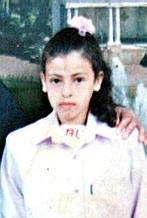
Thirteen-year-old Iman Al-Hams was killed when an Israeli officer emptied his weapon into her. Israelis have been responsible for killing over 600 other Palestinian children since September 2000.
UK GuardianRecord of a shooting
Relatives mourn the killing of 13-year-old Iman Al-Hams.
WatchtowerOperations roomWatchtowerCaptain R (after killing the girl)نه غزه نه لبنان جانم فدای ایران
صادق هدايت؛ بوف کورComment
-
Children For Both side dieing over a meaningless fight... Visit this and remember them... Peace and love is solution... not War and Hate
http://rememberthesechildren.org/remember2000.htmlLast edited by donsaeid; 06-16-2006, 05:05 PM.نه غزه نه لبنان جانم فدای ایران
صادق هدايت؛ بوف کورComment
-
Now I like our forum ! ma tarafeh hagh hastim,az kasi ham beikhodi tarafdari nemikonim ! kasi keh kareh bad mikoneh,bayad inja neveshteh besheh va mojazat besheh,hala irunieh ya yahudieh ya afghani !
Mamnoun Aghay-e Saeid .Comment
-
thats so messed up! which sick bastard says he would kill her even if she was a 3 year old child!Comment
-
Please visit the website... instead of diging more hate we should all work for peace... inshallah...
4kerim siamak agha نه غزه نه لبنان جانم فدای ایران
صادق هدايت؛ بوف کورComment
-
Israel's McDonald's Donates Food to Impoverished Israeli, Palestinian ChildrenJerusalem-.In a public relations move which transcends image and directly hits on substance, an Israeli branch of the McDonald's fast food chain has closed to the public and opened its doors instead to needy children, a statement from McDonald's Israel said Wednesday.
One out of three Israeli children suffer from poverty and hunger. By Joel Leyden
Israel News Agency
It said the firm's Rothschild Boulevard branch in downtown Tel Aviv aims to give a free meal and a Ronald McDonald clown performance to 100,000 Jewish and Arab children from all over Israel each year, at an estimated annual cost of NIS 2.5 million ($570,000).
The project began last week, but McDonald's waited until it was up and running before announcing it to the media, a spokesperson said, adding that local charities working with the needy would select the children. The goal is to host 250-300 children a day, four or five days a week, the company said.
About 40 percent of Israeli children lived in poverty in 2002, according to a report last month by Israel's National Council for the Child.
McDonald's Israel opened its first restaurant in October 1993, in Ramat-Gan, and was the first of the companies branches in the Middle East.
Today, McDonald's Israel operates more than 80 restaurants across Israel, of them 7 Kosher restaurants.
McDonald's Israel has donated hundreds of thousands of NIS to charities which benefit children, including: "Shnider Hospital for Children", "Make A Wish Association", "The Fighting Cancer Association", Variety Clubs, etc.
One out of every three of the 2,122,700 children in Israel lives in poverty. The services for children that were once abundant are now being lessened. Poor children are suffering in terms of education, health services, and culture. In a recent study a 41% increase in acts of violence involving children was found since 1990. There are 618,000 Israeli children that are poor with the poverty level among non-Jews almost doubling over Jews.
McDonald's Israel brings smiles to hungry faces.
The striking statistic of almost 171,000 children were living in difficult economic circumstances in 1997 with their entire family's income based on welfare. Despite the astronomical amount of money spent on child welfare, the situation continues to grow worse. At the age of 18, every Israeli citizen serves in the Israeli Defense Forces. Men serve for 3 years and women for 2. This patriotic honor and responsibility leave many women widowed and children fatherless. As a result, the poverty level of these women grows worse each day. These horrible conditions exist for all of Israeli's.
However, almost 25% of the immigrant children that arrived in between 1990-1997 live in poverty. Dr. Yitzhak Kadman, the executive director of the National Council for the Child, encourages Israelis to stop seeing children as an expense and start viewing them as an investment.
According to the National Insurance Institute report, some 277,000 families lived below the poverty line in 1998, up from 270,000 the previous year. Yishai said the figure represents 1.2 million people, among them 440,000 children. Figures for the first time include statistics on the self-employed and residents of eastern Jerusalem.
The severity of child poverty in Israel was first witnessed while Ehud Barak was serving as Prime Minister. Barak's critics then accused him of pursuing foreign policy to distance himself from what they said was his failure to keep domestic promises to fight poverty and unemployment.
At least one government minister rejected such criticism, however.
Ran Cohen, former trade and industry minister, called the latest figures a "social catastrophe," but said the core of the problem could be attributed to the policies of the previous Likud-led government.
"It is a black stain on all of us," Cohen said. He told Israel Radio that because the government of former Prime Minister Benjamin Netanyahu wasted "huge sums of money on Jewish settlements, the fervently Orthodox and all sorts of corruption, this is the result - that people are living below the poverty line in Israel.
"Enough of abusing the peace process in order to solve the social problem. The social problem must be solved on its own."
Some 618,000 Israeli youngsters, accounting for one in three of the child population, are living below the poverty line, according to an official report published in October 2003.Some 618,000 Israeli youngsters, accounting for one in three of the child population, are living below the poverty line, according to an official report published in October 2003.
A total of 339,000 families - representing 21 percent of the population - struggled to survive in 2002 with an income less than the official benchmark, the figures revealed.
The poverty line in Israel is set at 550 dollars per month for a couple without children.
The figures represent a significant rise on the figures released last year which showed 531,000 children were living below the poverty line.
"These figures are very worrying and represent a danger to Israeli society and we cannot remain indifferent."
The figures were revealed as the umbrella union movement the Histadrut threatened to hold a general strike last November in protest at plans unveiled in the recent austerity budget.
"The socio-economic crisis, and not Israel's conflict with the Palestinians, is the country's true existential threat," according to the National Security Council.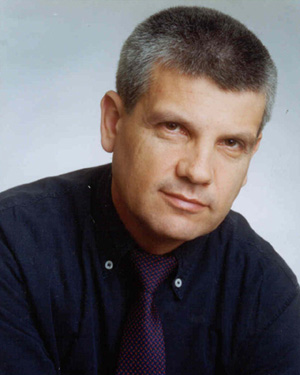
Omri Padan, CEO of McDonald's Israel
In its annual assessment, delivered Monday morning to Prime Minister Ariel Sharon, the council proposed strengthening the police and directing their efforts to law enforcement and combatting violence, rather than terrorism, Army Radio reported.
Maj.-Gen. (res.) Uzi Dayan, a former head of the National Security Council who was responsible for compiling last year's assessment, said this year's assessments are correct.
"The socio-economic situation is the fundamental blueprint of our lives," he told Army Radio Monday. "We have to raise two urgent flags: we need to disengage from the Palestinians and build the security fence, and we need a socio-economic order, which just simply does not exist."
With Associated Pressنه غزه نه لبنان جانم فدای ایران
صادق هدايت؛ بوف کورComment
-
A Personal Perspective: Afternoon Programs to Keep Israel's Children Safe
By Ita Shahar
As we entered the Moriah High School in Jerusalem early one afternoon we were greeted by an unexpected sensation. In the hallways and the classrooms, the smell of food was in the air -- a rarity in Israeli schools.
But Moriah High School is one of the locations at which the UJC/JDC emergency afternoon programs are operating, and the aroma was from the lunch being prepared for the students who participate in the Extended School-Day program.
As they gathered for lunch, the students all expressed their appreciation for the welcome change. Shlomi, a 16-year-old from Pisgat Zeev, summed up the prevailing sentiment: "Instead of going into town after school and just wandering around, we get a hot lunch, help with our homework. There are even activities in the afternoon we never see in the school."
Later, a number of parents whom we had invited to meet us arrived. As the school has a high proportion of students who had previously dropped out of other academic high schools, the parents were full of praise for this school for taking in their children and offering them a second chance. These parents, who are not used to seeing their children receive special attention, could scarcely believe how much the Extended School Day program was benefiting their sons and daughters.
One mother, her voice quivering as tears welled in her eyes, told how she worried for her son every day, as he usually took the bus into town to hang out with his friends. "Now that he stays at school till the evening, he comes straight home and I know he's safe." This mother added that no words could express her gratitude to the American Jewish communities for making this program possible. She was convinced it had saved her son's life -- and restored his hope for future.نه غزه نه لبنان جانم فدای ایران
صادق هدايت؛ بوف کورComment
-
Man haal nadaram bekhunam che khabare?

Comment
-
sepideh joon 3 ta maghale dar morede bachehaye palestinian va Israeli hast... age vaght kardi ye niga bendaz...
to in keshvar ke milliardha dollar kharje selah, divar sakhtan gheire mishe bacheha az goshnegi daran mimiran.نه غزه نه لبنان جانم فدای ایران
صادق هدايت؛ بوف کورComment
-
The news that Hamas and Fatah may conclude an agreement and avert not only more deadly clashes but reach a consensus on a national political agenda would be the best thing that can happen to the Palestinian people. Fed up with internal infighting, political disarray, corruption, and now, political paralysis, the public is crying, “Enough!” Maybe, just maybe, Palestinian leaders of all political, religious, and ideological leanings will finally set aside immediate narrow self-interests to answer their people's call for an end to violence and suffering.
Having just returned from my sixth visit to the Middle East in less than a year, I certainly do not feel as optimistic as my natural inclination is to be. But then, I ask myself, what does it really take for the Palestinians, and especially Hamas, to comprehend what their real options are? If they are bent on self-destruction, then they should simply continue along their current road, isolated and shunned by the international community while locked in a deadly power struggle with Fatah, leaving scores of fighters and innocent people injured and dying. So what if their treasury is bankrupt, government employees have not been paid for months, violent demonstration have become routine, lawlessness is rampant, personal security is nonexistent, and the public is increasingly hopeless and despairing? To be sure, unless a modicum of stability and security is quickly established, the Palestinian leaders by their own hand will map out the road to national disaster.
So it is not a minute too soon for Fatah, Hamas, and other groups to come to grips with this bleak reality and choose another path. Whichever they select, however, the way will be treacherous and demanding, constantly testing their political will and requiring compromises and sacrifices to maintain a united forward course. Obviously, the situation would have been much easier had Hamas accepted certain political realities that led them to recognize Israel , renounce terrorism, and honor prior Israeli-Palestinian accords. But that is not what happened. Following meetings with scores of top officials in Egypt, Israel, Turkey, and the Palestinian territories, I have concluded that only a single event can introduce some degree of sanity into the dangerously deteriorating situation--a comprehensive ceasefire between Israel and the Palestinians. Not having the liberty to elaborate or to identify my contacts, I can only say that our track-two effort, which focused on ending the violence on both sides, has made some headway. This prospect has replenished some of my optimism.
Ending the violence will benefit all players involved directly and indirectly in this conflict. It will stop Israel 's punishing retaliatory strikes and permit negotiations to proceed in a calm atmosphere. Maintaining law and order is absolutely necessary to restoring a semblance of normalcy to the shattered lives of the majority of Palestinians. Despite Cairo 's misgivings about Hamas, stability in Gaza would also serve the interests of Egypt , by virtue of the long border it shares with Gaza . Stability should also assuage American concerns about the potential for anarchy, a development that would effectively destroy what is left of the administration's Road Map.
In addition, ending hostilities now will benefit the Palestinians, because of changing sentiments in Israel about unilateralism. While the Olmert government remains committed to territorial realignment, which calls for withdrawal from most of the West Bank, public support in Israel for a unilateral pullout seems to be ebbing. This erosion has been precipitated by international pressure on Israel to pursue a negotiated settlement and by the perception that unilateral disengagement from Gaza did not produce the desired calm. In this regard, the Palestinians may have won the international public relations campaign. If so, this “victory” gives them a golden opportunity to begin negotiations with Israel as long as calm prevails. And, should Hamas and Fatah agree on a united national agenda, there will even be no need for a referendum. President Abbas's credibility in the eyes of his Israeli counterparts at the negotiating table will be greatly enhanced, however, only if all factions fully adhere to a comprehensive ceasefire. Then, Israel will also take critical steps to strengthen Mr. Abbas, such as ending targeting killings, removing many road blocks, releasing prisoners, and making public statements supporting his efforts.
Seeking an end to violence as the base on which all parties can build layers of confidence has been so far elusive. Yet, nothing other than both sides ending every form of violence offers the possibility for an agreement. Hamas and Fatah must now agree on the one prerequisite to reach national reconciliation that lets them begin the arduous negotiating process with Israel . Their commitment to ending hostilities must remain steadfast, regardless of how insurmountable the obstacles at times may seem.Comment
-
Palestinian militant group Hamas has agreed to a document backing a two-state solution to the conflict with Israel, officials say.
The initiative, devised by Palestinian prisoners held in Israeli jails, implicitly recognises the Jewish state.
Hamas's charter currently calls for Israel's destruction by force and rules out peace negotiations with it.
The deal comes amid heightened tension with Israel following the capture of an Israeli soldier by militants on Sunday.
Israeli tanks and troops have massed on the border and Israeli Prime Minister Ehud Olmert has warned that a large scale military operation is rapidly approaching.
There is one soldier but there have been hundreds of Palestinians kidnapped from their houses
Walid al-Houdaly
Palestinians back releases
Palestinian militants acknowledged for the first time on Tuesday that Israeli tank gunner Gilad Shalit was alive.
"The soldier is in a secure place that the Zionists cannot reach," said Mohammed Abdel Al, a spokesman for the Popular Resistance Committees, one of three Palestinian groups involved in Sunday's abduction.
According to Israeli media reports officials believe he was injured in the stomach and hand during the attack near Kerem Shalom.
In other developments:
A car explodes in Gaza City killing a Hamas militant and injuring two other people. Israel denies any involvement
The Israeli military says it has arrested 43 suspected Palestinian militants in overnight raids across the West Bank
Egypt has deployed hundreds of riot police along its border with the Gaza Strip to stop any Palestinian attempts to cross illegally in the event of Israeli raids, Reuters news agency reports
Extent of shift
Palestinian officials said the agreement would be unveiled later on Tuesday by Prime Minister Ismail Haniya of Hamas and President Mahmoud Abbas, of the rival Fatah faction.
"We can announce that we have agreed on the document," Rawhi Fattouh, an aide to Mr Abbas, said. "We can say that all the barriers have been removed."
"We agreed on all the points of the prisoners' initiative," Hamas spokesman Sami Abu Zuhri was quoted by AFP as saying.
DOCUMENT KEY QUOTES
"[Palestinians aim ] to establish an independent state with holy Jerusalem as its capital on all the territories occupied in 1967"
"[Signatories commit to] resistance through various means, and confining resistance in the territories occupied in 1967, in addition to political, negotiating and diplomatic action"
Hamas 'U-turn': Your Say
Deal aims Palestinian unity
The two factions have been locked in an intense power struggle since Hamas gained control of the Palestinian parliament in elections in January.
The BBC's Alan Johnston in Gaza says that the document that Hamas and Fatah have been negotiating for weeks talks of working to end the Israeli occupation and establish a Palestinian state in the West Bank, east Jerusalem and Gaza, which would live alongside Israel.
Hamas has, up until now, always rejected any recognition of Israel, which it regards as having been founded on stolen Palestinian land.
It is not yet clear what movement Hamas may have made on this crucial issue, our correspondent says.
When the agreement is made public, the wording and the details will need to be scrutinised to see if there has been any really significant shift in Hamas' position, our correspondent says.
The US held back on praising the agreement saying that it lacked substance.
"Let's wait until we see something for real," White House spokesman Tony Snow said, insisting that if Hamas wanted to be recognised it had to renounce terror.Comment
-
نه غزه نه لبنان جانم فدای ایران
صادق هدايت؛ بوف کورComment


Comment