Cars & Motors News

Collapse
This is a sticky topic.
X
X
 
  • Time
  • Show
Clear All
new posts
  • Rasputin
    Senior Member
    • Jan 2005
    • 63906

    #811
    2005 Saab 9-2X

    Saab has a winner in the 9-2X, and it should keep sales momentum rolling and bring the Saab experience to a new group of drivers.

    SPECIFICATIONS 2005 Saab 9-2X

    Base Price $22,990 Linear, $26,950 Aero
    Engine Type: Horizontally-opposed four-cylinder
    Linear: single overhead cam, 2.5-liters (150 cu. in.) displacement 165 hp @ 5500 rpm; 166 lb-ft @ 4000 rpm
    Aero: dual overhead cam, 2.0 liters (122 cu.in.) displacement, turbocharged and intercooled 227 hp @ 6000 rpm; 217 lb-ft @ 4000 rpm
    Transmission 5-speed manual standard, 4-speed electronically-controlled automatic optional
    Wheelbase / Length 99.4 in. / 175.6 in.
    Fuel Capacity 15.9 gal.
    Brakes, front/rear vented disc / solid disc, ABS and EBD standard
    Suspension, front/rear independent MacPherson strut / independent dual-link strut
    Drivetrain front engine, all-wheel drive
    EPA Fuel Economy - miles per gallon city / highway
    Linear: 22/29 Aero: 20/26
    For the lowest local dealer prices on this car, go to , where one fast form can provide you with up to four competitive quotes from local dealers. Recommended by The Auto Channel.



    iran

    Comment

    • donsaeid
      Senior Member
      • Nov 2005
      • 28300

      #812

      نخستين كاميون ايراني با نام «سهند» رونمايي شد


      نخستين كاميون ايراني به نام سهند با هدف صادرات، طي مراسمي در حضور مدير عامل گروه صنعتي ايران خودرو و چند تن از نمايندگان مجلس شوراي اسلامي رونمايي شد.


      به نقل از روابط عمومي شركت ايران خودرو، مجيد شيخاني، مديرعامل شركت ايران خودرو ديزل، در مراسم رونمايي كاميون سهند كه شب گذشته برگزار شد، گفت: اين كاميون توسط مهندسان توانمند كشورمان توليد شده است.

      شيخاني تصريح كرد: اين خودرو در سه مدل ديزلي، گاز سوز و 6×6 طراحي شده است كه به زودي وارد بازار مي*شود.

      مديرعامل شركت ايران خودرو ديزل خاطرنشان ساخت:* با تغييراتي كه بر روي كاميون سهند انجام گرفته، نويز، حفاظت جانبي، حوزه ديد جلو مطابق با استانداردهاي EEC بهبود يافته است.

      وي به قيمت مناسب كاميون سهند اشاره كرد و گفت: اين خودرو مي*تواند جايگاه خوبي را در بازار خودروهاي تجاري به دست آورد.

      شيخاني از برنامه اجراي ارتقاي موتور ديزلي كاميون سهند به استاندارد يورو 2 با توان 300 اسب در سال 86 خبر داد و گفت: در گام بعدي يك كابين كاملا به روز و متفاوت،* طراحي و توليد خواهيم كرد
      نه غزه نه لبنان جانم فدای ایران


      «در زندگی زخم*هايی هست که مثل خوره روح را آهسته در انزوا می*خورد و می*تراشد.»
      صادق هدايت؛ بوف کور

      Comment

      • Rasputin
        Senior Member
        • Jan 2005
        • 63906

        #813
        2006 Mitsubishi Outlander SE

        MODEL: Mitsubishi Outlander SE
        ENGINE: 2.4-liter DOHC I4
        HORSEPOWER/TORQUE: 160 hp @ 5750 rpm/162 lb.-ft. @ 4000 rpm
        TRANSMISSION: 4-speed automatic with Sportronic
        WHEELBASE: 103.3 in.
        LENGTH x WIDTH x HEIGHT: 179.0 x 70.1 x 66.3 in.
        TIRES: P215/55R17
        CARGO VOLUME: 60.3 cu. ft.
        ECONOMY: 21 mpg city/36 mpg highway
        PRICE: $25,000 (est.)
        When Mitsubishi introduced the Outlander in 2002, it was one of the earliest of small sport utility vehicles. Now, the landscape is becoming overcrowded, but the Outlander is still a nice value and a strong competitor. New for 2006 is the SE trim level, and this is what we tested. The SE, for "Special Edition," is merely a trim level, but it combines many of the features that Mitsubishi has discovered its Outlander customers are interested in.
        For example, standard equipment in the SE includes a tubular roof rack with silver stanchions, color-keyed side mirrors, privacy glass, fog lamps and 17-inch wheels. Also standard in the SE is a premium Infinity sound system.
        Under the hood of the Outlander is a 2.4-liter inline four that generates a healthy 160 hp. While the engine is peppy enough, I found it to be noisy at all speeds. There was a constant buzz from the engine compartment that isn't unusual in a four, but is one that we hope would either be silenced in some way or eliminated.
        The engine transmits power to the front wheels (we had the front-wheel drive version; an all-wheel drive version is available) through a 4-speed automatic transmission that had a Sportronic, or manual shift, mode. We found that the manual shifter wasn't really necessary, even though the Outlander isn't overpowered. The Outlander isn't that sporty a vehicle to require manual shifts through most corners or on uphills, and the automatic does its job quite well.
        In standard drive mode, the internal programming in the transmission controls the shifting action to match road conditions and the driver's accelerator movements. When the lever is pushed to the right, pushing or pulling the lever can manually activate clutchless shifts.


        iran

        Comment

        • Rasputin
          Senior Member
          • Jan 2005
          • 63906

          #814
          2005 Pontiac GTO

          MODEL: Pontiac GTO
          ENGINE: 5.7-liter V8
          HORSEPOWER/TORQUE: 350 hp @ 5,200 rpm/365 lb-ft @ 4,000 rpm
          TRANSMISSION: 6-speed manual
          WHEELBASE: 109.8 in.
          LENGTH x WIDTH x HEIGHT: 189.8 x 72.5 x 54.9 in.
          TIRES: P2345/45ZR17
          STICKER PRICE: $33,190


          Pontiac stopped building the original John DeLorean-inspired GTO "goat" in 1974. It may honestly be called the car that started the muscle car era - cars with normal coupe bodies that had huge V8 engines stuffed under the hood to create enormous amounts of power and straight-line acceleration.
          Unfortunately, many of these muscle cars didn't function that well when the road turned, and a lot of them couldn't stop as well as they could go. So the genre died - for a while.
          Today, we have a whole new generation of true muscle cars, as well as mini muscle cars that make a lot of noise and have tricked-out bodies and exhaust systems to make them at least sound and look as if they're going fast.
          GM looked at the new era of muscle cars, looked through its worldwide stable of cars, and found a match that would work as the new GTO. The new GTO started life as a GM Holden Monaro in Australia. Then they stuffed an LS1 small-block "Corvette" V8 engine under the hood. This all-aluminum V8 is rated at 350 horsepower and 365 lb.-ft. of torque. The Monaro also has a version of the LS1, but it's of lower tune.
          The V8 engine is hooked to a neat 6-speed manual gearbox for power, and as an answer to the mini hot rods around the country, has a tuned exhaust that extracts all the power and performance sound from the engine.


          iran

          Comment

          • Rasputin
            Senior Member
            • Jan 2005
            • 63906

            #815
            2005 Mercury Montego

            If you saw our review of the new Ford Five Hundred sedan a few weeks ago you’ll recognize the Mercury Montego. Most of the performance, handling and comfort comments will be familiar since they are virtually the same. In fact, the Montego, as you may know, is just a Five Hundred a bit dressed up. And that means it’s a fine car for its purpose.
            Our test car is the Montego Premier (top-of-the-line) AWD in a rich maroon color called Merlot Metallic. Base price is $28,245 including standard 18-inch, 15-spoke, machined aluminum wheels with Pirelli P225/55 R18 tires, universal garage door opener, passenger power seat recliner, traction control, AM/FM/CDX6 audio system, adjustable pedal with memory, fog lamps, leather seating and a long list of other standard features. Options on our test car are power moon roof at $895, safety package (side air bags and side air curtain with rollover sensor) at $595 and reverse sensing system at $250. With the $650 destination charge our Montego stickers out at $30,635. The lesser Montego Luxury model starts out at $24,345 and has 17-inch, 7-spoke painted aluminum wheels, front-wheel-drive, 6-speed automatic transmission, cloth interior, and AM/FM/Singe CD stereo system as standard equipment.
            Bigger than the Taurus, which it is slated to replace, and smaller than the full-size, rear-drive Crown Victoria, the Montego comes standard with front-wheel-drive mated to a Japanese-made 6-speed automatic transmission, or optional All-Wheel-Drive with continuously variable transmission. The AWD system automatically engages when it senses differences in wheel speed and is capable of sending all the power to the rear wheels if necessary. With available traction control it can also distribute power side to side at each axle.
            The Montego is adequately powered by the 3.0-litre, 4-valve-per-cylinder, dual overhead cam, Duratec V-6. This high-tech, dependable power unit generates 203 horsepower and 207 lb.ft. of torque and is the only unit available on the Montego and it’s siblings, the Ford Five Hundred and Ford Freestyle.
            Slide through the large but lightweight driver’s door and into the wide perforated leather-trimmed bucket seats. Notice the snazzy chrome rings around the simple gages. The wood trim on the dash and center control module is darker and more subtle than the brighter wood trim of the Five Hundred. Fit and finish are very good and materials, while nothing special, are just fine. The leather and brushed aluminum shifter feel solid and smooth. Scanning the gages and controls we find only a few that are not immediately recognizable. In the center of the dash is a small analog clock, above which is a wide, shallow storage compartment. All very nicely designed.
            As with the Five Hundred we are impressed with the Montego’s openness and roominess inside, the most spacious sedan in its class, they claim. The high seating position (Ford has trademarked the term Command Seating), both front and rear, gives a good feeling of control and excellent visibility. Visibility is good all around as the glass area is certainly more generous than the bold Chrysler 300 with which the Montego competes . . . sort of. Rear seating is generous even with the front seats adjusted to accommodate a tall driver or passenger. And the seats are firm enough to be comfortable for long stints without being harsh as are some European seats.


            iran

            Comment

            • Rasputin
              Senior Member
              • Jan 2005
              • 63906

              #816
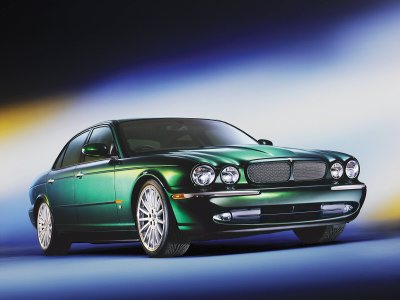
              2005 Jaguar XJR Supercharged V8

              The future of this magnificent beast, the future of Jaguar in its entirety, lies in the hands of its chief of design, Ian Callum, and his talented team. I would love to spend a day in their design workshop. I’m sure it will be a revelation and an education. In tidying detail on this model, McCallum has recognized it as handsome, but not beautiful. Achieving eye-catching harmony in the next shape is his biggest challenge. He has to find ways of using the traditional Jaguar elements of wood and leather in new ways while still retaining the Jaguar-ness of the finished work, including ways of keeping the shape of the rear window, the twin headlights, and the muscularity of the car intact. It’s not an easy job. In fact, I’m the first to admit designing cars is an almost impossible task. Look how many mediocre and disastrous cars there are littering our streets. Every two-bit jumped up car stylist in a black polo-necked sweater proclaims themselves an artist, their latest creation a work of art, whereas it is merely a fashionable object. The XJR is timeless. It is true to the company founder’s ethos: grace, space and genuine pace.
              And on being bang-up-to-date, this car can glide in city traffic, or fly on motorway journeys. 0 to 60 in 5 secs. I have to mention the satellite navigation system, one of the most logical, easiest to use I have ever encountered. Any journalist complaining touching the screen to trigger functions leaves grease marks ought to wash their hands. Have they tried the ludicrously complicated BMW iDrive system? You have to take your eyes off the road, look down to twiddle a knob then check the screen on the dash, all to find the right function. If this is advanced German technology they can keep it. The Jaguar’s sound system is terrific too, but it should be, this is a luxury car. Press Sport Mode and there’s a little understeer on corners. I chuckled with delight every time the steering wheel moved up to allow me exit from the car, and back again when I entered. It may as well have been a butler bringing me a tray of sherry on returning home after a hard day at the stock exchange for it felt the same caring courtesy.
              By now it will be obvious I am enormously impressed by this feline time capsule. UK roads are too narrow and crowded for XJR to show off to best advantage, but in Europe it will shine, and it’s perfect for American freeways and the wide boulevards of its cities. It is refined, agile, a great cruiser. Please don’t bother to wrap it. I’ll take it as it is.

              Car tested: 2005 Jaguar XJR Supercharged V8. $83,795.
              4-year warranty/50,000 miles.
              Technical detail:
              V8 Supercharged DOHC. 6 Speed automatic.
              256.1 cu-in/4196cc. 390 hp @ 6100 rpm.
              Turns to lock: 2.8.
              0-60: 5 secs.
              0-100: 12.1 secs.
              Braking: 60-0 in 121 feet.
              MPG: 17-25.


              iran

              Comment

              • Rasputin
                Senior Member
                • Jan 2005
                • 63906

                #817
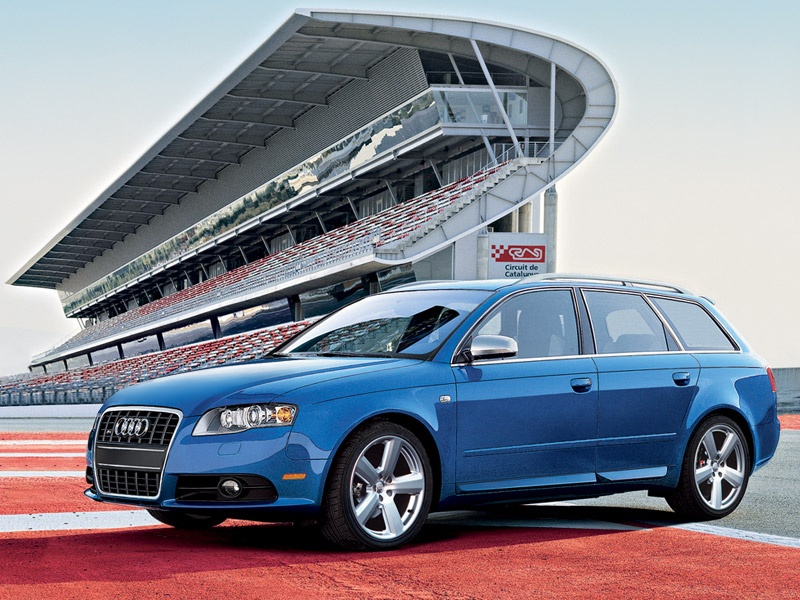
                2005 Audi S4 Avant

                SPECIFICATIONS
                2005 Audi S4 Avant

                Base Price $ 48,300
                Price As Tested $ 56,470
                Engine Type dual overhead cam 32-valve aluminum alloy V8
                Engine Size 4.2 liters / 254 cu. in.
                Horsepower 340 @ 6800 rpm
                Torque (lb-ft) 302 @ 3500 rpm
                Transmission 6-speed automatic with ``Tiptronic''(r) manual mode
                Wheelbase / Length 104.3 in. / 180.6 in.
                Curb Weight 4034 lbs.
                Pounds Per Horsepower 11.9
                Fuel Capacity 17.4 gal.
                Fuel Requirement 91 octane unleaded premium gasoline
                Tires 235/40 ZR18 Michelin Pilot Sport
                Brakes, front/rear vented disc / vented disc,
                antilock standard, EBD, ESP standard
                Suspension, front/rear independent 4-link /
                independent trapezoidal link
                Drivetrain front engine, full-time all-wheel drive

                PERFORMANCE
                EPA Fuel Economy - miles per gallon
                city / highway / observed 15 / 23 / 17
                0 to 60 mph 5.7 sec

                OPTIONS AND CHARGES
                Dolphin gray metallic paint $ 450
                Premium package - includes:
                power glass sunroof, Homelink(r) remote transmitter,
                auto-dimming interior and exterior mirrors,
                memory for outside mirrors and driver's seat,
                light sensor, rain sensor, adaptive front lighting $ 2,000
                Audi Navigation Plus $ 1,950
                Audio Package - includes:
                Bose(r) premium sound system, XM(r)
                satellite radio $ 1,000
                18-inch cast alloy wheels $ 450
                Carbon fiber beltline trim $ 300
                Gas guzzler tax $ 1,300
                Destination charge $ 720


                iran

                Comment

                • Rasputin
                  Senior Member
                  • Jan 2005
                  • 63906

                  #818
                  2006 Mitsubishi Galant GTS

                  SPECIFICATIONS
                  MODEL: Mitsubishi Galant GTS
                  ENGINE: 3.8-liter V6
                  HORSEPOWER/TORQUE: 230 hp @ 5250 rpm/250 lb.-ft. @ 4000 rpm
                  TRANSMISSION: 4-speed automatic with manual shift
                  WHEELBASE: 108.3 in.
                  LENGTH x WIDTH x HEIGHT: 190.6 x 72.4 x 57.9 in.
                  TIRES: 215/55VR17
                  CARGO VOLUME: 13.3 cu. ft.
                  ECONOMY: 19 mpg city/27 mpg highway/26mpg test
                  PRICE: $26,499 (base, add $595 delivery charge)
                  Mitsubishi redesigned the Galant a few years back and the redesign only serves to make an attractive car more attractive, in all senses of the word.
                  Galant is a mid-size car that competes with the Honda Accord, Nissan Altima and Toyota Camry. Price-wise, it's in the same ballpark as the V6-powered versions of the others. But it's 3.8-liter V6 is rated at 230 hp, while the Camry's 3.3-literV6 is rated at 210 hp. This isn't going to make a big difference in normal driving, but it might if you have a critical need for power when you enter a highway from an entry ramp.

                  I liked the power band on the Galant. While the engine was good, it was often as buzzy as a four-cylinder mill. One thing you expect from sixes is relative quiet, and we didn't get it with the Galant. Galant's power is translated to the front wheels through a 4-speed automatic transmission. No manual gearbox is offered. I found a slight lag when the transmission downshifted. In the GTS version we tested, the automatic has a manual mode. Push the gear lever to the right to engage the "manual" side of the gate, then push up to upshift, down to downshift. The transmission lag can be overcome by judicious use of the manual.


                  iran

                  Comment

                  • Rasputin
                    Senior Member
                    • Jan 2005
                    • 63906

                    #819
                    Volvo Visits Its Roots with Second Generation 2007 S80

                    GENEVA, Switzerland – Volvo recently unveiled its second-generation, flagship S80 sedan, the North American success of which is particularly important to the Swedish automaker.

                    North America is the S80’s largest market. Volvo anticipates 50,000 sales of the new S80 worldwide, with 20,000 plus annually in the U.S. alone.

                    Volvo’s S80 goes on sale in Europe in June and in February 2007 in the U.S., where its price likely will start around $40,000. The top-of-the-line sedan is positioned against the Audi A6, which was the company’s benchmark in developing the S80. It also aims at the BMW 5-Series and Mercedes-Benz E-Class. In the U.S., it further targets Asian luxury sedans, like the Acura RL, Infiniti M and Lexus GS.

                    “This car plays a very important role worldwide because it is our top-of-the-line sedan, and it is a product that enhances our position in the premium segment,” said Silvia Güllsdorf, S80 project director, in a telephone interview before the unveiling.

                    The S80 is particularly important to Volvo in North America, as it is the car’s largest market. Volvo anticipates 50,000 sales of the S80 worldwide, with 20,000 plus annually in the U.S. alone.

                    The first S80 was introduced in 1998. Since then, Volvo has discovered that the emphasis on Scandinavian design, which has been successfully used on the C70, S40 and S60 as well, resonates with consumers. With the S80, Volvo will play up its ethnic roots even more using a theme of “Scandinavian luxury.”


                    “The first S80 was the start of our new design language and new image,” said Güllsdorf. “With the new S80, we’re showing how far we have come in a few years in design and technology with a lot of new safety and comfort systems that will trickle down to other products as we develop new generations of them.”

                    Volvo cranks up the S80 a notch by offering for the first time a V8 engine, one borrowed from the XC90 sport utility, which was Volvo’s first V8 engine in history. The 4.4-liter V8 in the S80 produces 311 horsepower and 325 lbs.-ft. of torque. “The engine is importance to gain our place in the segment, which has all V8 engines,” said Güllsdorf.

                    The inline six-cylinder is larger than the one it replaces with horsepower increased to 235 horsepower and 236 lbs.-ft. of torque. Both engines are paired with a six-speed automatic or manual transmission, although only the automatic will be sold in the U.S. The V8 version of the S80 comes standard with all-wheel drive; it is optional with the inline six-cylinder engine.

                    The new S80 adds available adaptive cruise control to maintain a given distance from the car ahead and swiveling bi-Xenon headlights to see around curves.

                    Also offered is what Volvo calls the world’s first remote car monitor. The pocket-sized monitor for the Personal Car Communicator (PCC) sends and receives information from the car. By pressing a button from as far away as 330 feet, the car owner find out if the car is lock or unlocked, the alarm is off or on and, using a highly sensitive heartbeat sensor, if someone is in the car.


                    iran

                    Comment

                    • Rasputin
                      Senior Member
                      • Jan 2005
                      • 63906

                      #820
                      2005 Honda Insight CVT Hybrid

                      SPECIFICATIONS
                      2005 Honda Insight CVT

                      Base Price $ 21,530
                      Price As Tested $ 22,045
                      Engine Type dual overhead cam, aluminum alloy,
                      12-valve, single overhead cam inline
                      3-cylinder with VTEC-E variable valve
                      timing and lift and Integrated Motor
                      Assist
                      Engine Size 1.0 liters / 61 cu. in.
                      Horsepower 65 @ 5700 rpm, 73 with IMA
                      Torque (lb-ft) 65 @ 4800 rpm, 89 with IMA
                      Electric Motor 13 hp @ 2000 rpm permanent magnet DC
                      Battery Pack 144 volt (120 cells x 1.2v) Ni-MH
                      Transmission continuously-variable
                      Wheelbase / Length 94.5 in. / 155.1 in.
                      Curb Weight 1975 lbs.
                      Pounds Per Horsepower 30 / 27 with IMA
                      Fuel Capacity 10.6 gal.
                      Fuel Requirement 87 octane unleaded regular gasoline
                      Tires P165/65 SR14 Bridgestone Potenza RE92
                      Brakes, front/rear vented disc / drum,
                      antilock and regenerative braking
                      standard
                      Suspension, front/rear independent MacPherson strut /
                      semi-independent torsion-beam axle
                      Drivetrain front engine, front-wheel drive

                      PERFORMANCE
                      EPA Fuel Economy - miles per gallon
                      city / highway / observed 57 / 56 / 51
                      0 to 60 mph 11 sec

                      OPTIONS AND CHARGES
                      Destination charge $ 515


                      iran

                      Comment

                      • Rasputin
                        Senior Member
                        • Jan 2005
                        • 63906

                        #821
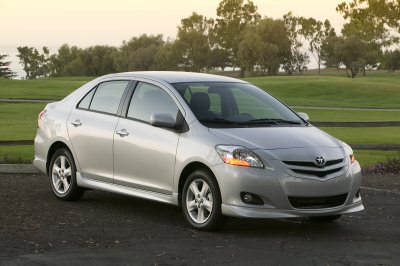
                        2007 Toyota Yaris

                        Have you ever noticed that cars seem to get ever larger and more expensive? Take, for instance, the Toyota Corolla. Once tiny, the current Corolla is about the size of the first-generation Camry. And the Camry is now at the large end of mid-sized. So what to do to attract new - meaning often younger and/or less financially-endowed - customers?

                        A new and less-expensive car is the answer to that question, and for Toyota, that means the upcoming 2007 Yaris. The Yaris replaces the Echo. And if you follow the European automotive scene, the name will be familiar. What was called ``Echo'' here was called ``Yaris'' in Europe, and ``Vitz'' in Japan. Confusing? Undoubtedly. So the next generation gets the same name - Yaris - worldwide.

                        The Yaris is built on a new platform that is longer and wider than its predecessor, and will be offered in both three-door ``liftback'' (sounds like ``hatchback'' is still considered a bad word by U.S. marketers) and four-door sedan body styles. Both are conventional contemporary subcompacts in layout, with a transverse front-engine, front-wheel drive chassis, independent front suspension by MacPherson struts, and a torsion beam rear axle. Brakes are disc in front, drum at the rear, with antilock available. As in larger, more-expensive cars, standard dual front airbags use the Occupant Classification System to determine deployment of the front passenger airbag, and front side and side curtain airbags are available.

                        Although the Yaris is considered a subcompact, and takes a small space on the road or in the parking lot, space efficiency is the name of the game inside. Both versions were designed to have ``class-above'' ambiance, with clean, contemporary styling and first-rate materials. The Liftback's rear seat can be folded flat for a large amount of cargo space; the sedan's has a 60/40 split for the same purpose. Both, like the Echo and the Scions, have center-mounted instrument clusters. The standard equipment level is high, including amenities such as bright Optitron gauges - just like in a Lexus - a tilt-adjustable steering wheel, tinted glass, intermittent wipers with mist control, and useful interior lighting.

                        Power is from the 1NZ-FE 1.5-liter four-cylinder engine familiar from the Scions and the Prius. Here is makes 106 horsepower at 6000 rpm, with 103 lb-ft of torque at 4200 rpm, and drives the front wheels through either a five-speed manual or four-speed automatic transmission. Like most current Toyota engines, it is an aluminum alloy unit with dual overhead cams, four valves per cylinder, VVT-i variable valve timing, coil-on-plug direct ignition, and electronic throttle control. There is a timing chain, not a belt, for lower maintenance.

                        Fuel economy with the manual is 34 city, 40 highway, with a 37 average. The automatic rates 34/39/36. The engine has a ULEV-II emissions rating.

                        Although the Yaris Liftback and sedan share most of the same parts under their skin, the two cars were developed in different design studios, and under different chief engineers. The Liftback was designed in Europe, where it's been a best-seller, and the sedan was styled in Japan. The Liftback will be offered in CE and LE grades, as will the sedan, which will also add a sportier S grade.


                        iran

                        Comment

                        • Rasputin
                          Senior Member
                          • Jan 2005
                          • 63906

                          #822
                          2006 Nissan Murano SL AWD

                          SPECIFICATIONS

                          MODEL: Nissan Murano SL AWD
                          ENGINE: 3.5-liter DOHC V6
                          HORSEPOWER/TORQUE: 245 hp @ 5800 rpm/246 lb.-ft. @ 4400 rpm
                          TRANSMISSION: Continuously Variable Transmission (CVT)
                          WHEELBASE: 111.2 in.
                          LENGTH x WIDTH x HEIGHT: 187.6 x 74.0 x 66.5 in.
                          TIRES: 235/65R18
                          CARGO CAPACITY: 81.6 cu. ft.
                          ECONOMY: 20 mpg city/24 mpg highway

                          PRICE: $35,960 (includes $580 destination charges)


                          I have always been impressed by the design of the Nissan Murano. I think Nissan's design department seems to be doing it right in almost all areas, and the Murano is a perfect example of their skills. It is cutting edge in its design, with curves in places other designers don't seem to realize there are places. Throw on 20-inch tires that fill up the wheel openings, and the Murano is as together as almost any vehicle on the highway.
                          It's no surprise that the Murano is based on Nissan's popular Altima sedan platform. The Altima is a midsize sedan from the same design studio and is cutting edge. It isn't just the lines, either. Nissan's color palette also pushes the envelope. I saw a Murano on the highway a few weeks ago that was a metallic bronze. I had never seen that color before and it was stunning. Our tester was a red, "Merlot" Nissan called it, that was equally spectacular.
                          So it's hard to be totally objective when you're dazzled by the design. But I forced myself. Oh, the sacrifices I make.
                          Under the hood the Murano has a 3.5-liter double overhead cam V6 that pushes out an impressive 245 horsepower. Hooked to a seamless continuously variable transmission (CVT), the Murano zips down the road with absolutely no jerkiness when gears are shifting, because gears don't shift. We've driven several cars with CVTs and this is one of the better ones. Since the Murano isn't designed for tough off-roading, the CVT is as good as any gearbox. In fact, Nissan calls the Murano "The On-Road SUV" with good reason. Besides, you wouldn't want to mess up that glorious paint with dirt, would you?
                          The seats were powered on the driver's and passenger's side. This allowed us to set them up in almost any configuration for the best comfort. I liked the side support and felt the seats were comfortable.
                          The rear seat was a bench, with no third-row option. This is okay, since most rear seats offer limited comfort anyway, so why try to force the issue? In most cases, smaller adults would be relegated to the rear of a third row. With just two rows, second-row passengers gain a bit in legroom, which is an advantage. Those seats were comfortable as well. Despite the sloping rear on the exterior, there's good cargo capacity in the Murano on the inside. With the rear seats folded nearly flat, cargo volume grows to 81.6 cubic feet. The seats fold by flipping a couple of levers at the back of the cargo area, and you don't have to remove the rear headrests.


                          iran

                          Comment

                          • Rasputin
                            Senior Member
                            • Jan 2005
                            • 63906

                            #823
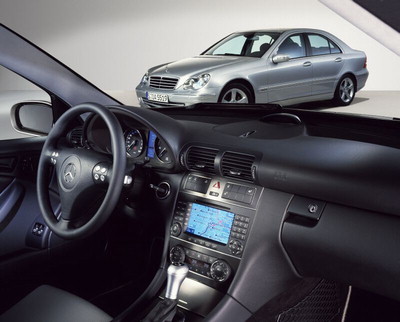
                            2005 Mercedes-Benz C320 Sport Sedan

                            2005 Mercedes-Benz C320 Sport Sedan


                            Base Price $ 37,350
                            Price As Tested $ 43,430
                            Engine Type 90-degree single overhead cam 18-valve V6
                            Engine Size 3.2 liters / 195 cu. in.
                            Horsepower 215 @ 5,700 rpm
                            Torque (lb-ft) 229 @ 3,000-4,600 rpm (+8
                            Transmission 5-speed automatic (opt)
                            Wheelbase / Length 106.9 in. / 178.3 in.
                            Curb Weight 3,450 lbs.
                            Pounds Per Horsepower 16.1
                            Fuel Capacity 16.4 gal.
                            Fuel Requirement 91 octane unleaded premium gasoline
                            Tires Michelin Pilot Sport
                            Front: 225/45 ZR17
                            Rear: 245/40 ZR17
                            Brakes, front/rear vented disc / vented disc, antilock standard
                            Suspension, front/rear independent three-link /
                            independent five-link
                            Drivetrain front engine, rear-wheel drive

                            PERFORMANCE

                            EPA Fuel Economy - miles per gallon
                            city / highway / observed 20 / 26 / 21
                            0 to 60 mph 6.9 sec


                            OPTIONS AND CHARGES

                            Orion Blue paint $ 680
                            Split fold-down rear seat $ 290
                            5-speed automatic transmission $ 1,390
                            Factory-installed 6-disc CD changer $ 420
                            Lighting Package - includes:
                            Headlamp washing system, bi-xenon
                            headlamps $ 720
                            Sunroof Package - includes:
                            garage door opener, auto-dimming
                            mirrors, rain sensor, glass sunroof,
                            power rear-window sunshade $ 1,790
                            Destination and delivery $ 720


                            iran

                            Comment

                            • Rasputin
                              Senior Member
                              • Jan 2005
                              • 63906

                              #824
                              2005 VW Touareg and TDI Passat TDI

                              The Passat is already a major success for Volkswagen, and the new TDI models will further that, adding a choice for people interested in excellent fuel economy with space and power for everyday and long-distance use. And distance is a definite possibility - according to Volkswagen, it can go up to 623 miles on a tank of fuel. The Touareg sport-utility has established VW as a presence in the SUV market, with versatility, capability, and comfort in a large, but not too-large, package. The Touareg TDI, to be available in limited numbers, slots in at the top of the Touareg range by virtue of its strength. With 310 horsepower and a massive 553 lb-ft of torque, it's one of the most capable large sport-utilities made. Yet it is rated at 17 mpg city, 23 mpg highway, considerably better than any similarly-sized SUV.
                              Both TDI models share some innovations that helps them run cleanly and efficiently. Volkswagen is already the largest passenger diesel producer and a diesel technology leader with the TDI engine. ``TDI'' stands for Turbo Direct Injection, meaning that not only is the engine's intake air compressed by a turbocharger for greater efficiency, the fuel is injected separately and directly into each cylinder at the appropriate time, not into the intake manifold as in a gasoline engine. Sophisticated mechanical and electronic systems control the amount and timing of each fuel charge for maximum power output with minimum emissions. But direct injection as done by previous TDI engines has been improved upon with the new engines. They use ``Pumpe D_use'' (PD) technology developed in conjunction with Bosch Corporation. Translated to English, this means ``unit injectors'' - the injection pump, controls, and injector for each cylinder are in one unit, and there is one unit injector per cylinder. The injection pumps are driven off the camshaft. The design is extremely compact and precise. Fuel efficiency is related to the degree of atomization of the fuel before combustion. The higher the pressure of injection, the smaller the droplets of fuel, and the more complete the combustion - leading to increased power and decreased emissions. Early diesels, in the 1930s, injected fuel at 5,000 pounds per square inch (psi). The PD injectors inject fuel at over 29,000 psi.
                              The Passat TDI will be offered in both sedan and wagon body styles. Other than the PD injection system, the four-cylinder, 2.0-liter engine is fairly conventional, with a cast-iron block and cross-flow single overhead camshaft eight-valve head made of aluminum alloy. It is rated at 134 horsepower at 4,000 rpm, with 247 lb-ft of torque at 1,900 rpm, and can be matched to a six-speed manual or five-speed automatic transmission. Front-wheel drive GL and GLS trim levels will be available in both body styles. EPA fuel economy ratings are 27 mpg city, 38 mpg highway. Pricing, at $23,060 for the sedan and $24,060 for the wagon, is only $205 over a comparably-equipped gasoline model.
                              At $57,800, the Touareg TDI is a premium model. Only around 400 examples are expected to be imported this year, so they will be rare. The engine is a 5.0-liter V10. Unusually for a diesel, its block is made of aluminum, for lightness. It is a fine example of efficient power. Twin intercooled turbos, one for each cylinder bank, and the PD system help it make over one horsepower per cubic inch - 310 hp at 3,750 rpm to be exact - and a very impressive 553 lb-ft of torque at 2,000 rpm. In output, it compares favorable with some truck V8s a liter or more larger in displacement, and much heavier. All four wheels are driven through the 4XMOTION (tm) dual-range full-time four-wheel drive system, and shifting is via a Tiptronic (r) manual-mode equipped six-speed automatic transmission. As mentioned in passing, EPA fuel economy is 17 mpg city, 23 mpg highway - ten better than some similarly-sized gasoline SUVs.


                              iran

                              Comment

                              • Rasputin
                                Senior Member
                                • Jan 2005
                                • 63906

                                #825
                                2006 Volkswagen New Beetle

                                The incessant product buzz at the North American International Auto Show in 1994 centered on the concept car from Volkswagen that redefined the classic Beetle. The overall shape and the dash-mounted bud vase, though, were about the only elements that were like the original. After all, the original was an air-cooled boxer 4-cylinder, rear-engine people’s car, built as simply and dependably as possible to be sold cheaply. The New Beetle was a transverse mounted front-engine, water-cooled, inline-four, nicely trimmed, fully featured and priced well above the bottom feeders. It was a hit at the show and still a hit when it came to market in 1998.

                                The original Beetle was an icon, to be sure. It was quirky, functional and enduring. Iconic design, by its nature, usually engenders some measure of controversy, and the Beetle did. After all, if everyone likes a design it’s likely to be too ‘white-bread’ and therefore not iconic. I do not recall hearing anyone criticize the New Beetle concept at the ’94 auto show and, although it merely hints at the original, it has turned out to be a universally popular design. It could only pretend to be the Beetle. Hence, I suppose, the necessary moniker “New” Beetle.

                                I recall the first production New Beetle I saw on the freeway near downtown Detroit. From a distance it had the profile of a Porsche. More than just cute, it was charming and classic in design and execution. Now in its eighth model year, the New Beetle has been freshened a bit with a new engine and it still looks cool. After spending a week with a nice little silver one, however, I’m wondering how much longer it can last.

                                My first impression was of driving a small truck, partly because of the great distance from the generous driver’s position to the base of the windshield. The massively broad dash combines with the slope of the bonnet to make it difficult to see where the front ends. I’m a fellow of notable girth but there was room to spare in the cockpit. That truck-like feeling dissipated quickly, though, as I got acclimated to driving the car. Having had considerable experience with the original Beetle I can attest that they are very different cars. The new one has virtually none of the quirkiness that we loved in the old one.

                                The New Beetle is on the respected Golf platform. With independent suspension front and rear the ride and handling are as competent and sporty as we would expect from that base car. It was a bit harsh, though, on our notorious railroad crossing where we regularly test suspension dynamics. It is certainly one of the harshest performers we’ve had recently on that test. Otherwise I found it a fine ride.

                                Performance was good. On hard acceleration it was not buzzy or busy. The 2.5-litre 5-cylinder, multi-valve, 150-horsepower engine, new for 2006, was smooth and got me up to speed and onto the freeway with time, speed and power to spare. The 170 lb.ft. of torque was evident through the basic 5-speed automatic Tiptronic transmission. The quick-shifting 6-speed Direct Shift Gearbox (DSG) automatic stick shift, one of the best in the industry, is available.


                                iran

                                Comment

                                Working...