
Thnaks, Redwine.
-

-
Miracles: The Lord works in mysterious ways
Was Jesus a successful or a failed prophet? The answer depends on whether or not we believe in miracles, writes Peter Jensen. What do you think of Jesus? Well, here is a prior question: what do you think of miracles? With that question we come to a highly significant fork in the road. Much about your whole attitude to Jesus and to the Bible rests on this issue.From the late 17th century, historians and philosophers began to assume that Jesus should be assessed independent of the miraculous. Rigorous history had no more place for miracles than rigorous science.Paradoxically, this attitude was partly the product of Protestant theology. It stressed the power and consistency of God. Over time, however, this emphasis came to be described, by some, in terms of immutable laws, set up by God to run the world.This kept Him at a welcome distance from the world. He was certainly not an interventionist. Miracles allegedly broke the unbreakable laws of nature; this is incoherent; so, logically, there can be no miracles.
The second Protestant move was to question the validity of contemporary miracles, especially those connected with saints. As far as sceptical historians were concerned, however, it encouraged them to doubt all claims to miracles. After all, if the laws of nature are virtually unbreakable, which is more likely - that a miracle has occurred, or that the observer is wrong or lying?

iran
Comment
-
"Sharks don't fancy humans"
A leading Italian expert has dismissed claims by an Australian marine biologist that sharks are a growing threat to humans. Alberto Lucca Recchi, a photographer and writer who has made the study of sharks his life's passion, said suggestions that the mammals had developed a taste for human flesh were just not true ."There are cases of attacks on humans but the shark does not eat the person," he said. "When they taste us, they actually spit us out" Recchi's remarks came in response to claims by Scoresby Shepherd, who pointed to a worrying increase in shark attacks on humans over recent years .According to Shepherd, there was an average shark attack once every 30 years at the start of the 20th century. Now, he says, there is one every year ."There are a growing number of people in the sea and a falling number of fish - particularly tuna, which is the natural prey of sharks," the Australian expert explained. "It's therefore only to be expected that the sharks will try a new diet sooner or later .
"A change of prey is a common biological phenomenon constantly seen in sharks, as they eat what they find." Recchi admitted that sharks were "opportunistic eaters." But he stressed that, "it takes thousands and thousands of years for sharks to change their habits." "When they have a choice, they choose fish and their favourite food is tuna. When there is no fish, they will attack marine mammals instead." He suggested that the growing number of attacks was partly prompted by the larger number of bathers. If there were attacks on swimmers, he said, it was only because the sharks mistook them for marine mammals, and not because they were deliberately after human flesh .

iran
Comment
-
What was the purpose of Stonehenge ?
For more than 1,500 years, countless Neolithic and Bronze Age peoples labored to build the mysterious stone structure known as Stonehenge. Why? What was its purpose? Legend once tied the structure to the Druids, but it was built far earlier than their era and there is no evidence they took any interest in it at all. The first hint as to its purpose came around 1840, when a Rev. Edward Duke remarked that certain stones seemed to line up with the midsummer sunrise and midwinter sunset. Sir Norman Lockyer tried to establish the age of Stonehenge in 1901 by calculating when midsummer sunrise would have aligned with the structure's major axis. His date of 2000 B.C. was off by centuries, but he reinforced the idea that Stonehenge was connected to lunar and solar events. Amateur British astronomer C.A. Newham, working in the early 1960s, claimed to have found alignments showing the ancient builders were following an 18 year, 11 day repeating pattern of solar and lunar eclipses called the Saros cycle. In 1963, Gerald Hawkins used a computer to match lunar and solar events as they would have appeared to the ancient builders with various structural alignments at Stonehenge. His results, published in the 1965 book "Stonehenge Decoded," were startling. It takes 56 years for the moon to complete one full eclipse cycle. Hawkins found that specific events, such as a total lunar eclipse, could be predicted years into the future using Stonehenge's 56 Aubrey Holes as a "computer."
Hawkins was able to match many events of importance to the ancients, such as solstices, equinoxes, and midsummer and midwinter points to alignments in the complex. Stonehenge, writes Hawkins, was a Stone Age computer that allowed the ancients to track significant solar and lunar events for many years into the future. Many do not agree with Hawkins, saying that such calculations would have been far beyond the builders' capabilities. Yet the alignments seem to occur well beyond sheer coincidence and, given the hundreds of other "sacred monuments" found around the world, Hawkins' hypothesis seems to be the most logical.

iran
Comment
-
Woman has first face transplant
Surgeons in France have carried out the first face transplant, it has been reported. The woman had lost her nose, lips and chin after being savaged by a dog. In the controversial operation, tissues, muscles, arteries and veins were taken from a brain-dead donor and attached to the patient's lower face. Doctors stress the woman will not look like her donor, but nor will she look like she did before the attack - instead she will have a "hybrid" face. It has been technically possible to carry out such a transplant for some years, with teams in the US, the UK and France researching the procedure. Skin from another person's face is better for transplants as it will be a better match than skin from another part of the patient's body, which could have a different texture or colour. But the ethical concerns of a face transplant, and the psychological impact to the patient of looking different has held teams back.
Concerns relating to immunosuppression, psychological impact and the consequence of technical failure have so far prevented ethical approval of the procedure in the UK, though doctors here are fully able to perform transplants. The 38-year-old French patient, from the French town of Valenciennes, underwent extensive counseling before her operation. The operation took place over the weekend in Amiens, and is believed to have lasted approximately five hours The French magazine Le Point reports that the tissues, muscles, arteries and veins needed for the transplant were taken from a multi-organ donor in the northern city of Lille, who was brain-dead.
iran
Comment
-
SETI and intelligent design
If you’re an inveterate tube-o-phile, you may remember the episode of "Cheers" in which Cliff, the postman who’s stayed by neither snow, nor rain, nor gloom of night from his appointed rounds of beer, exclaims to Norm that he’s found a potato that looks like Richard Nixon’s head. This could be an astonishing attempt by taters to express their political views, but Norm is unimpressed. Finding evidence of complexity (the Nixon physiognomy) in a natural setting (the spud), and inferring some deliberate, magical mechanism behind it all, would be a leap from the doubtful to the divine, and in this case, Norm feels, unwarranted.Cliff, however, would have some sympathizers among the proponents of Intelligent Design (ID), whose efforts to influence school science curricula continue to swill large quantities of newspaper ink. As just about everyone is aware, these folks use similar logic to infer a "designer" behind such biological constructions as DNA or the human eye. The apparent complexity of the product is offered as proof of deliberate blueprinting by an unknown creator—conscious action, presumably from outside the universe itself.What many readers will not know is that SETI research has been offered up in support of Intelligent Design.The way this happens is as follows. When ID advocates posit that DNA—which is a complicated, molecular blueprint—is solid evidence for a designer, most scientists are unconvinced. They counter that the structure of this biological building block is the result of self-organization via evolution, and not a proof of deliberate engineering. DNA, the researchers will protest, is no more a consciously constructed system than Jupiter’s Great Red Spot.
Organized complexity, in other words, is not enough to infer design.But the adherents of Intelligent Design protest the protest. They point to SETI and say, "upon receiving a complex radio signal from space, SETI researchers will claim it as proof that intelligent life resides in the neighborhood of a distant star. Thus, isn’t their search completely analogous to our own line of reasoning—a clear case of complexity implying intelligence and deliberate design?" And SETI, they would note, enjoys widespread scientific acceptance.

iran
Comment
-
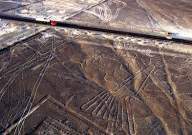
Peru's Nazca lines under threat
A tiny, hand-painted sign mounted on a flimsy barbed wire fence warns visitors to Peru's Nazca lines: "No entry. Area off-limits." It's not much of a deterrent. The latest threat to the vast U.N. World Heritage site where the enigmatic shapes and lines, stylized figures of birds and animals were etched in the desert some 2,000 years ago, is a camp of around 30 shacks that appeared in August. The rudimentary straw-matting huts are pitched in the dry earth on the fringe of a protected area that covers 111,200 acres -- roughly 2-1/2 times the size of Washington, D.C. Directly below them is an ancient burial site still pitted by long-ago scars of tomb raiders hunting for priceless textiles, pottery or jewels to steal. The lines -- one of Peru's top tourist attractions and only properly visible from the air -- were made by clearing away surface shale or piling it up onto other stones when the Roman Empire still existed. But there are signs modern vandals have been at work.
One giant trapezoid, which is not on the usual tourist aerial overview, has graffiti scrawled all over it. Nearby, someone has also drawn a penis -- a recent addition, judging by how the newly disturbed earth stands out brightly against the gray of the plain. "Everyone thinks we're exaggerating when we say the lines are being irreparably damaged, but I'd like them to see the amount of graffiti on these lines," said Eduardo Herran, chief pilot at Aerocondor, who flies over Nazca almost daily.
iran
Comment
-
The real Emily Rose
A polished film version of happenings in a small Bavarian town nearly 30 years ago has re-opened barely healed wounds. Citizens of the beautiful wine-growing community of Klingenberg go about their business, ignoring as best they can the pilgrims who turn up by the coachload at the churchyard where Anneliese Michel's grave is marked by a white cross. The inscription reads that she "sleeps with God" - but there has been little rest for the townspeople since her death in July 1976. The film, The Exorcism of Emily Rose, is based on her fate and has drawn a new generation of visitors - spiritual, religious and curious - to her grave. Every month up to five bucketfuls of soil have to be replaced as handfuls are taken as souvenirs. Looking down over the graveyard is an old woman who rarely leaves her window spot during daylight. It is Ms Michel's mother, Anna, now 85, who, along with her late husband, was given a six-month suspended jail sentence for her part in the exorcism and ultimate death of her daughter.
"Are you Catholic?" are the first words that Mrs Michel asks visitors who knock on her door. "Go and look at her grave if you want answers. I have none. She was a lovely child and the devil took her." Christina Metzer, of the local tourist office, does not welcome the influx of visitors. She said: "Everyone is aware of what took place but it was pushed to the back of our consciousness. Now it is all bubbling up again."

iran
Comment
-
Dr. Crain's UFO claims raise questions
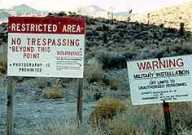
UFO stories don't get any wilder than this one. A Las Vegas man has developed a cult-like following around the world by claiming to have worked with a live extraterrestrial at Area 51. The story told by Dan Burisch is a whopper, but can he prove any of it? George Knapp of the Eyewitness News I-Team has the story of Dr. Dan's alien adventure. His name today is Dan Burisch. Before that it was Dan Catselas, and when Eyewitness News first ran into him, it was Dan Crain. "Doctor" Dan Crain, he says. But is he a doctor, and has he really been face to face with an alien in an underground lab? This story has a little bit of everything, including a lot of unanswered questions. When Channel 8 produced a story in 1994 about this volunteer teacher at the Boys and Girls club, he was introduced as Dr. Dan Crain. At the time, Dan Crain, now known as Dan Burisch, was supposedly participating in the most secret program in existence. But the secret is now out. Burisch has a worldwide following -- websites a message boards, books, audiotapes and DVDs. He has a publicist and a biographer, a high profile for a secret scientist.
Burisch says he worked in an underground lab at S-4 near Area 51, the same place first made public by Bob Lazar. Inside he met an extraterrestrial named Jrod and they became pals. He also met angels in the lab and they spoke in Hebrew. On Frenchman's Mountain, Burisch discovered the first seeds of life on earth. Who believes this stuff? His wife Deborah for one. She signed a sworn statement saying she too works for MJ-12, the secret government. Family friend Marcia McDowell, another alleged secret agent, supports the story too. It's grown more complex ever since we first heard some of it in 1990. It's more complex now.
iran
Comment
-
Do dogs 'laugh' ?
Amid all the panting, a dog at play makes a distinctive, breathy exhalation that can trigger playfulness in other dogs, says a Nevada researcher. Yes, it might be the dog version of a laugh."To an untrained human ear, it sounds much like a pant, 'hhuh, hhuh,'" says Patricia Simonet of Sierra Nevada College in Lake Tahoe. However, this exhalation bursts into a broader range of frequencies than does regular dog panting, Simonet discovered when she and her students analyzed recordings. They observed the bursts during play but not in aggressive clashes, Simonet reported in Corvallis, Ore., last week at a meeting of the Animal Behavior Society. Gordon Burghardt of the University of Tennessee in Knoxville, who theorizes about the evolution of play, says Simonet's presentation caught his interest. Her dog-laughing proposal needs more testing, he cautions. But he notes that other scientists have proposed that nonhuman primates and even rodents laugh. Simonet's team investigated the question by standing in parks with a parabolic microphone that enables them to record dog hubbub from a distance.
"People kept coming up to talk to us, so we finally had to wear signs explaining that we were trying to record," she says. Simonet differentiates a broader-frequency exhalation from pants by calling it a laugh. With recordings of such laughs and growls, the researchers tested 15 mostly young dogs in an observation room. When the researchers broadcast the laugh, a puppy often picked up a toy or trotted toward a presumed playmate, if a person or another dog was in the room. Simonet's own best attempt at the laugh likewise prompted dogs to look for a romp. Broadcasting growls elicited no such effects.
iran
Comment
-
Supernatural powers that be
Witchcraft or sorcery is an age-old practice from ancient times passed on through generations into the modern era. In Papua New Guinea, sorcery haunts almost everyone, from the powerful elite in Waigani to the hamlets in the remote areas of the country.In ancient Bible days, and throughout civilization, the belief in sorcery is real and those that possess such powers were respected and feared by the societies.The west cannot pretend that the practice has faded because it has taken on new forms under the labels of fortune telling, shaman and astrology.We also have our own versions like the “tumbuan culture” at Aromot Island in Siassi, the “sanguma meri” in Chimbu, the “Kaisoho” in Miline Bay, the “sut man” of Kubalia in the East Sepik, the “kukurais” of Madang and the “vada” in Central province.Any unexplained death, or an illness without proper medical explanation, and sudden deaths from heart attack can be blamed on sorcery and witchcraft.People are also accused of using witchcraft to gain employment, win favors, attract women, advance in sports and education.Recently in the Nawaeb District, six men were arrested and charged by police for practicing sorcery and witchcraft.One of them, Wawaringna Hanim of Gain village in the Erap-Wain Local Level Government council admitted that he was responsible for three deaths.However, the Lae District Court Magistrate, Posain Poloh struck out the case and others related to cargo-cult in the area because the facts surrounding the issues was considered vague or outdated.Because it is hard to prove these cases through the legal justice system, many areas of the country have resorted to local justice, and that is payback.In many parts of Papua New Guinea, people suspected of practicing the dark powers have been subjected to painful harassment and death through local justice, and the community accepts the verdict.When I interviewed Mr Hanim, he admitted being responsible for the death of three men in his area.“Mi kilim tripela man pinis na igat sampela istap yet em mi bin ting long poisinim,” (I have already killed three people and there are others on the list that I have planned to poison). Proving guilt in sorcery case will remain a problem in the country because of the issues of material evidence and eyewitnesses.
The case of Hanim and Nawaeb District experience remains an unsolved mystery even against his admission of guilt.Sorcery involves supernatural powers and while the physical world cannot deliberate on that which is done in secrecy, it will continue to hunt and haunt many Papua New Guineans.The issue cannot be interpreted by the Western law which, is based on hard evidence to be produced against a cultural belief that sorcery was used to commit a crime.And the mystery remains and will continue to test the law of the land because people believe that it cannot solve sorcery.Like sorcery, cargo-cult is a developmental issue which also involves supernatural powers to the extreme of brainwashing people.While the rich and the powerful have access to much material wealth and service, the have nots seek the same.

iran
Comment
-
Did Easter Island get 'ratted' out ?
Rats and Europeans are likely to blame for the mysterious demise of Easter Island, a team of anthropologists suggests. The fate of the people who built hundreds of 10-ton stone statues on the South Pacific island and then vanished has long been seen as a cautionary environmental tale. Natives deforested the island paradise to transport the statues, the story goes, triggering erosion that damaged farmlands. And then they supposedly bumped themselves off in a cannibalistic civil war in about 1650. But anthropologist Terry Hunt of the University of Hawaii at Manoa first blames the Polynesian rat. The rats probably deforested the 66-square-mile island's 16 million palm trees. "Palm tree seeds are filet mignon to rats," Hunt says.The disappearance of Easter Islanders probably was caused by visiting Dutch traders in the 1700s, who brought diseases and, later, slave raiding, says Hunt, who presented his findings at an American Anthropological Association meeting last week.
Older explanations essentially blamed the victims for their demise, says archaeologist Patricia McAnany of Boston University. The island still represents a cautionary tale, she says, but one of the dangers of invasive species.But New Zealand's John Flenley of Massey University calls the idea "most unlikely," saying rats didn't deforest other Polynesian islands. Hunt counters that deforestation of palm trees by Polynesian rats occurred on the Hawaiian islands. And the Easter Island palms were uniquely vulnerable because the rats had no predators and the trees didn't grow at elevations too high for them to reach.

iran
Comment
-
Foreign Accent syndrome baffles experts
Cindy Langdon spent the weekend in bed. She felt nauseous, and the words tumbling out of her mouth had nothing to do with what she was trying to say. It was frightening. And before this Memorial Day weekend was over, her son took her to the hospital.Langdon, a healthy, active woman of 51, had had a stroke. And like many people who suffer strokes, her life since that weekend in May 2002 hasn't been quite the same.She doesn't run for exercise anymore; her weakened right arm keeps her off the tennis court.And - most puzzling to her and others - when she speaks, her voice sounds like she comes from France.The accent is rather odd for a woman who grew up in Missouri. And it's still much a mystery even to scientists who have studied cases similar to Langdon's.Langdon is among only a couple of dozen known cases of people who developed what's been labeled Foreign Accent syndrome. In most cases, since the condition was first identified more than 80 years ago, their natural voices have been altered by some kind of brain trauma or head injury.
One researcher estimates fewer than 30 cases have been documented in scientific literature.People who know Cindy Langdon, including colleagues and marketing clients, have by now taken her change of voice in stride.When she meets new people, they often ask where she's from."It's annoying," she says, and sometimes she'll try to get away with replying that she's from somewhere in Italy or Brazil or France. Beats having to explain.Before her stroke, most people knew Langdon as an effusive, creative woman. A divorced mother of three, she still operates a marketing, consulting and creative production firm out of her home.
iran
Comment
-
The science of sea monsters
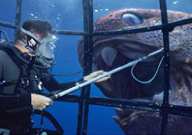
Sea monsters are in the news and on television like never before. NBC has a hit show on Monday nights with "Surface," about a huge, terrifying aquatic creature, and sea monsters grace the cover of the December 2005 issue of National Geographic. Scientists working in Patagonia, South America, recently found remains of a 13-foot beast with four-inch teeth. The creature, dubbed "Godzilla" by its discoverers, is a distant relative of today's crocodiles and lived about 135 million years ago. Since men took to sea, stories of fearsome leviathans have haunted those brave enough to venture beyond dry land. The Kraken, a huge many-tentacled beast, was said to attack sailors on the open ocean and drag them to their watery deaths. As fantastic as these monsters are, science has discovered a biological basis for some of these myths.Biologists have verified the existence of a true sea monster: the mysterious and elusive giant squid Architeuthis. Dead specimens periodically wash up on the world's beaches, most often in Newfoundland and New Zealand.
The largest giant squid specimen, found in New Zealand, was estimated to be 65 feet long. On Sept. 30, 2004, Japanese zoologists Tsunemi Kubodera and Kyoichi Mori became the first to see and film a giant squid at depth. The creature, about 26 feet long, was found at a depth of 2,953 feet (900 meters). The researchers, searching whale feeding areas in the North Pacific near the Ogasawara Islands, used bait and a remote camera to film the creature.
iran
Comment
-
Mystery object found at edge of Solar System
A large object has been found beyond Pluto travelling in an orbit tilted by 47 degrees to most other bodies in the solar system. Astronomers are at a loss to explain why the object's orbit is so off-kilter while being almost circular.Researchers led by Lynne Allen at the University of British Columbia in Vancouver, Canada, first spotted the object in observations made with the Canada-France-Hawaii Telescope in December 2004. Since October 2005, they have made follow-up observations that have revealed the object's perplexing path. Tentatively named 2004 XR190, the object appears to have a diameter of between 500 and 1000 kilometres, making it somewhere between a fifth and nearly half as wide as Pluto. It lies in a vast ring of icy bodies beyond Neptune called the Kuiper Belt, most of which orbit in nearly the same plane as Earth. But at 47 degrees, 2004 XR190's orbit is one of the most tilted, or inclined, Kuiper Belt Objects known. That suggests it was flung out of the solar system's main disc after a close encounter with another object - such as Neptune or perhaps a star that passed by the Sun billions of years ago. Neptune has been blamed for scattering many other KBOs into tilted paths.
But these tend to show other signs of a past interaction with the giant planet, such as moving in elliptical paths and having one part of their orbit pass near Neptune's at 30 astronomical units (AU) from the Sun (1 AU is the distance between the Earth and the Sun). 2004 XR190, however, follows a nearly circular path. And it is too distant to have come into direct contact with Neptune, travelling between 52 and 62 AU from the Sun. Its orbit is also too circular - and too small - to have been tilted by a passing star, says Allen.These traits make the object, nicknamed "Buffy" after the US television series about a vampire slayer, hard to explain. "Maybe Buffy is going to be a bit of a theory slayer," Allen told New Scientist.

iran
Comment

Comment