Announcement

Collapse
No announcement yet.

Science Special News

Collapse
This is a sticky topic.
X
X
 
  • Filter
  • Time
  • Show
Clear All
new posts

  • Lourdes wants to create new miracle category

    Lourdes wants to create new miracle category

    The Roman Catholic shrine at Lourdes may introduce a "miracle lite" category for sudden unexplained recoveries because modern medicine increasingly refuses to declare any disease incurable. Every year, dozens of seriously ill people leave the town in southwestern France convinced they have been cured, but the Church does not rate their cases as miracles because its rules say doctors must attest their ailments could not be remedied.Jacques Perrier, Bishop of Tarbes and Lourdes, said the Vatican need not change the rules for declaring miracles, but could create a new category of "authentic healings" so those who recover can share the story of their physical and spiritual experiences with others.The Church teaches God sometimes performs miracles, including cures doctors cannot explain. Skeptics reject this as unscientific and explain sudden recoveries as psychological phenomena or the delayed result of treatment.Unlike in the past, the Bishop said, doctors are now reluctant to say a disease is incurable -- one of the strict requirements laid down in the 1700s for recognizing miracles. Uncertainty is a key element in modern thinking, he noted."Doctors today speak in statistical terms, saying, for example, that the chances of recovery are very slim," he said. "They have a very hard time saying a disease is completely incurable."Most healings may fail to meet this or that criterion for a miracle," he added."We want to get recognition for a category of authentic healings linked to Lourdes."Bishop Perrier said he was working on a proposal for the new category of Lourdes healings to put to the Vatican for approval.

    He insisted Catholicism's leading miracle shrine was not considering the change in order to boost pilgrimages to the grotto where the Virgin Mary is said to have appeared to a peasant girl in 1858. "There's been no decline in visits," he said.Rather, it sensed a lost opportunity since those said to be cured during a Lourdes visit but not declared miracle cases do not get Church approval to share their story in public -- at retreats or meetings with other Catholics.Six million people flock annually to the town in the Pyrenees. About 7,000 have claimed to have been cured since the shrine's medical bureau began keeping records in 1883, but only 66 have been declared miraculously healed.Bishop Perrier says a shrine committee examines possible miracle cases and rejects most of them. The last official miracle -- a man said to be cured of multiple sclerosis -- was declared in 1999 after 12 years of inquiries.

    Comment


    • Serpents reveal China, Australia myth links

      The rainbow serpent, a mythical creature widespread throughout the continent of Australia, is said to live in water. A closer look at it reveals that these great serpent-like creatures, usually associated with the rainbow, seem to bear the closest resemblance to the Chinese mythical dragon. The rainbow serpent is commonly depicted in its terrifying animal form, with a serpent-like body, kangaroo or horse-like head, crocodile teeth, ears or crown of feathers, long, spiked body and fish tail. Similarly, the form of the Chinese dragon is also a compound of species: the body of a serpent with the scales of a fish, the claws of an eagle, and the horns of a deer. There are also much deeper connotations of the two figures which suggest the links between myths in Australia and China. The Aborigines have inhabited the continent of Australia for at least 40,000 years. Human evolution could not have taken place separately in Australia because there is no evidence of the existence of the ape-like predecessors of Homo sapiens. Therefore, the first Aborigines must have come from elsewhere. No authority disputes that the Australians came from Southeast Asia, arriving somewhere on the northwest of the continent. It is even argued that the ancestors of the Australian Aborigines could have arrived in Australia from mainland Asia, especially China, as the Australian Encyclopaedia described in its fifth edition. This hypothesis that there must be close historical connections between these two peoples is strengthened by some parallels between the myths from the Australian Aborigines and those of the ancient Chinese people. The rainbow serpent, for example, is strongly associated with water, life, and of course the arching rainbow in the sky.
      Attached Files

      Comment


      • UFO photo contest wants you to fake it

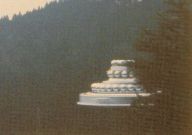
        This month, The Center for Inquiry and The Tallahassee Skeptics are seeking creative photographers and computer artists who can concoct the most convincing UFO photo that uses a Tallahassee landmark or building as a backdrop. The winner will receive $250 in cash. The faux-UFO photo also will be published in the Tallahassee Democrat. It's one contest that actually encourages faking it. "Nowadays, with Photoshop and other computer programs, it's really pretty easy to come up with credible-looking photos that are completely fake," said Bruce Thyer, a Florida State University professor and member of the Center for Inquiry. "We want (the contest photos) to look seamless - not a couple of kids with a fishing pole and a hubcap." The Tallahassee Center for Inquiry and the Tallahassee Skeptics are interlocking groups that seek to expose hoaxes, quackery and urban legends. Thyer used the example of a photograph that circulated on the Internet almost immediately after Sept. 11, 2001. The image depicted a smiling, waving tourist on top of a World Trade Center Tower at the moment the hijacked jets were crashing. It later proved to be a Photoshop-ed sham.

        "There was a whole story going around about how they found a camera in the ashes and processed the film," Thyer said. "It was very touching at the time but ... none of it was true." The UFO competition is intended to be more lighthearted. "I thought it could be a fun way for a Boy Scout troop or a fraternity to pick up a little extra money," Thyer said.

        Comment


        • Comment


          • Is red rain evidence of alien life ?

            There is a small bottle containing a red fluid on a shelf in Sheffield University's microbiology laboratory. The liquid looks cloudy and uninteresting. Yet, if one group of scientists is correct, the phial contains the first samples of extraterrestrial life isolated by researchers. Inside the bottle are samples left over from one of the strangest incidents in recent meteorological history. On 25 July, 2001, blood-red rain fell over the Kerala district of western India. And these rain bursts continued for the next two months. All along the coast it rained crimson, turning local people's clothes pink, burning leaves on trees and falling as scarlet sheets at some points. Investigations suggested the rain was red because winds had swept up dust from Arabia and dumped it on Kerala. But Godfrey Louis, a physicist at Mahatma Gandhi University in Kottayam, after gathering samples left over from the rains, concluded this was nonsense. 'If you look at these particles under a microscope, you can see they are not dust, they have a clear biological appearance.' Instead Louis decided that the rain was made up of bacteria-like material that had been swept to Earth from a passing comet. In short, it rained aliens over India during the summer of 2001. Not everyone is convinced by the idea, of course. Indeed most researchers think it is highly dubious. One scientist who posted a message on Louis's website described it as 'bulls***'. But a few researchers believe Louis may be on to something and are following up his work. Milton Wainwright, a microbiologist at Sheffield, is now testing samples of Kerala's red rain.

            Comment


            • Comment


              • Comment


                • British Rail flying saucer plan

                  A Channel Tunnel or tilting train may once have seemed far-fetched, but these plans were grounded compared to British Rail proposals to use flying saucers. Recently uncovered plans show bosses filed for a patent in 1970 for a spacecraft powered by "controlled thermonuclear fusion reaction". With a passenger compartment upstairs, it would have been cheap to run and super-fast, according to its inventor. The proposals were recently found on the European Patent Office website. The original patent application said the reaction would be "ignited by one or more pulsed laser beams". The application was made on behalf of the British Railways Board and the patent was granted in March 1973. A patent document reads: "The present invention relates to a space vehicle. More particularly it relates to a power supply for a space vehicle which offers a source of sustained thrust for the loss of a very small mass of fuel.


                  "Thus it would enable very high velocities to be attained in a space vehicle and in fact the prolonged acceleration of the vehicle may in some circumstances be used to simulate gravity." But, it seems, the patent later lapsed because of non-payment of renewal fees, while the spaceship - the invention of Charles Osmond Frederick - clearly never materialised.

                  Comment


                  • Buddha on the brain

                    The 14th incarnation of the Living Buddha of Compassion approaches the podium, clears his throat, and blows his nose loudly. "So now I am releasing my stress," he says. The audience dissolves into laughter.The Dalai Lama is here to give a speech titled "The Neuroscience of Meditation." Over the past few years, he has supplied about a dozen Tibetan Buddhist monks to Richard Davidson, a prominent neuroscience professor at the University of Wisconsin-Madison. Davidson's research created a stir among brain scientists when his results suggested that, in the course of meditating for tens of thousands of hours, the monks had actually altered the structure and function of their brains. The professor thought the Dalai Lama would make an interesting guest speaker at the Society for Neuroscience's annual meeting, and the program committee jumped at the chance. The speech also gives the Tibetan leader an opportunity to promote one of his cherished goals: an alliance between Buddhism and science. But the invitation has sparked a noisy row within the neuroscience community. To protest the talk, some scientists set up an online petition, which was immediately hacked by the pro-Dalai Lama faction. Others are boycotting the event or withholding their conference papers. Still others have demanded - unsuccessfully - time for a rebuttal.

                    All of which may explain the lama's ailment. "His Holiness' cold is a manifestation of the opposition of some scientists to his coming to the conference," a young Chinese Buddhist explains to me.The protesters complain that the Tibetan leader isn't qualified to speak about brain science. They fret that he'll draw media attention away from important findings presented at the conference. Worst of all, his presence muddles the distinction between objective inquiry and faith. "We don't want to mix science and religion in our children's classrooms," says Bai Lu, a researcher at the National Institutes of Health, "and we don't want it at a scientific meeting."

                    Comment


                    • Saturn moon 'may have an ocean'

                      Saturn's moon Enceladus could harbour a liquid water ocean beneath its icy crust, according to data sent back by the Cassini spacecraft. Until Cassini reached Saturn, the tiny moon had received little attention. But Enceladus is now the focus of intensive study following the discovery that it is geologically active. Enceladus may possess reservoirs of near-surface liquid water that erupt to form geysers - and where there's water, there may be life, scientists argue. These jets have been observed erupting from a "hot spot" in the moon's south polar region. Scientists on the mission have likened them to the kinds of geysers found in Yellowstone National Park in the US. "We realise that this is a radical conclusion - that we may have evidence for liquid water within a body so small and so cold," said Dr Carolyn Porco, Cassini imaging team leader at the Space Science Institute in Boulder, US. "However, if we are right, we have significantly broadened the diversity of Solar System environments where we might possibly have conditions suitable for living organisms. It doesn't get any more exciting than this." Dr Jeffrey Kargel, from the US Geological Survey in Flagstaff, Arizona, US, believes that shifting, glacier-like tectonic plates and tidal forces could generate and trap heat to produce the activity seen on Enceladus. His modelling also allows for a deep liquid water ocean saturated with gases such as carbon dioxide (CO2).

                      Comment


                      • Comment


                        • Comment


                          • Mystery of vanished "Buddha Boy" grips Nepal

                            The weekend disappearance of a Nepalese boy whom supporters hail as a reincarnation of the Buddha has sparked a nationwide search. Supporters have showered 16-year old Ram Bahadur Bomjan with money and gifts for allegedly sitting in motionless meditation in the roots of a pipal tree without taking food or water, or using the toilet, since May 16 last year. The youth, dubbed "Buddha Boy" by the media, left the site in southern Nepal because the thousands of devotees who flocked there had disturbed his meditation, media reported Sunday. "He left as there was a lot of noise in the meditation area," his friend Prem Lama told the Kathmandu Post. A search using plain-clothes police and civilians failed to find the boy, but he had been glimpsed in the jungle surrounding the meditation site at Bara district 250 kilometres (150 miles) south of Kathmandu, the Himalayan Times reported. Inspector Kamal Acharya told AFP he was "90 percent sure" the boy disappeared voluntarily. "It does not seem likely that it was an abduction," said Acharya. a police inspector from Bara. Police believed the youth had left the site with a close friend Sahila Tamang, who was also missing, Acharya said.

                            "The boy disappeared at around three in the morning Saturday while the people who guard the site were sleeping," Shankar Acharya, a journalist from Bara, told AFP. The thousands of visitors who have flocked to see the boy were kept at least 15 metres (50 feet) away. The boy's followers did not permit visitors to see him during the night, raising scepticism about claims that he had been surviving without food and water. Ram's meditation spawned a mini-industry with the site jammed with food and souvenir vendors. Rupees were stuffed in collection boxes around the site and a member of a committee looking after the site said foreign Buddhist groups had donated 40,000 dollars for its upkeep.


                            Comment


                            • Comment


                              • Comment

                                Working...
                                X