Cars & Motors News

Collapse
This is a sticky topic.
X
X
 
  • Time
  • Show
Clear All
new posts
  • yayara
    Newbie
    • May 2006
    • 22

    #586
    Some major changes to the Mustang occurred at the start of 1965 model year production, a mere five months after its introduction. First was an almost complete change to the engine lineup. The 170 in³ (2.8 L) I6 engine made way for a new 200 in³ (3.3 L) version which had 120 hp (89 kW) at 4400 rpm and 190 ft•lbf (258 N•m) at 2400 rpm. Production of the 260 in³ (4.2 L) engine ended with the close of the 1964 model year. With a new, two-barrel carbureted 200 hp (149 kW) 289 in³ (4.7 L) engine taking its place as the base V8, people started to excited. A 225 hp (168 kW) four-barrel 289 in³ (4.7 L) was next in line, followed by the unchanged "Hi-Po" 289. The DC generator was replaced by a new AC alternator on all Fords and the now-famous Mustang GT was introduced. Available was a four-barrel engine with any body style. Additionally, reverse lights were added to the car in 1965. Originally, the Mustang was available as either a hardtop or convertible. During the car's early design phases, however, a fastback model was strongly considered. The Mustang 2+2 fastback made its inaugural debut with its swept-back rear glass and distinctive ventilation louvers.

    A machine built for the ages, Carroll Shelby converted (with Ford Motor Company's blessing), a special model designed with only two things in mind; winning races and beating Chevrolet's Corvette. Designated simply as the "GT-350", these purpose-built performance cars started as "Wimbledon White" fastbacks with black interiors. The fastbacks were shipped from the San Jose, California assembly plant and fitted with a Hi-Po 289, four-speed manual transmission, and included front disc brakes. Also shortened hoods and rear seats with identifying trim were among other visual variations. These few cars were converted to street, road racing, and drag cars in Shelby's plant at Los Angeles International Airport.

    Modifications to both the street and racing versions included: side-exiting exhausts, Shelby 15 in (380 mm) magnesium wheels (though some early cars were fitted with the factory steel wheels), fiberglass hoods with functional scoops, relocated front control arms, (to reduce under steer and neutralize handling), quicker steering, Koni shock absorbers, a Detroit Locker rear end with Ford Galaxie drum brakes, metallic brake linings at all four corners, rear-mounted batteries, rear anti-sway bars with supped-up front anti-sway bar, dash-mounted gauges, a fiberglass parcel shelf and spare tire holder where the rear seat was intended to be. Among other engine modifications, considerable overhaul boosted output to 306 hp (228 kW). Hot Rod Magazine recorded a 0-60 time of 3.4 seconds.

    When Ford stiffened the car's basic body structure, they included a front angled brace intended for the export models and so-called "Monte Carlo" bar; triangulating the under-hood shock absorber towers. Though Shelby's influence on the car diminished as Ford's grew, the 1965 to 1970 GT-350 and its "big-block" brother, the 1967 to 1970 GT-500 are among the most sought-after, and valued automobiles in the world; so too are the high-performance models offered over the years by other automotive tuners following in Shelby's footsteps.

    In its first two years of production, three Ford Motor Company plants in San Jose, California; Dearborn, Michigan; and Metuchen, New Jersey produced nearly 1.5 million Mustangs, a record unequalled before or since. It was a success that left General Motors utterly unprepared and the Chrysler Corporation only slightly less so. Chrysler had just introduced a car only a few weeks before that would be a competitor, the Plymouth Barracuda. Though the "'Cuda" would grow into one of the most revered muscle cars of all time, it started out at as just a Plymouth Valiant with a hastily grafted fastback rear window. As for GM, they were certain that they had a Mustang fighter in their rear-engine Corvair Monza, but sales figures didn't even come close. The Monza was a fine performer, but boasted a six-cylinder, not competing to the Mustang's available eight-cylinder. It took GM until the 1967 model year to counter with the Chevrolet Camaro and Pontiac Firebird. Even Lincoln-Mercury joined the fray in 1967 with the introduction of an "upmarket Mustang" (and subsequent Motor Trend Car of the Year), the Mercury Cougar. The Cougar name had originally been given to the Mustang during the development phase. In 1968 American Motors (AMC) would introduce the Javelin and later, the 2-seat high-performance AMX. This genre of small, sporty, and often powerful automobiles was unofficially dubbed the "pony car" as a tribute to the car that started it all. The 1968 Mustang fastback gained pop culture status when it was used to great effect as Steve McQueen's car of choice in the crime thriller Bullitt. The Mustang was pitted against the Dodge Charger in the film's famous car chase through the streets of San Francisco.

    The 1966 Mustang debuted with only moderate trim changes, and a few new options such as an automatic transmission for the "Hi-Po," a new interior and exterior colors, an AM/eight-track "Stereosonic" sound system, and one of the first AM/FM monaural radios available in any car. The 1967 model year would see the first of the Mustang's many major redesigns with the installation of big-block V8 engines in mind. The high-performance 289 option now took a supporting role on the option sheet behind a massive 335 hp 390 in³ (6.4 L) engine direct from the Thunderbird, which was equipped with a four-barrel carburetor. Stock 390/4speed equipped Mustangs of the day were recording ¼ mile times of mid 13's, with trap speeds of over 105mph. A drag racer for the street took a stand during the middle of the 1968 model year, as the 428 Cobra Jet (7.0 L) officially rated at 335 hp (250 kW), but in reality producing well in excess of 400 hp. 1969 saw the introduction of both the car's third body style and a hand-built muscle car intended solely to satisfy the homologation rules of NASCAR, the Boss 429.


    Modified 1969 Ford Mustang HardtopAvailable in 1969 and 1970 only, with a standard Mustang SportsRoof (the new corporate name for the fastback) and the new Mach 1 muscle car version's deluxe interior, the Boss 429 sported none of the garish decals and paint schemes of the day. Only a hood scoop and 15 in (380 mm) "Magnum 500" wheels fitted with Goodyear "Polyglas" tires, with a small "BOSS 429" decal on each front fender, hinted that most powerful Ford V8 of all time was fitted under the hood. Ford intentionally underrated the Boss 429 for advantages both in racing as well as insurability at 375 hp (280 kW) and 450 ft•lbf (610 N•m) of torque. Even with racing touches straight from the factory such as aluminum heads with hemispherical combustion chambers, along with a combination of O-rings and seals in place of head gaskets, it was believed that yet another 75 to 100 hp (50 to 75 kW) was on tap once the single four-barrel carburetor, intake, the restrictive factory exhaust system, and engine speed governor were either replaced or removed. While power steering was a "mandatory option" on the Boss 429, neither an automatic transmission nor air conditioning was available. In the case of the latter, there simply wasn't enough room under the hood. It should be noted that due to the extremely free breathing capabilities of this huge motor, it wasn't necessarily the best choice for a street car. The Boss 429 made its power in a higher RPM range than most other big block street cars, and of course street racing was prevalent in the day. Owners of these could often be surprised by "lesser" cars of the day in stop light drag racing.

    Also available during that two-year period was another homologation special for the up-and-coming sport of Trans-American sedan racing. The Boss 302 was Ford's attempt to mix the power of a muscle car with the handling prowess of a sports car. The automotive press gushed over the result, deeming it the car "the GT-350 should have been." Boasting a graphic scheme penned by Ford designer Larry Shinoda, the "Baby Boss" was powered by an engine that was essentially a combination of the new-for-1968 302 in³ (4.9 L) V8 and topped with cylinder heads from the yet to be released new-for-1970 351 in³ (5.8 L) "Cleveland". This combination meant that the Boss 302 was good for a conservatively rated 290 hp (216 kW) through its four-speed manual transmission. Ford originally intended to call the car Trans Am, but Pontiac had beaten them to it, applying the name to a special version of the Firebird. In the ¼ mile the Boss 302 could post very similar times to the Boss 429, oddly enough, despite the smallest displacement and an incredibly free-breathing induction system in the car. It should be noted that the blocks from these cars are incredibly strong, and Ford Racing plans on selling new Boss 302 blocks in the near future.

    Comment

    • yayara
      Newbie
      • May 2006
      • 22

      #587
      Some major changes to the Mustang occurred at the start of 1965 model year production, a mere five months after its introduction. First was an almost complete change to the engine lineup. The 170 in³ (2.8 L) I6 engine made way for a new 200 in³ (3.3 L) version which had 120 hp (89 kW) at 4400 rpm and 190 ft•lbf (258 N•m) at 2400 rpm. Production of the 260 in³ (4.2 L) engine ended with the close of the 1964 model year. With a new, two-barrel carbureted 200 hp (149 kW) 289 in³ (4.7 L) engine taking its place as the base V8, people started to excited. A 225 hp (168 kW) four-barrel 289 in³ (4.7 L) was next in line, followed by the unchanged "Hi-Po" 289. The DC generator was replaced by a new AC alternator on all Fords and the now-famous Mustang GT was introduced. Available was a four-barrel engine with any body style. Additionally, reverse lights were added to the car in 1965. Originally, the Mustang was available as either a hardtop or convertible. During the car's early design phases, however, a fastback model was strongly considered. The Mustang 2+2 fastback made its inaugural debut with its swept-back rear glass and distinctive ventilation louvers.

      A machine built for the ages, Carroll Shelby converted (with Ford Motor Company's blessing), a special model designed with only two things in mind; winning races and beating Chevrolet's Corvette. Designated simply as the "GT-350", these purpose-built performance cars started as "Wimbledon White" fastbacks with black interiors. The fastbacks were shipped from the San Jose, California assembly plant and fitted with a Hi-Po 289, four-speed manual transmission, and included front disc brakes. Also shortened hoods and rear seats with identifying trim were among other visual variations. These few cars were converted to street, road racing, and drag cars in Shelby's plant at Los Angeles International Airport.

      Modifications to both the street and racing versions included: side-exiting exhausts, Shelby 15 in (380 mm) magnesium wheels (though some early cars were fitted with the factory steel wheels), fiberglass hoods with functional scoops, relocated front control arms, (to reduce under steer and neutralize handling), quicker steering, Koni shock absorbers, a Detroit Locker rear end with Ford Galaxie drum brakes, metallic brake linings at all four corners, rear-mounted batteries, rear anti-sway bars with supped-up front anti-sway bar, dash-mounted gauges, a fiberglass parcel shelf and spare tire holder where the rear seat was intended to be. Among other engine modifications, considerable overhaul boosted output to 306 hp (228 kW). Hot Rod Magazine recorded a 0-60 time of 3.4 seconds.

      When Ford stiffened the car's basic body structure, they included a front angled brace intended for the export models and so-called "Monte Carlo" bar; triangulating the under-hood shock absorber towers. Though Shelby's influence on the car diminished as Ford's grew, the 1965 to 1970 GT-350 and its "big-block" brother, the 1967 to 1970 GT-500 are among the most sought-after, and valued automobiles in the world; so too are the high-performance models offered over the years by other automotive tuners following in Shelby's footsteps.

      In its first two years of production, three Ford Motor Company plants in San Jose, California; Dearborn, Michigan; and Metuchen, New Jersey produced nearly 1.5 million Mustangs, a record unequalled before or since. It was a success that left General Motors utterly unprepared and the Chrysler Corporation only slightly less so. Chrysler had just introduced a car only a few weeks before that would be a competitor, the Plymouth Barracuda. Though the "'Cuda" would grow into one of the most revered muscle cars of all time, it started out at as just a Plymouth Valiant with a hastily grafted fastback rear window. As for GM, they were certain that they had a Mustang fighter in their rear-engine Corvair Monza, but sales figures didn't even come close. The Monza was a fine performer, but boasted a six-cylinder, not competing to the Mustang's available eight-cylinder. It took GM until the 1967 model year to counter with the Chevrolet Camaro and Pontiac Firebird. Even Lincoln-Mercury joined the fray in 1967 with the introduction of an "upmarket Mustang" (and subsequent Motor Trend Car of the Year), the Mercury Cougar. The Cougar name had originally been given to the Mustang during the development phase. In 1968 American Motors (AMC) would introduce the Javelin and later, the 2-seat high-performance AMX. This genre of small, sporty, and often powerful automobiles was unofficially dubbed the "pony car" as a tribute to the car that started it all. The 1968 Mustang fastback gained pop culture status when it was used to great effect as Steve McQueen's car of choice in the crime thriller Bullitt. The Mustang was pitted against the Dodge Charger in the film's famous car chase through the streets of San Francisco.

      The 1966 Mustang debuted with only moderate trim changes, and a few new options such as an automatic transmission for the "Hi-Po," a new interior and exterior colors, an AM/eight-track "Stereosonic" sound system, and one of the first AM/FM monaural radios available in any car. The 1967 model year would see the first of the Mustang's many major redesigns with the installation of big-block V8 engines in mind. The high-performance 289 option now took a supporting role on the option sheet behind a massive 335 hp 390 in³ (6.4 L) engine direct from the Thunderbird, which was equipped with a four-barrel carburetor. Stock 390/4speed equipped Mustangs of the day were recording ¼ mile times of mid 13's, with trap speeds of over 105mph. A drag racer for the street took a stand during the middle of the 1968 model year, as the 428 Cobra Jet (7.0 L) officially rated at 335 hp (250 kW), but in reality producing well in excess of 400 hp. 1969 saw the introduction of both the car's third body style and a hand-built muscle car intended solely to satisfy the homologation rules of NASCAR, the Boss 429.


      Modified 1969 Ford Mustang HardtopAvailable in 1969 and 1970 only, with a standard Mustang SportsRoof (the new corporate name for the fastback) and the new Mach 1 muscle car version's deluxe interior, the Boss 429 sported none of the garish decals and paint schemes of the day. Only a hood scoop and 15 in (380 mm) "Magnum 500" wheels fitted with Goodyear "Polyglas" tires, with a small "BOSS 429" decal on each front fender, hinted that most powerful Ford V8 of all time was fitted under the hood. Ford intentionally underrated the Boss 429 for advantages both in racing as well as insurability at 375 hp (280 kW) and 450 ft•lbf (610 N•m) of torque. Even with racing touches straight from the factory such as aluminum heads with hemispherical combustion chambers, along with a combination of O-rings and seals in place of head gaskets, it was believed that yet another 75 to 100 hp (50 to 75 kW) was on tap once the single four-barrel carburetor, intake, the restrictive factory exhaust system, and engine speed governor were either replaced or removed. While power steering was a "mandatory option" on the Boss 429, neither an automatic transmission nor air conditioning was available. In the case of the latter, there simply wasn't enough room under the hood. It should be noted that due to the extremely free breathing capabilities of this huge motor, it wasn't necessarily the best choice for a street car. The Boss 429 made its power in a higher RPM range than most other big block street cars, and of course street racing was prevalent in the day. Owners of these could often be surprised by "lesser" cars of the day in stop light drag racing.

      Also available during that two-year period was another homologation special for the up-and-coming sport of Trans-American sedan racing. The Boss 302 was Ford's attempt to mix the power of a muscle car with the handling prowess of a sports car. The automotive press gushed over the result, deeming it the car "the GT-350 should have been." Boasting a graphic scheme penned by Ford designer Larry Shinoda, the "Baby Boss" was powered by an engine that was essentially a combination of the new-for-1968 302 in³ (4.9 L) V8 and topped with cylinder heads from the yet to be released new-for-1970 351 in³ (5.8 L) "Cleveland". This combination meant that the Boss 302 was good for a conservatively rated 290 hp (216 kW) through its four-speed manual transmission. Ford originally intended to call the car Trans Am, but Pontiac had beaten them to it, applying the name to a special version of the Firebird. In the ¼ mile the Boss 302 could post very similar times to the Boss 429, oddly enough, despite the smallest displacement and an incredibly free-breathing induction system in the car. It should be noted that the blocks from these cars are incredibly strong, and Ford Racing plans on selling new Boss 302 blocks in the near future.

      Comment

      • Rasputin
        Senior Member
        • Jan 2005
        • 63906

        #588
        2007 Jaguar XK

        Driving the latest 300 horsepower Jaguar XK in Baja, Mexico was no picnic. Before you say “oh, poor man, tough job but someone has to do it” how would you like to drive someone else’s 75 thousand dollar brand new sports coupe at relatively high speeds while avoiding 5 cows and 15 goats?! No, not in a week, not in a year but within a few hours? Add to that one rabid dog which very nearly jumped into our convertible and you get the picture. From all this you’ll gather two things. Firstly that I live to tell the tale and secondly that the Jag’s brakes and steering are pretty amazing. Have you ever had occasion to swerve round a big black cow on a narrow, two-way road with a massive Freightliner rapidly approaching from the other direction? Trust me, boring it isn’t.

        It is an open secret that Jaguar desperately need a success. The X type didn’t fulfill expectations and the S class is selling all right, rather than brilliantly. There is a brand new replacement on the horizon but not in the near future.

        The XK is not just a new car, it is also an image builder. You may have seen the controversial “gorgeous” campaign featuring some beautiful girls with a few macho men thrown in for good measure. Shot in a French chateau and on a beach just outside Saint Tropez it features people in situations one would normally associate with Ferraris or Lambos. A brave move for a car costing one third of the 430. Love it or hate it, you will certainly remember it. The company is desperately and understandably trying to get away from the brand’s “old man’s car image”.

        If anything will do it, it is the XK. First of all it does look great, particularly in British Racing Green.

        It is also a very easy car to drive. There is no fiddling for knobs or buttons a la BMW 7 series, you just jump in, press the red start button , pop it into “D” and you are off. There are some perfectly placed paddles under the steering wheel for those-like me- who like to drive as opposed to just get from A to B. These work magnificently, certainly as well as in the Ferrari 430.

        The only disappointment in that respect was that when you floored the throttle the 300 horses were adequate rather than outstanding.

        Relief, however, is at hand as the 420 horsepower version will be unveiled at the LA show in late November.

        If Jaguar can keep the price down to around 90 thousand dollars then it will be a very attractive proposition indeed.

        Don’t get me wrong, a 300 horsepower sports car/GT is fine for most people but if Jaguar really wants to reach the “gorgeous” people featured in the commercials they will expect 420. After all the company is presumably after what are known in the trade as conquest sales, in other words persuading people to give up their BMWs, Porsches and Mercedes 500SL-s. No easy task as I am sure Jaguar will be the first to admit.

        On the other hand while many people are suffering as a result of the 3 dollar plus gas (mind you, they would faint if they had to pay UK prices!) there is an awful lot of money around in oil and hedge fund circles. With the sort of bonuses certain companies have been dishing out some of these “gorgeous” wannabes might buy the XK as an addition to their fleet.


        iran

        Comment

        • Rasputin
          Senior Member
          • Jan 2005
          • 63906

          #589
          2006 Honda Ridgeline RTL

          I thought it would be kinda fun to test a modern pick-up truck, after all I used to sell International Harvester trucks back in the early sixties and believed that a truck is a truck is a truck...well guess what it’s not any more.

          Before we get too far into this journalistic tome I would like to keep my youngish readers from leaving this read and go Googling International Harvester Trucks...hey kids that was a brand of truck that was made here in the U.S. for almost 80 years...just stay here.

          Ok back to the story you are all waiting for.

          I picked up the 2006 Honda Ridgeline at the Denver airport, and as always the fine folks from Specialty Transport had everything arranged and my test ride ready shinning and filled-up with fuel for this truck review.

          My first impression was even though the Ridgeline has 4 doors and seating for 5, “it’s big”, it really is a truck, just how big? I whipped out my trusty ruler and found that the Ridgeline stands 70” high and that although the cargo bed measured 60", it can still carry a 4’x8’ plywood panel in the box with the tail gate down/open.

          A unique benefit from the out of the box thinking engineers in Marysville Ohio, is the Ridgeline’s lockable trunk placed into the floor of the cargo bed. Honda measured the space as 8.5 cubic feet which is as big as many car trunks, and passes the “it holds two sets of golf clubs” criteria, not bad for “extra space”.

          But there is one problem with this space; if you live in a part of the country where snow is a regular feature of the winter, then the “trunk” will be buried beneath snow and ice for a good part of the year...oh well there is enough space on the back bench seat to stack as much luggage as you could ever use.


          iran

          Comment

          • I.M.M
            Member
            • Dec 2004
            • 394

            #590
            plz yek sery info ham raje be astonmartin bedeh...
            mamnon

            Comment

            • Rasputin
              Senior Member
              • Jan 2005
              • 63906

              #591
              Schumacher stripped of pole in Monaco

              Monte Carlo, Monaco (Sports Network) - Michael Schumacher's pole victory for Sunday's Grand Prix of Monaco has been removed and the No.5 Ferrari driver will start from the back of the 22-car grid.

              Stewards concluded that he "deliberately blocked the track in the closing stages of qualifying, preventing rivals from beating his time."

              The decision, which came eight hours after the session had ended, gives the pole to defending Formula One Series champion and current points leader Fernando Alonso.

              Schumacher will join teammate Felipe Massa, who crashed during the qualifying session, at the back of the grid.

              Schumacher appeared to overshoot the Rascasse hairpin, but regain control of his Ferrari in time to prevent it from slamming into the tire barrier. He then stalled his car so that the yellow flag was brought out an no competitor could beat his provisional pole time.

              Following the session, race officials heard evidence concerning the incident from Schumacher. They also reviewed video footage and data evidence supplied by the team and the FIA.

              Their finding was that "Schumacher had no justifiable reason for braking so hard," as he had been traveling little or no quicker than at the same point on previous laps. They concluded that he deliberately stopped his car on the circuit.

              iran

              Comment

              • Rasputin
                Senior Member
                • Jan 2005
                • 63906

                #592
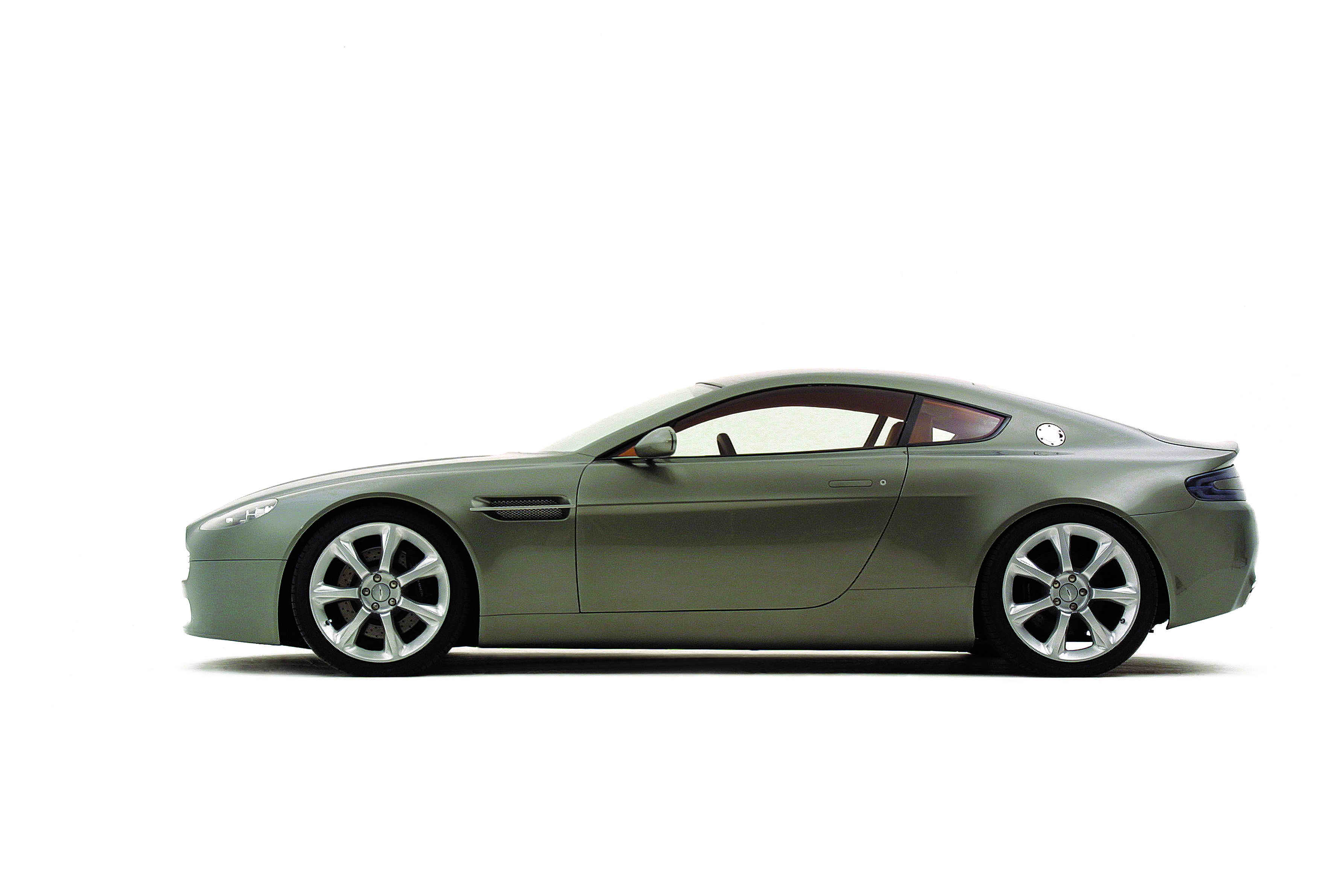
                Aston DB9 - Million Dollar DB
                For I.M.M

                Aston Martin is on a roll. After decades of neglect, under-funding and compromised designs, the famous British marque has a clear direction, fresh vision and, most importantly of all, the financial backing to bring one of the most evocative brands back into the major sports and GT battle grounds and go head to head with the best of Italian and German exotica.

                Thanks to the success of the Vanquish, or as ‘Q’ famously referred to it ‘The Vanish’ and to some extent the DB7 V12, Aston Martin has demonstrated to parent - and check writer - Ford that it has real potential in limited production sports and GT tourers. The

                Vanquish, and lately the Vanquish S, is the super-expensive pinnacle or ‘halo’ car for the brand, accessible to only those with $240,000+, not a problem for most Aston owners as 75% of them own at least six other vehicles. Now with the brand mystique and rave reviews as securely engraved in the minds of potential customers as the names of fortunate owners on their cars sillplates, Aston has set about replacing the rather outdated DB7 and introducing a new Vantage targeting the 911 owner.

                The V12 450bhp DB9 is a clean sheet design, using the latest aluminum chassis and composite technology enabling the 2+2, front-engined coupe to weigh in at a mere 1800 kg / 3900lbs and giving the ‘9’ an impressive power-to-weight ratio of 263bhp / tonne. With a sub-5 second to 60mph time and a theoretical top speed of 180 mph / 300 KPH the DB9 is a serious performer.

                Style and performance are the buzz words of the auto industry but few brands can really carry it off. With the Aston’s heritage and brand values, the DB9 already has a significant advantage and the resulting combination of power, agility, comfort, poise and a touch of British class is enough for me to believe this is one of the finest and most complete GT sports cars ever made and certainly a match for the current crop of competitors.

                The exterior styling has many carry-over themes from what is now the Aston Martin ‘mold’. Chief designer Henrik Fisker has worked hard to

                produce a purposeful, unique and elegant shape, which while aggressive does not have the brutish stance of the Vanquish. Personally I would have incorporated some front driving lights into the design, as used so effectively in the V12 DB9, but until Aston releases a styling kit for owners we’ll have to make do with the air inlets instead. The rear of the car is very clean, the rear haunches look terrific both from inside and outside the car and the light cluster - a new signature design that will carry through to all new models - is simple, bold and effective.

                Following a DB9 one can appreciate the ‘ooohs and ahhs’ from other drivers and passengers as they crane their necks to get a better view. I think the design will age well as it has a certain timeless grace to it, which with a little tweaking over time, will still look in shape in ten years.

                Naturally, I’m more interested in driving the DB9 than looking at it. Aston’s clever marketing and communications wiz Christina Cheever managed to have each test vehicle personally engraved with the name of its driver, so for a few short hours I got to drive ‘my’ DB9. You sit low in the car, the seats are flat, almost race like, visibility is good and the handmade leather- and suede-lined cabin is spacious, with plenty of head room, at least for the two of you sitting in the front. Ahead of the driver is a clear instrument binnacle, which once you’ve adjusted the rake and reach steering wheel to it lowest position is nicely obscured from 80mph to 130mph. Fortunately the digital read out can still be seen, and the gear selector gauge peaks out above the top of the wheel.

                As with the Vanquish, you don’t ‘start’ the DB9 but rather fire it up. After turning the ignition key, you reach across to the center binnacle and hit the ‘start engine’ button. I can only imagine how many owners have excited their dates by inviting them to hit


                that particular button. The starter whirls into action and the 6-litre twelve fires quickly and cleanly into life with a reassuringly expensive and crowd-pleasing burble. Select the D button or just click the right paddle into first, apply a little throttle and off you go. The 9 is a very easy car to drive. It doesn’t intimidate the driver, unless the mere thought of driving a $172,000 car in city traffic fills you with a sense of horror. All the input controls, except the brakes, are quite light and fall easily to hand. Up to speed on the highway out of picturesque San Diego, the mighty USS Carl Vinson and Ronald Reagan carriers moored menacingly off on the left of the harbor, their grey silhouettes reminding me of the turbine-like power that I’m currently in control of, as I join the I805 heading east and accelerate straight to 110mph without any effort on my or the car’s part.


                iran

                Comment

                • I.M.M
                  Member
                  • Dec 2004
                  • 394

                  #593
                  mamnon RW jan khili jaleb bod

                  Comment

                  • Rasputin
                    Senior Member
                    • Jan 2005
                    • 63906

                    #594
                    2006 Jeep Commander Limited

                    What was the first sport-utility vehicle as we now understand the genre? Any answer is bound to be controversial, but the Willys-Overland, produced from 1946 through 1962, and the Jeep Wagoneer, its successor from 1963 through 1991, stand out as some of the earliest fully off-road capable four-wheel drive vehicles civilized enough for everyday use in town. The Willys-Overland, while having only two doors, even had a seven-passenger capacity thanks to a jump seat behind the second-row bench. When it debuted in 1984, the Jeep Cherokee offered four doors as well as the then-standard two, and was designed to be as capable in the city as it was off road.

                    Interestingly, despite the SUV boom of the 1990s, fueled in large part by vehicles like Jeep's own Cherokee and Grand Cherokee, the Wagoneer was the last large Jeep. It's taken until now, with the 2006 Jeep Commander, to fill that void in the lineup.

                    If it builds on the heritage and style of the Overland, Wagoneer, and Cherokee, the Commander is most akin to the current Grand Cherokee. Unsurprisingly, as it's built on the Grand Cherokee platform. Although the Commander is only two inches longer than the Grand Cherokee, and very different in style, the two vehicles share a 109.5-inch wheelbase. But the Commander is significantly larger inside, and was designed from the beginning to have three rows of seating.

                    For trim level, power, and off-road capability, choices abound. Choose between the standard Commander or the luxury-class Limited. The standard model comes with a 3.7-liter, 210-horsepower V6, with the 235-hp 4.7-liter V8 optional. The Limited gets more chrome outside, and leather inside, and the 4.7 V8 under the hood, with the 5.7-liter, 330-hp version of the HEMI V8 optional. All have a five-speed automatic transmission. Suspension for all models is by independent short and long arms in front, with a live axle with multi-link location in the rear. Brakes are four-wheel antilock discs. Both models are available with two- or four-wheel drive, with the V6 having a full-time single-range system and the V8s using a dual-range system with full-time active four-high.


                    iran

                    Comment

                    • Rasputin
                      Senior Member
                      • Jan 2005
                      • 63906

                      #595
                      Antara, the new Opel 2006
                      Attached Files

                      iran

                      Comment

                      • Rasputin
                        Senior Member
                        • Jan 2005
                        • 63906

                        #596
                        نمايشگاه بهترين و زيباترين اتومبيلهای اسپرت و تقويت شده (تيونينگ)، معروف به A.T.S با شعار'اول ايمنی بعد حرکت' برای دومين سال در مجموعه ورزشی انقلاب تهران با حضور بيش از يکصد دستگاه اتومبيل تقويت شده از سراسر ايران برگزار شد.
                        اين نمايشگاه شامل غرفه های تبليغاتی، لوازم جانبی اتومبيل های اسپرت (تيونينگ)، سیستم های صوتی و تصويری و مدل های اسباب بازی بود
                        Attached Files

                        iran

                        Comment

                        • Rasputin
                          Senior Member
                          • Jan 2005
                          • 63906

                          #597
                          2006 Mercedes-Benz C350

                          MODEL: Mercedes-Benz C350
                          ENGINE: 3.5-liter V6
                          HORSEPOWER/TORQUE: 268 hp @ 6000 rpm/258 lb.-ft. @ 2400-5000 rpm
                          TRANSMISSION: 6-speed manual
                          WHEELBASE: 106.9 in.
                          LENGTH x WIDTH x HEIGHT: 178.4 x 68.0 x 55.6 in.
                          TIRES: 225/45R17F, 245/40R17R
                          CARGO VOLUME: 12.2 cu. ft.
                          ECONOMY: 20 mpg city/28 mpg highway/20.0 mpg test
                          PRICE: $43,295 (includes $775 destination and delivery charge)

                          It’s hard to imagine a Mercedes-Benz that’s almost too small, but the C350 sedan fits in that category. Dimensionally, it’s about the same size as a BMW 3-series, on a wheelbase that’s 2 inches shorter. It’s also about 120 pounds heavier. Continuing the comparison, the biggest engine you can get in a 3-series is a 255 hp 3.2-liter inline six, so the Mercedes has the advantage in power.

                          But still, the C350 is a compact car, even if it is classified as a premium compact. Price wise as well, the C350 is premium, with a bottom line sticker price of $43,295 with a couple of options that aren’t necessary, even if they’re nice to have. But 43 grand is a lot for a compact car, even if it’s a Mercedes.

                          The C350 comes with a 268 horsepower V6 engine and a 6-speed manual transmission. AMG has created the C55 sport, with a 5.4-liter V8 that pumps out a healthy 362 horses and a 5-speed automatic. Personally, I felt the 3.5-literV6 offered plenty of power for most normal applications. Sure, if you feel the need for speed and you live in an area where you can use it, the C55 might make sense, but I was perfectly happy with the “smaller” engine.

                          Performance was excellent under all conditions. We drove the C350 on turnpikes and on our favorite twisting hilly roads. It never disappointed me. The 6-speed gearbox was fun to use and was smooth. There was a time in the past when Mercedes-Benz was chided for building less-than-perfect manual gearboxes, but those days are gone. The 6-speed ion the C350 was great. Of course, withal the torque available (258 lb.-ft.) we could actually run in 6th gear on roads that were other-than-Interstate smooth. And on Interstates, there was enough power to keep up with anybody else on the road.


                          iran

                          Comment

                          • Rasputin
                            Senior Member
                            • Jan 2005
                            • 63906

                            #598
                            2006 BMW 325i/330i

                            SPECIFICATIONS
                            MODEL: BMW 325i/330i
                            ENGINE: 2.5-liter/3.0-liter DOHC inline six
                            HORSEPOWER/TORQUE: 215 hp @ 6,250 rpm/185 lb-ft. @ 2,750 rpm(325i)
                            255 hp @ 6,600 rpm/220 lb-ft. @ 2,750 rpm (330i)
                            TRANSMISSION: 6-speed manual or automatic
                            FUEL ECONOMY: 20 mpg city/30 mpg highway (manual)
                            WHEELBASE: 108.7 in.
                            LENGTH/WIDTH/HEIGHT: 178.2 x 71.5 x 55.9 in.
                            TIRES: 205/55R16 (325i)/225/45R17 (330i)
                            CARGO: 12.0 cu.ft.
                            BASE PRICE: $30,995/$36,995
                            BMW's fifth-generation 3-Series will continue to be the benchmark in the small sports sedan category. Ever since the BMW 2002 was introduced in 1967, BMW has been at the forefront of the small sports sedan category. The 2002 was followed in 1975 by the E21, the first true 3-Series. That was followed, in turn, by the E30 in 1984, the E36 I 1992, and the E46 in 1999. This generation is referred to as E90. The E numbers reflect internal BMW model numbers.

                            You'll immediately recognize the New 3 (as it will be called in commercials) by its adhesion to the modern BMW styling idiom. Yes, it has a semblance of the 7-Series' bustle-back trunk, although in both series it is more subtle and refined than in the original. I'd like to reiterate that I didn't dislike it in the 7-Series as much as some of my colleagues.

                            The New 3 is also more aerodynamic frontally, and it has some neat styling touches that smooth it out greatly. When you look at the way the series has progressed over the years, you sometimes wonder how BMW was able to make such a success of it. But, of course, styling in general has improved, so that's really not a knock on BMW style. There is no question you'll recognize a New 3 when you see it.


                            iran

                            Comment

                            • Rasputin
                              Senior Member
                              • Jan 2005
                              • 63906

                              #599
                              2007 Audi Q7

                              I've just returned one of the short-lead presentations of Audi's Q7, where company spokespersons stressed two points: One, the Q7 is not merely a stretched Touareg. The two vehicles have only 15 percent parts commonality, most of which are suspension pieces. And two, the Q7 is the most important vehicle in Audi's history.

                              There is an old saying to the effect that if you are late to the party, you had better have good reasons and be correctly dressed. Audi didn't want to do a ``me too'' variation on the Touareg/Cayenne theme, and chose to take its time and do the job right.

                              Why ``Q7''? Q as in quattro, Audi's well-developed all-wheel drive system, which is standard in all Q7s, and 7 as it fits between the midsize A6 sedan and wagon and A8 premium luxury sedan in the company's lineup.

                              The SUV wave may have crested, but SUVs are still an important part of the American vehicle marketplace. The Q7 will gather buyers from two groups - existing Audi owners who need an SUV and want an Audi SUV, no substitutes, and conquest sales. Selling to brand fanatics is easy; making conquests is not.

                              But the Q7 should do well in bringing new customers into the Audi fold. It's a luxury vehicle first and foremost, with all of the elegant design and comfort for which Audi is known. In the Audi lineup, it's closest to the A6 sedan in interior design. And it does have a true seven-passenger capacity, not merely five and two (very) small children stuffed way in the back. The third row provides reasonable space and comfort for two medium-sized - say 5-8 or less - adults. The first two rows provide all the space and comfort anyone could need.

                              Outside, the Q7 looks like what it is - a thoroughly modern luxury crossover vehicle. There is no truck in its chassis, and no truck in its high-sided styling. It's an extra-large and brawny wagon, Avant in Audi-speak, and that's exactly what it looks like.


                              iran

                              Comment

                              • Rasputin
                                Senior Member
                                • Jan 2005
                                • 63906

                                #600
                                2006 Dodge Magnum SRT

                                I have to make a confession-the new Dodge Magnum SRT8 is not my cup of tea. Having said that it is wonderful news that in its various guises the truly dramatic looking car enabled Chrysler to make a profit after years of languishing in a sea of red ink. Clearly something new and exciting was called for and the company surprised all of us with a really aggressive looking automobile which has been getting awards from all and sundry. Why is it not for me? Well, put it down to old age if you like but I don’t need a 6.1 liter hemi engine. Yes, I can control it, there were no spins or spills but the power did come in rather suddenly and it did call for a great deal of concentration.

                                I see this as a great car for young Texans blasting to a rodeo but genteel Marin County is not like that. Percentage wise there are more Priuses here than anywhere else in the country and that probably says it all. Don’t get me wrong-the Dodge is amazing value at around 40 thousand dollars. It is a bit of an International cocktail-the engine is made in Mexico, the transmission in Germany and final assembly is in Ontario, Canada.

                                Still, what matters is that the Dodge is very well screwed together. The instrumentation is excellent as are the seats. What I missed was the brilliant TV monitor - aiding reversing- from the Infiniti. The Magnum is a long car and the TV would be a God-send.

                                The Dodge has all the standard equipment one could reasonably expect from a 60 thousand dollar automobile and as I’ve said huge fun and huge value for the right person. Having said that I am not that person. I am delighted they are doing well but as we all know the other half of the company is Mercedes Benz. For me an E series 320 with 4matic is the answer to my prayers. Until and if the new S class had a 4matic option as well.

                                For the record the Magnum does 14 to a gallon in town and 20 on the highway, although the chances are that the sort of speeds this Dodge is capable of will tempt people to put pedal to the metal and really go for it.


                                iran

                                Comment

                                Working...