Announcement

Collapse
No announcement yet.

Science Special News

Collapse
This is a sticky topic.
X
X
 
  • Filter
  • Time
  • Show
Clear All
new posts

  • Geomagnetic flip may not be random after all

    One of the most fascinating natural phenomena on Earth is the flipping of its magnetic field, which has occurred hundreds of times in the last 160 million years. When the magnetic field flips, the North Pole becomes the South Pole and vice versa. The last time this happened was some 780,000 years ago, so we could be heading for another reversal soon. Now, physicists in Italy have found that the frequency of these polarity reversals is not random as previously thought but occurs in clusters, revealing some kind of "memory" of previous events (physics/0603086).Although a full geomagnetic polarity reversal can take thousands of years to complete, the implications could be enormous. As well as affecting the migration trajectories of birds and other animals, the disruption to the Earth's magnetic field could expose the Earth to hazardous cosmic rays -- a scenario that some researchers have linked to mass extinction events like the one that wiped out the dinosaurs around 65 million years ago. Geoscientists believe that our planet's internal magnetic dynamo is responsible for pole reversals, but the actual mechanism is not well understood. Previous analyses assumed that the number of times the poles have reversed over last 160 million years follows a Poisson distribution, implying that the events are random. The Poisson distribution tells you the probability of a number of events occurring in a fixed time if the events are independent and the average rate is known. A good example of the Poisson distribution in physics is the likelihood of unstable radioactive nuclei decaying in a certain period.


    Comment


    • New book describes US UFO response

      In their new book, "Exempt from disclosure" by Robert M. Collins and Richard C. Doty, the authors tell readers about many complex and surprising factors involving the U.S. military, intelligence communities, scientific communities and the general public with regard to UFOs and extraterrestrial visitors. Collins is a retired Air Force captain with 22 years of service. He served as an Air Force intelligence officer, worked in aviation avionics and has a background in engineering and physics.Doty also served in the Air Force, and as a former agent with the Air Force Office of Special Investigations, he worked on projects and operations related to UFOs.Cooper is a former U.S. Marine who also served in the Navy. He has researched UFO-related topics since 1988.The authors write in a straightforward way about a subject that has been examined in other books, films, TV shows and investigations. The book comes across as an honest effort to present important information in a way that informs readers and brings them up to date on a hidden history that is now emerging from the shadows of secrecy.The authors state they are accurately documenting specific events, places and people involved in many of the efforts to handle the UFO and extraterrestrial visitation situation over the decades since the end World War Two to the present.Skeptics might question this.

      Comment


      • Comment


        • "Bigfoot" prints intentionally destroyed

          Tracks resembling giant footprints in forests around Kampung Lukut and Kampung Temening are being erased, seemingly to distract foreign tour groups on Bigfoot sighting expeditions here. The authorities have cut the eco-tourist influx at these villages and nearby foothills by bulldozing and clearing the secondary forest where the Bigfoot footprints and other evidence were discovered.A check by the New Straits Times showed the secondary jungle area beside the tar road where a set of Bigfoot footprints was first found by local jungle trekker Kong Nam Choy on Jan 16 had been cleared.Foreign tour groups have been coming in big numbers and according to locals, this new eco-tourism activity had started after an expedition on Feb 20 by a team of local and foreign media members and researchers.The team comprising American and local film crews, members of the Singapore Paranormal Investigators and a foreign newspaper journalist were led by Kong to discover fresh Bigfoot footprints at Kampung Lukut.

          The team produced the first plaster cast of a clear footprint, believed to have been made by the Johor Bigfoot, which was widely reported in the local and foreign media.It is believed that since then tour groups in Singapore had been organising Bigfoot tours to Kota Tinggi, for foreign and local tourists although this brought no benefit to locals.Kong said yesterday that tourists would arrive in cars and vans as early as 6am to trek into the secondary jungle at the two villages, looking for evidence of Bigfoot.

          Comment


          • Comment


            • Comment


              • Comment


                • Comment


                  • 'Clive of India's' 250-yr-old tortoise dies

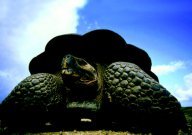
                    A tortoise that once belonged to British colonial general Clive of India in the 18th Century has died in a zoo in Calcutta. Adwaita, "the only one" in Bengali, was found dead by keepers in Alipore Zoo on Wednesday. His shell cracked some months ago and a wound had developed. West Bengal officials said records showed Adwaita was at least 150 years old but other evidence pointed to 250. The shell of Adwaita, an Aldabra tortoise, will now be carbon-dated. Forestry minister in the West Bengal government, Jogesh Barman said: "Historical records show he was a pet of British general Robert Clive of the East India Company and had spent several years in his sprawling estate before he was brought to the zoo about 130 years ago." Mr Barman said Adwaita was probably brought from the Seychelles in the Indian Ocean and presented to Clive, an increasing force in the East India Company's military hierarchy. Aldabra tortoises are found in the four-island Aldabra atoll of the Seychelles, a UN World Heritage Site that now has about 152,000 giant tortoises.

                    Comment


                    • Ethiopian skull may be a missing link

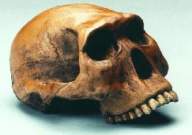
                      A hominid skull discovered in Ethiopia could fill the gap in the search for the origins of the human race, a scientist says. The cranium found near the city of Gawis, 500 km south-east of the capital Addis Ababa, is estimated to be 200,000 to 500,000 years old.The skull appeared "to be intermediate between the earlier Homo erectus and the later Homo sapiens", Sileshi Semaw, an Ethiopian research scientist at the Stone Age Institute at Indiana University, told a news conference in Addis Ababa.It was discovered two months ago in a small gully at the Gawis river drainage basin in Ethiopia's Afar region, south-east of the capital.Sileshi said significant archaeological collections of stone tools and numerous fossil animals were also found at Gawis."(It) opens a window into an intriguing and important period in the development of modern humans," Sileshi said.Over the last 50 years, Ethiopia has been a hot bed for archaeological discoveries.Hadar, located near Gawis, is where in 1974 US scientist Donald Johnson found the 3.2 million year old remains of "Lucy", described by scientists as one of the greatest archaeological discoveries in the world.Lucy is Ethiopia's world-acclaimed archaeological find.

                      Comment


                      • Archbishop opposes creationism in schools

                        The spiritual leader of the world's Anglicans does not believe that creationism -- the Bible-based account of the world's origins -- should be taught in schools. "I don't think it should, actually. No, No," said Archbishop of Canterbury Rowan Williams, reflecting on the bitter education debate over religion and science that has so divided the United States in particular.Williams, head of a church which has no problem with the Darwinian theory of evolution, told the Guardian newspaper: "I think creationism is, in a sense, a kind of category mistake, as if the Bible were a theory, like other theories."Asked if he was comfortable with the teaching of creationism in schools, the mild-mannered and usually cautious theologian said: "Not very. Not very."In the battle to bring God into the classroom, Christian conservative supporters of creationism and intelligent design seek to deny or downgrade the importance of evolution.Intelligent design proponents say that nature is so complex that it must have been the work of a creator rather than the result of random natural selection as outlined in Charles Darwin's theory of evolution.Williams' stance echoes the position of the Roman Catholic Church, the world's largest single Christian denomination, which has weighed into the debate by praising a U.S. court decision that rejected the intelligent design theory as non-scientific.

                        Comment


                        • www.psychicanada.com)

                          Comment


                          • Comment


                            • Pre-Columbus map may be authentic

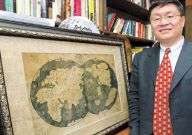
                              A New Zealand university's research has suggested a 243-year-old map indicating a famous Chinese explorer discovered New Zealand, Australia and America before Europeans is probably not a fake. Waikato Times reported Saturday that Waikato University carbon-dating shows that "there might be something in a theory that the Chinese discovered New Zealand before Europeans." Before Christmas, the university's carbon-dating unit was asked to analyze a Chinese map allegedly dating back to 1763 and stating that it was a copy of a 1418 map. If authentic, the 1418 map by Chinese explorer Zheng He, which includes portrayals of America and Australia, was drawn 70 years before Christopher Columbus became the first European to land in America. In the early days of the Ming Dynasty, that is, early in the 15th century, Zheng He was ordered by the then emperor to lead a vast fleet to sail for a distant voyage, aimed to establish relations with foreign countries and expand trade contacts. Between 1405 and 1433, Zheng acted as an envoy to countries lying to the west of China for seven times. But where actually had he been has been debated for years, especially recently by some historians. Western histories record that Columbus found the New World in 1492, Portugal's Bartholomeu Diaz discovered the Cape of Good Hopein 1488, and Portuguese navigator Ferdinand Magellan set off to circumnavigate the world in 1519. While some people said Zheng He seemed to have discovered America 70 years before Columbus in 1492 if the controversial map drawn in 1763 by a Chinese cartographer is real. The map could have an important influence on a re-evaluation of Chinese and Western maritime exploration.

                              The map was originally unveiled in Beijing on Jan. 16, attracting interest from across the globe. The owner, Liu Gang, a Chinese lawyer and map collector, said at the time that it was an authentic 1763 copy of a 1418 Ming Dynasty (1368-1644) original. The original map has not been found, but if real, the 1763 copy could be proof that it existed. If so, it would give credence to the theory that Chinese sailors traversed the globe long before their European counterparts. Deputy Director Fiona Petchey of Waikato University carbon-dating unit, who was entrusted to make tests of the map, said tests showed there was an 80 percent probability that the map's paper dated to either 1640-1690 or 1730-1810.

                              Comment


                              • Comment

                                Working...
                                X