Announcement

Collapse
No announcement yet.

Science Special News

Collapse
This is a sticky topic.
X
X
 
  • Filter
  • Time
  • Show
Clear All
new posts

  • The Lone Gunmen conspiracy

    Doug Yurchey: The X-Files spinoff series, 'The Lone Gunmen,' had its pilot episode concerned with a federally-sanctioned/terrorist plot to fly an airplane by remote-control into the World Trade Center! The pilot was written by Chris Carter, Vince Gilligan, John Shiban and Frank Spotnitz. 'Despite the concerns of some fans, the plot of TLG is indeed part of the boxed set. This would seem like a no-brainer - until you realize that the central conspiracy in the episode involved high-tech electronic hijacking of a commercial airliner with the intent of crashing it into the WTC. Although the episode was conceived and shot in 2000 and aired 6 months before the tragic events of September 11, 2001, the eerie coincidence sent shockwaves through cast and producers.'

    The following is a quote from Propaganda Matrix:

    'The X-Files spinoff shows a government plan to remote-control a plane to crash into the WTC and trigger war just like Pentagon's Operation Northwoods. The only difference is that the airliner crew got help to unlock their flight controls and save all lives. Hollywood always lies about reality. The show premiered in March 2001...Ladies and gentlemen, this is either someone somewhere within the establishment trying to desperately get out a warning or it is more likely an evil government operation. The show has been used to subconsciously manipulate people to believe that if these events did actually happen, it would be like a film, not a part of reality, therefore we should not worry too much. Anyone who would dare say that the government were responsible for such terrorist attacks would immediately be branded a 'lunatic conspiracy theorist, like those guys from the X-Files.' This is one of the sickest depraved operations that could possibly be devised, it is conditioning on a mass scale.'

    'In the early 1960s, America's top military leaders reportedly drafted plans to kill innocent people and commit acts of terrorism in U.S. cities to create public support for a war against Cuba. Code name Operation Northwoods, the plans reportedly included the possible assassination of Cuban emigres, sinking boats of Cuban refugees on the high seas, hijacking planes, blowing up a U.S. ship and even orchestrating violent terrorism in U.S. cities.'
    - ABC 5/1/01

    These were real terrorist acts planned by the American Joint Chief of Staff against its own population.

    'In the two years before the September 11 attacks, the North American Aerospace Defense Command conducted exercises simulating what the White House says was unimaginable at the time: hijacking airliners used as weapons to crash into targets and cause mass casualties...one of the imagined targets was the World Trade Center. In a third scenario, the target was the Pentagon...'
    - USA Today 4/18/04

    Christopher Bollyn of the American Free Press reported the following in an article called '9/11 - What Did Rupert Murdoch Know?' More than a year before 9/11, media mogul and owner of Fox-TV, Rupert Murdoch produced a television program that depicted a passenger aircraft being remote-controlled and flown into the World Trade Center. Did he have prior knowledge of 9/11?

    Murdoch is said to be television's most powerful man in the world with the capacity to reach more than 110 million viewers across four continents. Murdoch is a close friend of 'accused Israeli war criminal' and PM Ariel Sharon. An estimated 13.2 million Fox TV viewers watched the pilot episode of TLG broadcast on 3/4/01. When life imitated art just six months later on 9/11, no one in the media seemed to recall the program. Why was it so forgotten?

    Comment


    • Comment


      • The end for complimentary medicines ?

        A group of top doctors called on the NHS on Tuesday to stop offering complementary therapies like homoeopathy at a time when hospitals are laying off staff due to budget deficits. A letter published in the Times newspaper and sent to individual health trusts, called for a review on how money is spent. "We are a group of physicians and scientists who are concerned about ways in which unproven or disproved treatments are being encouraged for general use in the NHS," said the letter. It was signed by 13 top doctors and scientists and organised by Professor Michael Baum, Emeritus Professor of Surgery at University College London. "At a time when the NHS is under intense pressure, patients, the public and the NHS are best served by using the available funds for treatments that are based on solid evidence," the letter urges. It said government funds were being used for the "overt" promotion of homeopathy which it called "an implausible treatment for which over a dozen systematic reviews have failed to produce convincing evidence of effectiveness."

        The release of the letter, dated May 19, comes as Prince Charles, a long-time advocate of complementary medicines, is set to give a speech on the issue to the World Health Organisation in Geneva. In recent years, complementary therapies and medicines such as acupuncture and herbalism have been increasingly available via various state health providers although there is little empirical evidence to suggest they actually work.

        Comment


        • Waitoreke - new species or castaway ?

          Tony Lucas: New Zealand is believed to have had no mammals when it separated from Gondwana, apart from three species of bats, historical evidence however states that an either otter or beaver like animal may also have been resident here, or been stranded long ago. The first accurate account we receive of this animal comes from the logbook of Captain Cook.When he entered Pickersgill Harbor in 1773 aboard the Resolution, he reports in his journal the sighting of a four-legged, cat sized animal, with short legs and tawny colored fur seen on shore.One of the mariners who also viewed the animals was of the opinion that it had a distinct jackal-like semblance, but with a bushy tail.When Cook queried his naturalists about this beast, which they had not observed themselves, they proposed it may have been some type of fox or more likely one of the vessels cats that had somehow managed to get ashore.Another possibility, of which the Naturalists and indeed Cook may not have been aware of, is what Cook and his crewmen may have witnessed was one of the native dogs (Kuri).This species of dog is now extinct but was described as having shorter legs than the average dog and a very bushy tail. As Natives were residing in the Pickersgill area at the time it may have been one of their dogs Cook viewed, being unfamiliar with the species it is possible Cook misidentified the animal as a new species of mammal native to New Zealand Shores.

          Comment


          • Comment


            • Toward immortality

              Adam and Eve lost it, alchemists tried to brew it and, if you believe the legends, Spanish conquistador Juan Ponce de Leon was searching for it when he discovered Florida. To live forever while preserving health and retaining the semblance and vigor of youth is one of humanity's oldest and most elusive goals.Now, after countless false starts and disappointments, some scientists say we could finally be close to achieving lifetimes that are, if not endless, at least several decades longer. This modern miracle, they say, will come not from drinking revitalizing waters or from transmuted substances, but from a scientific understanding of how aging affects our bodies at the cellular and molecular levels.Whether through genetic tinkering or technology that mimics the effects of caloric restriction strategies that have successfully extended the lives of flies, worms and mice a growing number of scientists now think that humans could one day routinely live to 140 years of age or more.

              Extreme optimists such as Aubrey de Gray think the maximum human lifespan could be extended indefinitely, but such visions of immortality are dismissed by most scientists as little more than science fiction.While scientists go back and forth on the feasibility of slowing, halting or even reversing the aging process, ethicists and policymakers have quietly been engaged in a separate debate about whether it is wise to actually do so.

              Comment


              • Nazca photographs deepen mystery

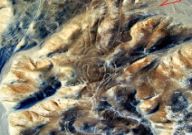
                The Nazca Lines have been a source of mystery and dispute since their discovery in southern Peru nearly a century ago. So why should the latest find be any different? Japanese enthusiasts recently released new aerial photographs of figures etched in the ground of the Nazca region, adding a fresh dollop of wonder to the giant geometric patterns and animal drawings that scientists say the Nazca Indians created as many as 2,000 years ago. Peruvian officials expressed excitement about the announcement. But Nazca experts said the Japanese discoveries might merely be good photographs of previously known lines. 'Saying these figures are new is a risk,' said Josue Lancho Rojas, a Nazca historian and writer. 'You cannot say at this time that there are any virgin sites.' Even if the Japanese figures are not new, the announcement exposed shortcomings in Nazca scholarship. And it raised new questions about the Peruvian government's commitment to sophisticated scientific study. Largely undocumented There is no central catalog detailing the hundreds of lines and figures already mapped and measured. There is no database for archeologists or, for that matter, a team headed by a literature professor from Yamagata University in Japan, to refer to when trying to piece together the history of the Nazca. 'There are two consequences to this `discovery,' one positive and one negative,' Lancho said.

                'The positive is that a lot of tourists are going to come to Nazca now, eager to see the new figures. 'The negative is that once again it shows that the National Institute of Culture has no central registry of the geoglyphs.' Putting together such a list would not be difficult, experts said, but it would take time and money. Though the Peruvian government profits greatly from the international tourists who come to Nazca to fly over the lines for a dizzying display of ancient accomplishment, Peruvian officials say they could not afford such a project. 'The government should open its doors and say that all the scientists of the world, all the foundations, are invited to come and work,' Lancho said. 'But the Peruvian government puts up too many obstacles to projects.'

                Comment


                • Comment


                  • Backyard approach finds extrasolar planet

                    Three years of scouring the skies with a "homemade" telescope fashioned from commercially available parts has finally paid off for astronomer Peter McCullough. First came the observation of the brief but telltale dimming of a sun-like star 600 light-years away, then the detection of the star's wobble indicative of an orbiting planet's presence.Finally, McCullough's international team of professional and amateur astronomers received the official word that they had discovered a Jupiter-sized planet."Of the planets that pass in front of their stars, XO-1b is the most similar to Jupiter yet known, and the star XO-1 is the most similar to our Sun," said McCullough, of the Space Telescope Science Institute. "But XO-1b is much, much closer to its star than Jupiter is to the Sun."By scouring the skies with many telescopes made from relatively inexpensive equipment instead of a few large observatories, the search for extrasolar planets could pick up dramatically.

                    "This discovery suggests that a fleet of modest telescopes and the help of amateur astronomers can search for transiting extrasolar planets many times faster than we are now," McCullough said.To find XO-1b, the team built their telescope, which they call the XO prototype telescope, from two commercially available 200-millimeter telephoto camera lenses. The setup, which resembles a pair of high-powered binoculars, is mounted on the summit of the Haleakala volcano in Hawaii.

                    Comment


                    • Comment


                      • "Cloaking device" blueprints revealed

                        Researchers in the US and Britain have unveiled their blueprints for building a cloaking device. So far, cloaking has been confined to science fiction; in Star Trek it is used to render spacecraft invisible. Professor Sir John Pendry says a simple demonstration model that could work for radar might be possible within 18 months' time. Two separate teams, including Professor Pendry's, have outlined ways to cloak objects in the journal Science. These research papers present the maths required to verify that the concept could work. But developing an invisibility cloak is likely to pose significant challenges. Both groups propose methods using the unusual properties of so-called "metamaterials" to build a cloak. These metamaterials can be designed to induce a desired change in the direction of electromagnetic waves, such as light. This is done by tinkering with the nano-scale structure of the metamaterial, not by altering its chemistry.

                        John Pendry's team suggest that by enveloping an object in a metamaterial cloak, light waves can be made to flow around the object in the same way that water would do so. "Water behaves a little differently to light. If you put a pencil in water that's moving, the water naturally flows around the pencil. When it gets to the other side, the water closes up," Professor Pendry told the BBC.

                        Comment


                        • Comment


                          • 'Alien message' sparks tsunami panic

                            A website warning of a tsunami has spread panic in Morocco, despite the government's assertion that the alert was merely rumour - and the dubious nature of its source. The Ufological Research Centre said on its website last week that a tsunami could hit the Atlantic after a comet passes close to earth on Thursday, May 25.Eric Julien, author of La Science Des Extraterrestres (Science of Aliens), claimed that the impact of a comet fragment would trigger powerful volcanoes in the Atlantic and generate a giant tsunami that would be destructive across the coasts of several countries, including Morocco.Julien, who claimed to have received the information psychically, said that waves up to 200 metres high will reach coastlines of countries bordering the Atlantic.The alert caused fear and panic among Moroccan citizens, though the Moroccan meteorological office dismissed it on Monday as insignificant. The Moroccan news agency MAP quoted Mustafa Janah, the head of the Meteorological Office, as saying the comet would pass earth at a distance of about 10 million kilometres.

                            Citing the US space agency, Nasa, he ruled out any risk of a tsunami in the Atlantic Ocean.Janah also said that "the Ufological Research Centre does not have technical means" to observe this kind of phenomenon.But despite all the assurances, many Moroccan coastal residents have abandoned their homes and moved to higher ground, anxiously awaiting May 25. Memories remain of the tsunami that hit Asia in 2004 and left up to 232,000 people dead or missing across large parts of the continent.

                            Comment


                            • The kink at the edge of the solar system

                              The outer boundary of the solar system is distorted as though it has been punched from below. The evidence comes from NASA's Voyager 2 spacecraft, which is about to cross the inner boundary even though it is closer to the sun than its twin spacecraft was when it crossed in 2004.The Voyager craft have been racing out of the solar system for 30 years. "They're a pair of old fridges out there," says astrophysicist Merav Opher from George Mason University in Fairfax, Virginia, who has used the data to simulate the shape of the heliosphere, the huge magnetic bubble that contains the solar system, the solar wind and the sun's magnetic field.The simplest evidence that the heliosphere must be distorted comes from Voyager 2, flying south of the solar system's equator. The probe has started to feel the effects of the termination shock, where the solar wind, speeding away from the sun at 1.6 million kilometres per hour, slams into the slower interstellar wind. For more than two years before Voyager 1 passed out of the heliosphere, its instruments detected energetic particles that appeared to be coming from the termination shock.

                              Now Robert Decker of Johns Hopkins University in Laurel, Maryland, reports that Voyager 2 is picking up similar particles.However, Voyager 2 is 1.3 billion kilometres closer to the sun than Voyager 1 was when it crossed the shock in the northern hemisphere in December 2004 (New Scientist, 28 May 2005, p 15). This suggests the termination shock has been deflected inward in the southern hemisphere. Given this data, researchers expect Voyager 2 to cross the shock into the dense heliosheath beyond in the next year or two.The source of this southerly distortion is probably the interstellar magnetic field pushing up on the heliosphere (see Diagram), according to Opher's simulations. "Using a magnetic field in a particular plane we were able to match the Voyagers' observations," says Opher. Both scientists presented their findings this week at the American Geophysical Union Joint Assembly in Washington DC.

                              Comment


                              • Mission to target highest clouds

                                A Nasa satellite mission will be launched this year to study the highest and most mysterious clouds on Earth. Noctilucent, or "night-shining", clouds appear as thin bands in twilight skies, some 80km (50miles) above the surface. Recent records suggest they have become brighter, more frequent and are being seen at lower latitudes than usual. Scientists cannot say for sure but they suspect human activity may be altering the conditions in the mesosphere that drive the clouds' formation. "Noctilucent clouds were first seen in 1885 by a British amateur astronomer, Robert Leslie," explains James Russell from Hampton University, Virginia, US. "They're very beautiful. They have distinctive features - bands, and ripples we call billows - and form right on the edge of space." Russell is the principal investigator on the AIM (Aeronomy of Ice in the Mesosphere) spacecraft, which will be lofted to 600km (370 miles) to make a detailed study of the clouds.

                                The 195kg (430lb) satellite will be put in space by a Pegasus rocket launched from beneath the wing of an aircraft. AIM's three instruments will investigate the recipe needed to make the clouds - cold temperatures, the presence of water vapour, and small dust particles around which the water can condense and freeze out to create ice crystals. Scientists think most of the dust comes not from below but from above - from space. It is extremely hard for dust in the lower atmosphere to be pulled so high, while meteoritic dust is known to be settling onto the planet all the time as rocky space debris falls to Earth.

                                Comment

                                Working...
                                X