Science Special News

Collapse
This is a sticky topic.
X
X
 
  • Time
  • Show
Clear All
new posts
  • Rasputin
    Senior Member
    • Jan 2005
    • 63906

    #571
    How to turn yourself into a genius

    What if I were to tell you that just one year from now your IQ could be double what it is today? And what if I told you that all you needed to do was perform a simple daily exercise that would make it happen? In fact, there is strong evidence that by doing this one simple exercise, you can dramatically increase your IQ -- and even make yourself a genius!So what is this simple, easy and fantastic “genius exercise” that will supercharge your brain? This: Keep a daily journal or dairy. Every day, or several times a day, write down all your thoughts on paper. Do it faithfully for one complete year, and you will rapidly grow more intelligent -- guaranteed.

    Consider:

    • Researcher Catherine Cox studied the habits of 300 geniuses — luminaries such as Isaac Newton, Einstein, Thomas Jefferson — and discovered that all of them were “compulsive” journal or diary keepers.
    • A study determined that only 1 percent of the world’s population habitually engaged in daily journal writing. The study also found that that same 1 percent were almost always super high achievers, and that they almost always lived longer than the average for their time, place and era.
    • Thomas Edison wrote an incredible 3 million pages of notes, letters and personal thoughts in hundreds of personal journals throughout his life.
    • The brilliant cosmologist Steven Hawking contracted Lou Gehrig’s disease more than 30 years ago and was give just two years to live. Hawking is a shriveled up lump of a human being confined to an electronic wheelchair. He cannot speak, write, or even move more than just a trifle. But 32 years after contracting his disease, Hawking is considered among the world’s greatest thinkers. He remarried a few years ago after a divorce, and shows no signs of slowing down with his contributions to cosmology and quantum relativity theory. Although unable to physically keep a journal, Hawking has used computers and other mechanical aides to constantly record not only new ideas and scientific theories, but his own inner reflections.
    • When he was a young man, Albert Einstein took a young woman sailing for a date. The date didn’t go very well. The young woman was frustrated because Einstein hardly said a word to her -- but instead spent the whole day scribbling in a small journal he carried with him.

    Now here’s some more good news: to get all of the IQ building effects of daily journaling, you don’t even have to write down anything that is even coherent!This fact is demonstrated in the the journal of one of the great minds of the 19th Century, English inventor Thomas Faraday, a man much admired by Einstein himself. Faraday filled thousands of notebooks with seeming utter nonsense. Many have studied the journals of Faraday hoping to discover the key to his brilliant mind. All have been frustrated. In Win Winger and Richard Poe’s book, The Einstein Factor, one researcher wrote:“(Faraday's) Diaries have the irritating form of ideas jotted down, repeated and forgotten … a morass or articulated and unarticulated principles, concepts, observations and physical facts.”In fact, the best method to build your IQ seems to be carrying your journal with you throughout the day and writing down any random thoughts as they come into your head.Now an added bonus: Keeping a daily “random thoughts” journal will not only make you smarter, but may also increase your life span! The evidence for this come from a fascinating study of a group of unusual nuns in Mankato, Minnesota.

    The nuns are unique in that just about all of them live well past the average age of death for women in Minnesota. Most of them live well into their 90s, and some top the 100-year mark. Few or none of them have ever suffered from senile dementia or Alzheimer's Disease.What do the sisters all have in common? That’s right -- they are all obsessive journal keepers. Keeping a journal is a requirement of their particular order. And yes, a study of the nuns’ IQs showed that they were all well above average. Of course, there were other variables in the nuns’ clean and serene lifestyle that most likely contributed to their intelligence and long life -- but journal keeping is the one key element they all had in common.So there you have it. Buy a notebook, get a pen and carry them wherever you go. Jot down your random thoughts, reflect upon what you write, and soon, you’ll be enjoying your shiny new super-powered IQ!
    iran

    Comment

    • Rasputin
      Senior Member
      • Jan 2005
      • 63906

      #572
      A sixth sense for a wired world

      What if, seconds before your laptop began stalling, you could feel the hard drive spin up under the load? Or you could tell if an electrical cord was live before you touched it? For the few people who have rare earth magnets implanted in their fingers, these are among the reported effects -- a finger that feels electromagnetic fields along with the normal sense of touch. It's been described as a buzzing sensation, a tingling, an oscillation, movement, pure stimulation and, in the case of body-modification expert Shannon Larrett's encounter with a too-powerful antitheft gateway at a retail store, "Like sticking your hand in an ultrasonic cleaner."Body-mod artists Jesse Jarrell and Steve Haworth's original idea was to implant a magnet to carry metal gadgets. It turns out that doesn't work: If you try to carry something magnetic on your implant regularly, the pinched skin between the magnets dies and your body rejects the implant. But they came up with a new application when a mutual friend suffered an accident that left a shard of iron in his finger.

      He worked with audio equipment, and found that he could tell which speakers were magnetized from the sensation that passed through his finger at close range.That gave Jarrell and Haworth a new direction: Could they obtain that effect deliberately, extending the sense of touch into a sense of magnetism?Todd Huffman, a graduate student at Arizona State University with a background in neuroscience, joined the project and brainstormed with Jarrell and Haworth about how, and where, to best implant a powerful magnet. He helped come up with the most effective design for an implant, and eventually became the first recipient. "The fingertip was chosen because of the high nerve density, and because the hands are constantly interacting with the environment, increasing the chances of sensing electromagnetism in the world," Huffman says.

      iran

      Comment

      • Rasputin
        Senior Member
        • Jan 2005
        • 63906

        #573
        Corkscrew asteroid is Earth's second Moon

        Earth has a "second moon." Asteroid 2003 YN107 is looping around our planet once a year. Measuring only 20 meters across, the asteroid is too small to see with the unaided eye—but it is there. This news, believe it or not, is seven years old."2003 YN107 arrived in 1999," says Paul Chodas of NASA's Near Earth Object Program at JPL, "and it's been corkscrewing around Earth ever since." Because the asteroid is so small and poses no threat, it has attracted little public attention. But Chodas and other experts have been monitoring it. "It's a very curious object," he says.Most near-Earth asteroids, when they approach Earth, simply fly by. They come and they go, occasionally making news around the date of closest approach. 2003 YN107 is different: It came and it stayed."We believe 2003 YN107 is one of a whole population of near-Earth asteroids that don't just fly by Earth. They pause and corkscrew in our vicinity for years before moving along."These asteroids are called Earth Coorbital Asteroids or "coorbitals" for short. Essentially, they share Earth's orbit, going around the Sun in almost exactly one year. Occasionally a coorbital catches up to Earth from behind, or vice versa, and the dance begins: The asteroid, while still orbiting the sun, slowly corkscrews around our planet. "These asteroids are not truly captured by Earth's gravity," notes Chodas. "But from our point of view, it looks like we have a new moon."Astronomers know of at least four small asteroids that can do this trick: 2003 YN107, 2002 AA29, 2004 GU9 and 2001 GO2. "There may be more," says Chodas. He believes the list will grow as asteroid surveys improve in sky coverage and sensitivity.At the moment, only two coorbitals are actually nearby: 2003 YN107 and 2004 GU9. The others are scattered around Earth's orbit.

        2004 GU9 is perhaps the most interesting. It measures about 200 meters across, relatively large. And according to calculations just published in the Monthly Notices of the Royal Astronomical Society (S. Mikkola et al., 2006) it has been looping around Earth for 500 years--and may continue looping for another 500. It's in a remarkably stable "orbit."Right now, however, researchers are paying more attention to 2003 YN107 for one simple reason: it's about to depart. The asteroid's corkscrew path is lopsided and on June 10th it will dip within 3.4 million km of Earth, slightly closer than usual. Earth's gravity will then give the asteroid the nudge it needs to leave. "This is a chance to observe one of these asteroids [on the way out]," explains Chodas.

        iran

        Comment

        • Rasputin
          Senior Member
          • Jan 2005
          • 63906

          #574
          Report fuels spy plane theories

          The UK knows more than it is saying about top secret American aircraft projects, recently declassified documents reveal. Deep inside a previously secret Ministry of Defence report are a few pages which will reignite one of the biggest internet conspiracy questions - Is the US Air Force building secret spy planes which can cross the sky at 3,000mph? The plane, which is often referred to as Aurora, is supposed to be a follow on from the U2 spy plane and the 2,000mph SR71 Blackbird, both of which were first developed and flown in secrecy as 'Black' projects. The MoD report from 2000 says the USAF plans to produce "highly supersonic vehicles at Mach 4 to 6" and hypersonic unmanned craft which will fly in the upper atmosphere and in space. In 2003, the USAF revealed it had been working on a hypersonic unmanned craft - the Falcon - but denied building an Aurora-like Mach 4 to 6 aircraft. The Aurora has 100,000 web pages devoted to it - a lot for an aircraft which may not exist. According to Jane's Defence Review a third of USAF spending on research and development and procurement goes on classified projects. Some of that helps pay for the development of spy satellites and intelligence activities.

          But a sizable proportion goes on the development of secret manned and unmanned aircraft. For more than 50 years some of the world's most exotic aircraft have been developed at Groom Lake in Nevada - otherwise knows as Area 51 - where the appearance of strange shapes in the sky - planes which officially did not exist - led to rumours that captured UFOs were being flown out of there by the US military. The U2 first took to the sky at Groom Lake in 1955 and stayed secret for five years till the Russians shot one down over Svedlovsk and captured the pilot Gary Powers. The Blackbird SR71 spy plane also secretly flew from Groom Lake in the early 1960s and the F117 Stealth Fighter and its prototypes flew from there for ten years before they were publicly revealed.

          iran

          Comment

          • Rasputin
            Senior Member
            • Jan 2005
            • 63906

            #575
            Is the Bosnian pyramid human-made ?

            A war of words continues to rage over the alleged discovery of an ancient pyramid in Bosnia. Bosnian-American pyramid buff Semir "Sam" Osmanagic claims a four-sided hill in the town of Visoko is Europe's first known pyramid, larger than any ever built in Egypt. But in the latest salvo in this battle, the president of the European Association of Archaeologists said on Friday that he had visited the 700-foot (213-meter) hill and saw no evidence that it was human-made. Speaking at a press conference in Sarajevo, Anthony Harding told reporters the pyramid-shaped hill was a natural phenomenon. "My opinion and the opinion of my colleagues is what we saw was entirely geological in nature," the AFP news agency quoted him as saying. "Further work of the same kind would simply produce the same results. I don't think it would change any view about what the nature of the hill is," he said. Harding, an archaeology professor at England's University of Exeter, visited Visoko, 18 miles (30 kilometers) from Sarajevo, on Thursday.

            In April 2006 the Houston-based Osmanagic and a mostly volunteer crew began limited excavations in the area and drilled exploratory wells. The team uncovered what they describe as large stone blocks shaped by human hands and a network of tunnels fronted by a wide, paved entranceway. Osmanagic has speculated that Illyrians—ancient ancestors of today's Albanians—could have built the alleged pyramid perhaps as early as 12,000 years ago during the last ice age.

            iran

            Comment

            • Rasputin
              Senior Member
              • Jan 2005
              • 63906

              #576
              First photos obtained of 'living fossil'

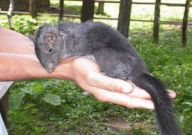
              The first pictures showing a live specimen of a rodent species once thought to have been extinct for 11 million years have been taken by a retired Florida State University professor and a Thai wildlife biologist. They took video and still photographs of the "living fossil," which looks like a small squirrel or tree shrew, in May during an expedition to central Laos near the Thai border.Known as Diatomyidae, scientists have nicknamed it the Laotian rock rat. The creature is not really a rat but a member of a rodent family once known only from fossils.The pictures show a docile, squirrel-sized animal with dark dense fur and a long tail but not as bushy as a squirrel's. It also shows that the creature waddles like a duck with its hind feet splayed out at an angle _ ideal for climbing rocks."I hope these pictures will help in some way to prevent the loss of this marvelous animal," said David Redfield, a science education professor emeritus.He and Uthai Treesucon, a bird-watching colleague, befriended hunters who captured a live rock rat after four failed attempts.

              They returned the animal, which the locals call kha-nyou, to its rocky home after photographing it.The long-whiskered rodent was branded as a new species last year when biologists first examined dead specimens they found being sold at meat markets. But they had never seen a live animal until Redfield and Treesucon photographed it.


              iran

              Comment

              • Rasputin
                Senior Member
                • Jan 2005
                • 63906

                #577
                New glacier theory on Stonehenge

                A geology team has contradicted claims that bluestones were dug by Bronze Age man from a west Wales quarry and carried 240 miles to build Stonehenge. In a new twist, Open University geologists say the stones were in fact moved to Salisbury Plain by glaciers. Last year archaeologists said the stones came from the Preseli Hills. Recent research in the Oxford Journal of Archaeology suggests the stones were ripped from the ground and moved by glaciers during the Ice Age. Geologists from the Open University first claimed in 1991 that the bluestones at one of Britain's best-known historic landmarks had not come from a quarry, but from different sources in the Preseli area. The recent work was conducted by a team headed by Professor Olwen Williams-Thorpe, who said she and her colleagues had used geochemical analysis to trace the origins of axe heads found at Stonehenge and this backed up the original work.

                "We concluded that the small number of axes that are actually bluestone derive from several different outcrops within Preseli," she said. "Axes found at or near Stonehenge are very likely to be from the same outcrops as the monoliths, and could even be made of left-over bits of the monoliths."

                iran

                Comment

                • Rasputin
                  Senior Member
                  • Jan 2005
                  • 63906

                  #578
                  Missing link in birds believed found

                  Separating the layers of sediment from an ancient lake was like turning the pages of a book to get a glimpse of life in the time of dinosaurs, an international team of scientists said Thursday. "A world lost for more than 100 million years was being revealed to us," said Hai-lu You of the Chinese Academy of Geological Sciences. What they found is being called the missing link on the evolution of birds, a loon-like creature that lived in northwest China and is the earliest example of modern birds that populate the planet today. Before their discovery, reported in Friday's issue of the journal Science, the only evidence for this creature Gansus yumenensis was a single, partial leg discovered in the 1980s. Now researchers have dozens of nearly complete fossils of Gansus, said a beaming Matt Lamanna of the Carnegie Museum of Natural History in Pittsburgh. "Most of the ancestors of birds from the age of dinosaurs are members of groups that died out and left no modern descendants.

                  But Gansus led to modern birds, so it's a link between primitive birds and those we see today," Lamanna said. Previously there was a gap between ancient and modern species of birds, and "Gansus fits perfectly into this gap," added Jerald D. Harris of Dixie State College in Utah. It was about the size of a modern pigeon, but similar to loons or diving ducks, the researchers said. One of the fossils even has skin preserved between the toes, showing that it had webbed feet. "We were lucky far beyond our expectations" in finding these fossils, added You. "Gansus is the oldest example of the nearly modern birds that branched off of the trunk of the family tree that began with the famous proto-bird Archaeopteryx," said Peter Dodson of the University of Pennsylvania.


                  iran

                  Comment

                  • Rasputin
                    Senior Member
                    • Jan 2005
                    • 63906

                    #579
                    UFO film exposes government cover-up ?

                    It began with a Colorado farmer seeing a strange, oval-shaped object zip across the sky over his house, kicking off one of the most amazing UFO incidents in the history of the world. But did this really happen?It did according to "The Top Secret UFO Project," R. J. Thomas' mock-documentary about a UFO incident in Colorado in the summer of 1956."Many people have been curious for decades about the Roswell, New Mexico Incident of 1947," Mr. Thomas said. "My film is inspired by stories like that."Based on Thomas' 2004 novella of the same name, "The Top Secret UFO Project" chronicles the UFO-related events experienced by a tiny Colorado hamlet called Jasper. According to the film, the town dealt with one unusual event after another in the summer of 1956. After the farmer's spaceship sighting, scientists rushed into Jasper to investigate, reporters rushed in looking for stories, and government officials rushed in to keep it a secret from the world. Billed as "the movie the government does not want you to see," "The Top Secret UFO Project," is a parody of specials you might find on the Sci-Fi Channel or Discovery, and the cheesy UFO documentaries of the 70's and TV programs like "In Search Of."

                    Mr. Thomas plays a documentary filmmaker who, in 2003, discovered (by accident) some top secret government films pertaining to the Jasper Incident of 1956. This inspired him to make a documentary about Jasper's UFO story, and to discover the truth behind what really happened that mysterious summer in Colorado."Not everyone is a UFO buff," Mr. Thomas said, "but everybody loves a good campfire story."And as far as the film portraying fiction as fact?"The film is told with a straight face, no matter how ridiculous the information may be," Mr. Thomas said. "But, even seven years later, 'The Blair Witch Project' is still seen by some people as fact."

                    iran

                    Comment

                    • Rasputin
                      Senior Member
                      • Jan 2005
                      • 63906

                      #580
                      So where are all the crop circles ?

                      Hay fever, different crops, tragedy, emigration and yet more argument. Yes, the 2006 crop circle season is now under way... or is it? The rumours spreading around the wacky crop-circle world of Wiltshire are that there might not be as many of the mysterious formations this year as in previous summers.While some people who claim to make the crop circles say they are hanging up their planks and ropes to have time out, others in the furtive world of the circlemakers pledge that this year will be the biggest yet.And then, of course, there are the crop-circle devotees. They scoff at such planks-of-wood nonsense and say the more other-worldly circle- makers are sure to carry on.One thing is certain, the possibility that there will be fewer, or even no crop circles this year, has sent the close-knit croppie community into a geometric vortex.It was prompted by probably the most famous circlemaker in Wiltshire, Matthew Williams, announcing he would be taking a year off because hay fever, probably sparked by the increase in oil seed rape fields, was getting the better of him.

                      Mr Williams, still the only person in the world to be found guilty of crop circle criminal damage, said: "I'll not be out this year, it really is getting too bad. After a night in the fields, it takes me at least a day to recover."He, and other crop circlemakers were also stunned by the death of one of their number, Paul Obee, who was found dead in a car at Erlestoke, near Devizes, last month.

                      iran

                      Comment

                      • Rasputin
                        Senior Member
                        • Jan 2005
                        • 63906

                        #581
                        The past is the future for the Aymara

                        Tell an old Aymara speaker to “face the past!” and you just might get a blank stare in return – because he or she already does. New analysis of the language and gesture of South America’s indigenous Aymara people indicates a reverse concept of time.Contrary to what had been thought a cognitive universal among humans – a spatial metaphor for chronology, based partly on our bodies’ orientation and locomotion, that places the future ahead of oneself and the past behind – the Amerindian group locates this imaginary abstraction the other way around: with the past ahead and the future behind. Appearing in the current issue of the journal Cognitive Science, the study is coauthored, with Berkeley linguistics professor Eve Sweetser, by Rafael Nunez, associate professor of cognitive science and director of the Embodied Cognition Laboratory at the University of California, San Diego.

                        “Until now, all the studied cultures and languages of the world – from European and Polynesian to Chinese, Japanese, Bantu and so on – have not only characterized time with properties of space, but also have all mapped the future as if it were in front of ego and the past in back. The Aymara case is the first documented to depart from the standard model,” said Nunez.

                        iran

                        Comment

                        • Rasputin
                          Senior Member
                          • Jan 2005
                          • 63906

                          #582
                          New life forms found in arctic glacier

                          A team of researchers are heading to the high Arctic in a Canadian-led expedition that will look for minerals that could provide clues about extraterrestrial life. After geologist Benoit Beauchamp’s previous journey to the arctic turned up a massive sulphur-coated glacier spring on Ellesmere Island, scientists are curious to know more about the natural oddity.Beauchamp discovered the spring in the mid-1990s when he noticed a yellow stain on the snow while flying above the Borup Fiord Pass in a helicopter. He returned to the area and noticed the strong smell of rotten eggs that indicated the presence of sulphur. Beauchamp’s colleague, Dr. Steve Grasby, came back in 1999 and 2001 to collect samples of water and mineral deposits.Early testing showed the glacier spring contains new forms of bacteria and an extremely rare mineral known as vaterite. The bacteria have survived in one of the coldest and harshest environments on Earth and scientists say nothing like it has ever been found before.“That yellowish stain has attracted the attention of NASA and the Canadian Space Agency because it has a link to extraterrestrial life,” Beauchamp, the executive director of the Arctic Institute of North America, told Canada.com.

                          “What we're finding more and more is there is life within the ice and beneath the ice.”The Arctic Institute of North America is a non-profit research institute of the University of Calgary. Their team is eager to begin exploring the arctic sulphur deposit because signs of life in Canada’s arctic suggest it’s also possible life could exist on Jupiter’s second moon Europa. Scientists say the glacial spring in the arctic will provide critical information for understanding and uncovering what lies beneath the icy surface of Jupiter’s second moon, Europa.NASA is currently planning on sending a robot probe to Europa to drill through ice for signs of life. But scientists will have to do so without contaminating ice, as Europa is widely regarded as one of the leading candidates to determine if we are alone in the universe.

                          iran

                          Comment

                          • Rasputin
                            Senior Member
                            • Jan 2005
                            • 63906

                            #583
                            New 'liquid armour' developed in lab

                            Submitted by Monkipuzzle: The current war in Iraq is leaving behind a legacy of wounded soldiers. For every fatality there have been between seven or eight injured -- a number amounting to 18,356 as of June 11, 2006. That's a higher ratio of injured to dead than in any previous American war, a mixed blessing that can largely be attributed to advances in body armor and improved battlefield medical treatment. A new "liquid armor" could be the solution for protecting the parts of the body that aren't currently covered by standard-issue ballistic vests – arms and legs, where many of these devastating and life-threatening injuries occur. Co-developed by two research teams – one led by Norman Wagner, and the other led by Eric Wetzel at the U.S. Army Research Lab in Aberdeen, MD – the liquid technology will soon lead to light, flexible full-body armor.

                            The liquid - called shear thickening fluid is actually a mixture of hard nanoparticles and nonevaporating liquid. It flows normally under low-energy conditions, but when agitated or hit with an impact it stiffens and behaves like a solid. This temporary stiffening occurs less than a millisecond after impact, and is caused by the nanoparticles forming tiny clusters inside the fluid. "The particles jam up forming a log jam structure that prevents things from penetrating through them," Wagner explains.

                            iran

                            Comment

                            • Rasputin
                              Senior Member
                              • Jan 2005
                              • 63906

                              #584
                              UT professor debunks chupacabra myth

                              UT professor Pamela Owen can add one more title to her resume: educator, scientist and supernatural investigator. The producers of "Mystery Hunters," an educational TV program for kids, asked Owen to help identify bones reported to belong to the mythical chupacabra. The chupacabra, whose name means goat-sucker in Spanish, is a fabled creature which attacks and mutilates live-stock, sucking the blood of its prey.The bones belong to rancher Devin Macanally who shot the animal while it was attacking chickens on his ranch in Elmendorf. Photos of the animal, which later became known as the "Elmendorf Beast" show a small, hairless, dog-like creature.Owen, who holds a doctorate in mammalogy with a specialization in carnivores, said that when she first heard about the "Elmendorf Beast," she agreed with biologists' initial findings that it was some kind of coyote with severe mange.Owen's suspicions were later confirmed when the show's producers e-mailed her a photo of the creature's exhumed skull.

                              Owen, who has been identifying bones for the Texas Memorial Museum for six years, was able to recognize the skull almost instantly."I wrote back and said, 'Nice coyote.'" she said.Owen said she could understand how an average person could mistake the creature for a new species."What [Macanally] described was certainly not like any coyote," she said. "It was this hairless blue-skinned thing with disfigured teeth. This was a sick animal."What is called supernatural phenomena can often be explained within the context of a natural world, Owen said."I still think the stories are great, but they are based on interesting natural phenomena," she said.

                              iran

                              Comment

                              • Rasputin
                                Senior Member
                                • Jan 2005
                                • 63906

                                #585
                                Discovery to launch July 1st

                                NASA decided Saturday to schedule the launch of the shuttle Discovery for July 1, despite the concerns of some top safety officials that the space agency has not solved the problem with flaky insulating foam, which brought down the shuttle Columbia in 2003. Two members of the shuttle-management team, chief engineer Christopher Scolese and head safety officer Bryan O'Conner, recommended the launch be delayed because of worries that foam on 37 brackets attached to the shuttle's giant external tank could fall off and pose a hazard to the craft.But at the end of the two-day Flight Readiness Review, they were outvoted by the rest of the management team. The team thought that even if foam comes off, it would not endanger the seven-person crew.After going on record recommending a delay, the dissenting officials said they did not oppose launching July 1.National Aeronautics and Space Administration officials agreed that recommending against a launch but not opposing it sounded contradictory. Shuttle-program manager Wayne Hale said this was proof that NASA has changed in the wake of the Columbia accident.

                                After the loss of Columbia, it came out that some officials had been worried about the 1.7-pound piece of foam that could be seen hitting the left wing during launch. Their concerns were brushed aside.Now, said Hale, every voice is heard, even if it sends a somewhat confusing message to the public.About 35 pounds of insulating foam have been removed from the fuel tank after a 1-pound piece of foam came off during the launch of Discovery last year.Concern remains about the potential loss of foam from a part of the tank known as the ice-frost ramps. Some engineers want those pieces of foam removed before the upcoming launch. NASA decided to leave them until they see how the shuttle performs during this mission.NASA Administrator Michael Griffin said no large pieces of foam have ever come off the ice frost ramps during 114 shuttle missions.

                                iran

                                Comment

                                Working...