Announcement

Collapse
No announcement yet.

Science Special News

Collapse
This is a sticky topic.
X
X
 
  • Filter
  • Time
  • Show
Clear All
new posts

  • Ancient civilization unearthed in Syria

    An excavation project on the Syrian-Iraqi border has uncovered an ancient settlement wiped out by invaders 5,500 years ago. Discovered in northeastern Syria, the ruined city of Hamoukar appears to have been a large city by 4,500 B.C., said archaeologists Clemens Reichel and Salam al-Quntar, who co-directed Syrian-American excavations on the site.Reichel, a research associate at the Oriental Institute of the University of Chicago, and al-Quntar, of the Syrian Department of Antiquities, jointly announced their discoveries on Thursday.They said Hamoukar was a flourishing urban center at a time when cities were thought to be relegated hundreds of miles to the south.The site is in the upper edges of the Tigris and Euphrates Valleys, near the Iraq border. Reichel said it may have been settled as long as 8,000 years ago.Scholars had long believed that urbanized societies started and were isolated in Uruk, in southern Mesopotamia. But excavations that started in 1999 at Hamoukar and at other sites in central Syria led to new ideas about the how urban culture spread in the region. Ancient Mesopotamia was a region that includes Iraq and parts of Syria.

    This year, the Syrian-American excavations discovered evidence of the battle that toppled and burned Hamoukar's walls and ended the city's independence. Researchers found that invaders likely hurled more than 1,200 sling-fired bullets at Hamoukar and more than 100 heavy, 4-inch clay balls."The whole area of our most recent excavation was a war zone," Reichel said.The ruins have preserved not only local pottery and artifacts, but also vast amounts of Uruk pottery."The picture is compelling," Reichel said. "If the Uruk people weren't the ones firing the sling bullets, they certainly benefited from it. They took over this place right after its destruction."
    Last edited by Rasputin; 07-20-2006, 01:40 AM.

    Comment


    • Comment


      • man asheghe science beedam, makhsoosan dar USA ke dar lab hashoon hameye azmayesh haro anjam midim bar axe iran, va moallema asheghe kareshoonan va hal vakonan, masalan yadame ke ye bar teacher kelase physics man gas He ro ghooort dad va sedash avaz shod ke faghat be man neshoon bede ke che farghi dashte beeed, man az khodam lezzat dar vakonam

        Comment


        • Visiting the home of Mothman

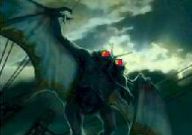
          West Virginia has played host to two famous monsters, both within a span of a dozen years. In 1955, a 12-foot-tall space creature landed in a flying saucer and terrified the town of Flatwoods. And in 1966-67, a monster nicknamed "Mothman" performed a similar frightfest on the citizens of Point Pleasant.But today, the Flatwoods monster -- it never got a name -- is almost invisible on the vacation landscape. All that the town of Flatwoods offers are some monster replicas for sale ($25) in the gas station next to the Shoney's.In contrast, Point Pleasant is keenly attuned to the needs of the modern monster tourist. It has a very cool Mothman statue. It has a Mothman museum. It sells lots of Mothman merchandise.Why the difference? Mothman was made into a Hollywood movie in 2001 and thus is more than a monster -- he's a celebrity.

          Mothman arrived in Point Pleasant in November 1966 in classic style, scaring couples in parked cars and eating farmers' dogs. He was described as seven feet tall with a barrel chest and a piercing shriek. His most memorable features were his ten-foot batlike wings and his huge, red, glowing eyes. And unlike the Flatwoods monster, Mothman didn't spook and run. He hung around for over a year, building an impressive roster of over 100 fear-struck locals who claimed to have encountered him. Fortean researcher John Keel heard the stories and came to Point Pleasant to see what was happening. He compiled what he found in a 1975 book, The Mothman Prophecies, which was later turned into that 2001 Richard Gere film.


          Comment


          • Comment


            • New way of reading minds discovered

              Scientists have developed a way of reading minds. Using brain scanners, they found people dredge up old memories by recreating the same pattern of activity as when the memory was laid down. By looking at which areas of the brain "lit-up" while people were retrieving a memory, neuroscientists were able to predict what people were thinking about, before they even knew themselves. This understanding could eventually help people with memory disorders, such as Alzheimer's disease. Sean Polyn, from the University of Pennsylvania in Philadelphia, asked people to remember 90 different things, ranging from famous places such as the Taj Mahal, to celebrities such as Halle Berry and everyday objects such as tweezers. As each picture was presented the scientists asked a question about it (such as 'Do you like Halle Berry?') and recorded the activity in the person's brain as they thought about that person, object or place. Following this exercise Dr Poyln and his colleagues used a computer program to analyse these brain snapshots. For all nine subjects certain areas of the brain always showed an increase in activity. But the program was able to pick out differences in the way people thought. Finally the scientists asked people to recall as many of the 90 things as possible.

              Using the previous brain scans and the computer program Dr Polyn and his colleagues matched up the original brain activity with the new brain activity, as people sifted through their memories. "We were able to see the re-surfacing of people's thoughts," said Ken Norman of the University of Princeton, another author on the paper. When people recalled the Taj Mahal their brain showed a similar pattern of activity to the moment they were first presented the picture. As people changed from thinking about a location to an object, or a celebrity the researchers could see different parts of the brain become activated seconds before the person had retrieved the memory.


              Comment


              • Last edited by Rasputin; 07-20-2006, 01:42 AM.

                Comment


                • Communion twenty years on

                  Whitley Strieber: Twenty years ago tonight, at approximately three thirty in the morning on December 26, 1985, I heard odd noises and felt as if I had fallen out of bed. I opened my eyes to a scene of such extraordinary horror that I am still suffering from the effects of that moment, two decades later. What I saw before me was a small room like the interior of a tent, populated by enormous insects. These insects were at once strange, distant-seeming creatures, totally unlike me and not communicating any sense of the human at all, and yet at the same time aware of me in a way that eloquently and terrifyingly signaled intelligence. Immediately, I was seized from behind and there was a swooping rush around me. An odd, machine-like voice commenced repeating again and again the phrase 'what can we do to help you stop screaming?' The terror was beyond words, beyond imagining. They were rough with me, pressing a needle into my head and raping me with a device that I now know is called an electrostimulator. In those days, such devices were used to induce erections in sex clinics, and they are still used to gather semen in animal husbandry. I am not a prude, but I am a modest man and quite shy physically. I was appalled at finding myself naked with these creatures. I can remember trying and trying to wake up, to somehow find my bed around me again, to embrace my wife. But my wife was not there. I was alone in the night with these things and I had no idea what might happen to me next. This experience has left me with a disease called post-traumatic stress disorder. The last time I awakened with my heard practically slamming out of my chest, my breath coming short and so frightened that I literally dared not move a muscle was last night.

                  In fact, for at least five out of seven nights since the event happened, I have been waking up in terror between three and four in the morning. I have tried many treatments for this, ranging from conventional psychiatry and psychotherapy to every sort of esoteric treatment you can imagine, to no avail. The disorder that began on that night will, I believe, remain with me until the day I die. And I wouldn't trade it for anything in the world. Because, on that night, the woman whose portrait is on the cover of the book Communion said to me, 'you're the luckiest of the lucky.' She was precisely correct. Yes, it has been hard and it has shattered me on the deepest possible levels. The public reaction has pained me as much as it has inspired me. But I have had a truly remarkable opportunity offered to me, and I have taken as full advantage of it as has been in my ability.


                  Comment


                  • Last edited by Rasputin; 07-20-2006, 01:43 AM.

                    Comment


                    • Last edited by Rasputin; 07-20-2006, 01:43 AM.

                      Comment


                      • Comment


                        • chera bazi vaghti ke ye chizi ke mibinid va bad mifahmid ke oono ghablan dar khab didin, vali chera oon ghesmate mohemmesho ke mikhahid be yad avarid ke tooo khab chi shod, chera yadetoon nemiad?????

                          Comment


                          • NASA team observe explosion on the Moon

                            Nasa scientists have witnessed a rare explosion on the Moon, caused by a meteoroid slamming into it. The blast was equal in energy to about 70kg of TNT and was seen near the edge of Mare Imbrium (the Sea of Rains). The object that hit the Moon was probably part of a shower of "taurids" which peppered Earth in late October and early November. Understanding lunar impacts could help protect astronauts when Nasa sends humans back to the Moon. Meteoroids are small rocky or metallic objects in orbit around the Sun, or another star. One of the astronomers who observed the impact estimates that it gouged a crater 3m wide and 0.4m deep. Rob Suggs of Nasa's Marshall Space Flight Center in Huntsville, US, was testing a new 10-in telescope and video camera assembled to monitor the Moon for space strikes. On 7 November, his first night using the telescope, he observed one. Renewed interest "People just do not look at the Moon anymore," said Dr Suggs, of Marshall's engineering directorate. "We tend to think of it as a known quantity; but there is knowledge still to be gained here." Dr Suggs used commercial software to study the video he took, and spotted a very bright flash.


                            Comment


                            • wOoOoOoOw thx redwine joooooooon


                              Comment


                              • Stigmatics: saints or insane ?

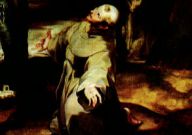
                                For over 750 years already some Christians have stigmata on their bodies as symbols of Christ's sufferingsThe hands and legs of the Savior were punched through with nails. The crown of thorns on his head scratched the forehead and the skull. One of the Roman legionaries deeply wounded the Savior with his spear right in the chest. For over 750 years already some Christians have stigmata on their bodies as symbols of Christ's sufferings. The Greek word 'stigma' means 'wound.' Stigmata may look like bleeding wounds on palms or on feet as if people were nailed down. Some people having stigmata have wounds on their foreheads resembling scratches left by a crown of thorns. Others have bloody wales on their backs as if traces of flagellation. Saint Francis of Assisi is believed the first man who ever had stigma. It was in 1224 that stigma appeared on the man during the holiday of Exaltation of the Cross.

                                A legend says that Saint Francis had a vision of an angel who excised the stigmata on the saint's hands and legs with five rays of light.However, some experts insist that the first evidence of stigma belongs to an earlier epoch, the first years of Christianity. One of Saint Paul's messages mentions that after the crucifixion of Christ Saint Paul got wounds like those that Christ had. The statement can be interpreted either literally or metaphorically. But it is true that no more evidence of stigma appeared within about a thousand of years afterwards. There are some versions explaining why stigmata began to appear at the beginning of the current century. The first version says stigma appeared because of the intensified theological disputes in the 11-12th centuries.


                                Comment

                                Working...
                                X