300 (The Second Part ?)

Collapse
X
 
  • Time
  • Show
Clear All
new posts
  • Rasputin
    Senior Member
    • Jan 2005
    • 63906

    #106
    Dear Artists,

    We have started a massive collaborative project - Project 300 - to bring together Persian/Iranian artists from around the world and use art to portray our history and our culture as we see it ourselves.

    The depiction of Persians/Iranians and our history in today's media is often created by people who don't always have a good understanding of our culture and don't come from a Persian background. As a result, most of these depictions are ill-researched, inaccurate, and at times offensive.

    The movie 300, is only the latest example. We believe that the only solution is to get involved ourselves. After all, who knows our history and culture better than ourselves? Thus, we have used the 300 movie as a stepping stone to materialize this effort, bring artists together, and showcase our art to the world.

    Already some great art has been gathered, and many more artists are currently working on their submissions.

    This is a call to all artists who wish to participate. If you wish to be a part of this project, please check out the submission guideline below:

    What we Want: We are looking for art that has a clear connection to Persian/Iranian culture, history, and heritage. Submitted art can be in the form of illustrations, paintings, drawings, photography, animation, and film. Although all styles are welcome, we are especially interested in CG art and art that has a comic-book theme and feel.

    Artwork can ONLY be submitted by the artist who created it.

    How to Submit:

    You can email your image submissions to submit @ 300themovie . info as an email attachment. For animation and film submissions, or for any other file larger than 2 Megabytes, please contact us first to make the necessary arrangements.

    Name the file as artistname-title, using lowercase letters and/or numbers only (no special characters please) and where artistname is your name and title is the title of the piece in the submitted image.

    If you have a website, please include its URL in the email and we will post it with your work.

    Submissions that are approved and meet the requirements will be displayed on the gallery page at http://300themovie.info.

    iran

    Comment

    • Rasputin
      Senior Member
      • Jan 2005
      • 63906

      #107
      For many Iranians the cinematic movie ‘300’ may come as a shocking revelation. But to those of us who came up through America’s school system, the ‘Battle of Thermopylae,’ which is what the movie ‘300’ is based on, is as familiar as George Washington’s fabled “cherry tree” incident.

      The Battle of Thermopylae was of course written by the classical Greek author, Herodotus, who lived in the Persian city of Halicarnassus. His book, ‘The Histories’ became part of Western folklore only recently. It was not until about 1850 that America embraced Herodotus as the leading authority on Persian history.

      Before 1850, however, the West had a very favorable impression of the Persian Empire. That’s because the West’s main source for Persian history was the Bible and the ‘Cyropaedia,’ written by another Greek author named Xenophon.

      But the Cyropaedia glorified the monarchy of Cyrus The Great, and in the wake of two bloody revolutions fought by America and France to liberate themselves from their own monarchies, a major campaign began, around the mid 19th century, to promote democracy throughout the rest of Europe, and Herodotus was the perfect propaganda tool.

      Herodotus was a democratic groupie and was quickly ushered in as the “Father Of History.” Around 1850, his ‘Battle Of Thermopylae’ came to symbolize the West’s struggle for democracy against the powerful forces of Persia’s monarchy.

      The story is easy to buy into: 300 brave Spartans saved Western democracy from 2.7 million evil Persians. But aside from the fanciful numbers which need decimal-point adjustments, this whimsical tale has far graver consequences than a mere biased account of history.

      The ‘Battle Of Thermopylae’ has been the single most powerful wedge, which has divided East and West for over 2 millennia. In a time when East and West should be reconciling their differences, along comes the movie ‘300’ to drive that wedge even deeper.

      What is most disturbing about this movie is not that it lacks historical accuracy. It is not that Xerxes, the Grandson of Cyrus The Great and loving husband of Esther, is shown as an oversized drag queen. It is not even the outdated racist cliché of casting the Persians as Africans and the Spartans as white, blue-eyed ‘Chippendale dancers,’ when in reality the roles may well have been reversed.

      What is so distressing about this movie is the realization of the tremendous power Hollywood wields in determining a people’s identity. It is the same nightmare Native Americans endured during the whole ‘cowboy-movie’ genre.

      But for those who are quick to dismiss ‘300’ as a fleeting fantasy flick aimed at the insignificant, 17 to 24 year-old male video-gamer, think again. First there was Alexander, now ‘300,’ next could well be the ‘Battle Of Marathon,’ another one of Herodotus’s glowing accounts of ancient Persia.

      Herodotus is accepted blindly by virtually all Western demographics. Even the New York Times is not immune. Here is how it described the Persians in its April 20, 2004 issue about the Battle Of Marathon:

      “the defeat of a ruthless state (Persia) that had enslaved much of the known world from the Balkans to the Himalayas.”

      “the ancient Greeks defeated the Asian invaders (Persia) and saved Europe in what scholars call one of the first great victories of freedom over tyranny” - William J. Broad, (NY Times)

      What stretches the limits of hypocrisy is that there isn’t a single shred of archeological evidence that the Persians ever owned slaves. Yet we know that slavery was an integral cornerstone of Greek society. Aristotle’s manifesto even sanctions it. Persia, which was once a haven for runaway slaves from Egypt, Greece, and later Rome, is today branded as a slave-hungry empire by cultures which were built on slavery!

      What makes Herodotus’s propaganda so difficult to refute is that it is peppered with facts. But in reality, it is a desperate diatribe. Perhaps his biggest ploy is his attempt to equate democracy with freedom. These two words are used virtually interchangeably throughout his book. And the West has swallowed it hook-line-and-sinker.

      But America’s founding fathers knew better. They were not swayed by Herodotus. They implemented many safeguards to protect freedom from the pitfalls that mired Athenian democracy. Even Winston Churchill said, “Democracy is the worst form of government except for all the others which have been tried.”

      Democracy may well be the best form of government. But what makes America great is not so much democracy as it is its Bill Of Rights. And this is exactly what made Persia Great. Democracy can often lead to tyranny by the majority as was the case in democratic Athens, where women, slaves and foreigners did not have the right to vote.

      In monarchic Persia, however, women enjoyed a level of gender equality unmatched even to this day, and slavery was not practiced. The fact is, Persia’s monarchy was more free than Athens’ democracy, all because of Persia’s Bill Of Rights.

      No one exemplifies Persia’s freedom better than Herodotus himself. He describes Athens as the bastion of freedom, yet he chose to live in Persia. Xenophon, on the other hand, who actually lived in Athens, reminisces enviably about the monarchy of Cyrus The Great?

      Herodotus claims Persia had enslaved most of the known world, yet we know Herodotus was not a slave. He traveled freely throughout the empire, openly criticizing it.

      Why did Herodotus not live in Greece? Because Persia - the empire he is so quick to demonize - afforded him the very freedom to publish his scathing report of it. People want to live where their god-given rights are protected, regardless of whether its democratic or monarchic.

      These god-given rights were first drafted into law by the founder of the Persian empire, Cyrus The Great. In fact, ancient Persia may well have served as the blue print for America’s Bill Of Rights. Both Thomas Jefferson and James Madison, the architects of America’s Constitution, were great admirers and owned several copies of Xenophon’s Cyropaedia.

      Today, no other country resembles ancient Persia as closely as does the United States. If any country should sympathize with, rather than celebrate, Persia’s quagmire in Greece it is the United States. Few events in history mirror America’s war on terror as closely as Persia’s war on Greece.

      The Greeks had been carrying out terrorist attacks on Persian holdings for years. They had attacked Persian cities, set fire to Persian temples, disrupted key trade routes, and pirated merchant ships crossing the Bosphorus. They incited rebellions inside Persian provinces, but perhaps most abhorrent to the Persians was the ease by which the Greeks broke their treaties and betrayed Persia’s trust.

      Rather than resort to violence, however, Persia tried to keep the Greeks in check by financially supporting Greek politicians who were “pro-Persian,” much the same way America fights its proxy wars. But what finally triggered Persia’s wrath was an act rarely mentioned in the West, though well documented, even by Herodotus (7:11).

      iran

      Comment

      • Rasputin
        Senior Member
        • Jan 2005
        • 63906

        #108
        Persia’s 9/11:

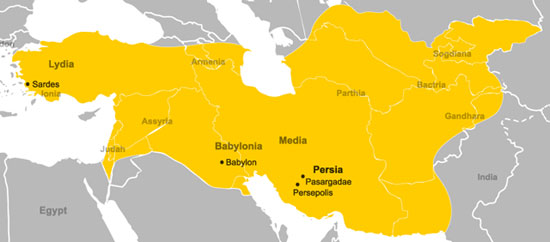
        In 498 BCE, Athens carried out a terrorist attack on Sardis, a major Persian city, which made 9/11 seem like child’s play. Aristagoras, an Athenian, set fire to the “outlying parts” of Sardis trapping most of its population “in a ring of fire.” (Herodotus 5:101)

        More innocent civilians died at the hands of Aristagoras than Osama bin Laden could ever hope to kill. And just as most of the world supported America’s retaliation against Al Qaeda, so did it rally in support of Persia’s attack on Athens.

        The Spartans were not even targets of Persia’s attack, until they violated a universal protocol by killing a Persian messenger who Herodotus claims was asking for Sparta’s submission but in reality was probably sent by Persia’s king, Xerxes to convey the same message America sent to the entire world after 9/11: “you’re either with us, or against us.”

        The Spartans were Greek Jihadists who lived only to die. They were by all accounts ruthless savages who murdered Greek slaves known as “Helots” just for sport, cultivated a culture of thievery and rape, and practiced infanticide, as the movie ‘300’ rightly points out in its opening scenes. Sparta was not even democratic. It was an oligarchy at best. Despite knowing all this, the West continues to hail the Spartans as the saviors of Western democracy.

        Yes, the Spartans died fighting a foreign invader. But so do countless terrorists, yet few would consider them “good guys.” Those who do are then not much different from Westerners who cheer for the Spartans.

        Persia was drawn into a protracted war against terror, much the same way the U.S. was. Cheering for the Spartans merely because they were underdogs, is like cheering for Osama bin Laden today.

        The Power Of Film:

        History is no longer written by the victors, it is written by filmmakers. When will the children of Persia rise up and fight back using the same weapon Hollywood has used for decades to denigrate the legacy of their ancestors? When will we abandon our defensive posture and begin to write our own history again?

        Perhaps the movie ‘300’ was a necessary wake up call. But Persia bashing will never disappear on its own. It is the main villain in the Western saga. The only way it will change is through the power of film.

        Alex Jovy’s epic movie about Cyrus The Great could have done wonders for the Iranian image. Most minority groups in America understand the power of film and are quick to finance films that communicate their stories to the rest of the world. But Alex Jovy’s movie today sits idle due lack of money. My documentary film about Cyrus The Great (www.spentaproductions.com) has languished for a mere want of $400,000.

        Iranians are the most affluent and educated minority group in America. If we set our minds to it, we could literally change the world. This Norooz, I hope all Iranians, regardless of race, religion or political affiliation, resolve to finally unite in an effort to redeem the reputation of our ancestors.

        iran

        Comment

        • Rasputin
          Senior Member
          • Jan 2005
          • 63906

          #109
          The Iranian community in the US and Canada is very keen on e-petitions as a form of protest.

          The latest issue to grip Iranian expatriates is the Hollywood blockbuster 300. According to the protesters, it projects an "irresponsible" and "distorted" image of ancient Persia.

          The film, which has broken US box office records, is a special effects-laden depiction of a battle in which a small Spartan army resisted a Persian invasion.

          It is based on Frank Miller's epic graphic novel about the Battle of Thermopylae in 480 BC.

          The film shows the Spartan king and his army of 300 - white, muscular soldiers - strongly resisting Xerxes and his savage Persian army of hundreds of thousands.

          Loud opposition

          The film has stirred controversy among Iranians across the world, but it is the expatriate community in North America that have been the loudest voice opposing an "assault on its culture and tradition".

          Iranian bloggers started their campaign against the film a week ahead of its opening.

          Not only does it give the wrong outcomes to battles, it grossly misrepresents the Persians and their civilization

          Omid Memarian

          Bloggers have taken offence at the way in which the Persians have been depicted in the film and the way the battle of Thermopylae has been narrated.

          Award winning Iranian blogger and journalist Omid Memarian has been among these voices. He is worried about what he sees as historical discrepancies in the film.


          "Not only does it give the wrong outcomes to battles, it grossly misrepresents the Persians and their civilization.


          Some see a hidden anti-Iranian agenda in the film
          "It is unfortunate that very few curriculums in the US cover world history and it is very easy to misdirect the general public on historical facts."

          Mr Memarian is also concerned about the film's balance.

          "Let's not forget that Cyrus the Great, Xerxes's grandfather, drafted the first declaration of human rights in 539 BC, freeing hundreds of thousands of Jews from Babylonian slavery."

          Iranian officials have joined the angry protests and some are seeing it as part of a wider campaign against Iran.

          Javad Shamaqdari, a cultural advisor to Iranian President Mahmoud Ahmadinejad said it was "plundering Iran's historic past and insulting this civilization".

          He branded the film "psychological warfare" against Tehran and its people.

          A daily Iranian newspaper, Ayandeh-No, recently carried the headline "Hollywood declares war on Iranians".

          Image problems

          Omid Memarian is not surprised at the reaction to the film due to what he calls "skewed media coverage on Iran and anti-Iranian rhetoric which has escalated in the US".

          Warner Brothers, the film's producers, has been quick to explain that "the film [is] a work of fiction, loosely based on an historical event".


          The makers say 300 is a work of fiction, not to be taken seriously
          A statement by the company said: "The studio developed this film purely as a fictional work with the sole purpose of entertaining audiences; it is not meant to disparage an ethnicity or culture or make any sort of political statement."

          Some bloggers and commentators have opposed the petition against 300 on the grounds that there are bigger battles to fight - such as opposing what is seen as the increasing threat of military action against Iran.

          Salman Jariri, a Farsi blogger, published an open letter addressed to the protestors.

          "The actions of leaders of third world countries has a more destructive effect on the westerners' perception of these countries than Hollywood productions," he said.

          Google-bomb

          One Iranian blogger in Canada has an alternative to the petition.

          Pendar Yousefi, who blogs from Toronto, is "Google-bombing" the film.

          His "bomb" aims to divert internet traffic searching for 300 to a web site that introduces the various aspects of Iranian culture through art.

          Mr Yousefi, who is upset with the way ancient Persians have been depicted in 300, has called on Iranian cartoonists and artists to send him work that will help educate people about the Persian empire.

          A number of artists have obliged and some 600 Iranian blogs and websites have established permanent links to Mr Yousefi's site.

          iran

          Comment

          • donsaeid
            Senior Member
            • Nov 2005
            • 28300

            #110
            Originally posted by RedWine View Post
            Persia’s 9/11:

            In 498 BCE, Athens carried out a terrorist attack on Sardis, a major Persian city, which made 9/11 seem like child’s play. Aristagoras, an Athenian, set fire to the “outlying parts” of Sardis trapping most of its population “in a ring of fire.” (Herodotus 5:101)

            More innocent civilians died at the hands of Aristagoras than Osama bin Laden could ever hope to kill. And just as most of the world supported America’s retaliation against Al Qaeda, so did it rally in support of Persia’s attack on Athens.

            The Spartans were not even targets of Persia’s attack, until they violated a universal protocol by killing a Persian messenger who Herodotus claims was asking for Sparta’s submission but in reality was probably sent by Persia’s king, Xerxes to convey the same message America sent to the entire world after 9/11: “you’re either with us, or against us.”

            The Spartans were Greek Jihadists who lived only to die. They were by all accounts ruthless savages who murdered Greek slaves known as “Helots” just for sport, cultivated a culture of thievery and rape, and practiced infanticide, as the movie ‘300’ rightly points out in its opening scenes. Sparta was not even democratic. It was an oligarchy at best. Despite knowing all this, the West continues to hail the Spartans as the saviors of Western democracy.

            Yes, the Spartans died fighting a foreign invader. But so do countless terrorists, yet few would consider them “good guys.” Those who do are then not much different from Westerners who cheer for the Spartans.

            Persia was drawn into a protracted war against terror, much the same way the U.S. was. Cheering for the Spartans merely because they were underdogs, is like cheering for Osama bin Laden today.

            The Power Of Film:

            History is no longer written by the victors, it is written by filmmakers. When will the children of Persia rise up and fight back using the same weapon Hollywood has used for decades to denigrate the legacy of their ancestors? When will we abandon our defensive posture and begin to write our own history again?

            Perhaps the movie ‘300’ was a necessary wake up call. But Persia bashing will never disappear on its own. It is the main villain in the Western saga. The only way it will change is through the power of film.

            Alex Jovy’s epic movie about Cyrus The Great could have done wonders for the Iranian image. Most minority groups in America understand the power of film and are quick to finance films that communicate their stories to the rest of the world. But Alex Jovy’s movie today sits idle due lack of money. My documentary film about Cyrus The Great (www.spentaproductions.com) has languished for a mere want of $400,000.

            Iranians are the most affluent and educated minority group in America. If we set our minds to it, we could literally change the world. This Norooz, I hope all Iranians, regardless of race, religion or political affiliation, resolve to finally unite in an effort to redeem the reputation of our ancestors.

            looooooooooooooool Greek Al Qaida
            نه غزه نه لبنان جانم فدای ایران


            «در زندگی زخم*هايی هست که مثل خوره روح را آهسته در انزوا می*خورد و می*تراشد.»
            صادق هدايت؛ بوف کور

            Comment

            • indian_blues
              Member
              • Aug 2006
              • 1893

              #111
              yes thats true killing a messenger is violating the universal protocol. A real warrior wont kill an unarmed messenger just for delivering a message. Now i really feel bad about Leonidas.
              “I want to feel passion, I want to feel pain. I want to weep at the sound of your name. Come make me laugh, come make me cry... just make me feel alive.”

              If you wish to be loved, show more of your faults than your virtues. - Edward Bulwer-Lytton


              Comment

              • Rasputin
                Senior Member
                • Jan 2005
                • 63906

                #112
                در اين بيانيه در واكنش به اعتراضات جهاني ايرانيان آمده است: ما قصد توهين به ملت، تمدن يا فرهنگي را نداشته ايم و "300"، فيلمي است بدون سنديت تاريخي.

                واكنش هاي ايرانيان سراسر جهان به فيلم ضدايراني 300، سازندگان اين فيلم را به عقب نشيني آشكار واداشت.

                سايت اطلاع رساني فيلم هاي كمپاني برادران وارنر ، اين شركت با صدور بيانيه اي اعتراف كرد كه فيلم 300 سنديت تاريخي ندارد .

                در اين بيانيه در واكنش به اعتراضات جهاني ايرانيان آمده است : ما قصد توهين به ملت ، تمدن يا فرهنگي را نداشته ايم و "300" ، فيلمي است بدون سنديت تاريخي.

                كمپاني برادران وارنر مي افزايد: 300، صرفا يك افسانه است كه از كميك استريپ "فرانك ميلر" الهام گرفته شده است نه بر مبناي يك واقعه تاريخي.

                برادران وارنر با اشاره به شائبه سياسي بودن فيلم ادعا كرده است: ما اين فيلم را صرفا براي سرگرمي مخاطبان ساخته ايم و هيچ پيام سياسي در ان نيست زيرا 300 ، يك تريبون سياسي محسوب نمي شود.

                درپي اكران فيلم ضدايراني 300 در آمريكا و برخي كشورهاي ديگر ، ايرانيان سراسر جهان اعتراضات گسترده اي نسبت به اين فيلم كه با جعل تاريخ در صدد ترسيم چهر هاي "وحشي" از ايرانيان است ، داشته اند


                iran

                Comment

                • Rasputin
                  Senior Member
                  • Jan 2005
                  • 63906

                  #113
                  ایران طی نامه ای به یونسکو خواهان واکنش این سازمان در برابر فیلم ۳۰۰ و محکومیت آن از سوی این نهاد وابسته سازمان ملل متحد شد.
                  دفتر نمایندگی ایران در یونسکو طی اطلاعیه ای خواهان توجه مدیر کل یونسکو به "ماهیت تحریک آمیز و توهین عامدانه" فیلم ۳۰۰ شده است.

                  محمد رضا دهشیری، سرپرست نمایندگی ایران در سازمان آموزشی، علمی و فرهنگی ملل متحد از یونسکو خواسته تا از تکرار آنچه وی اعمال اهانت آمیز خوانده جلوگیری کند.

                  نمایش فیلم ۳۰۰ که بر اساس کتاب مصوری از فرانک میلر ساخته شده و با موفقیت تجاری چشمگیری مواجه شده، با اعتراض هایی در ایران مواجه شده است.

                  برخی ایرانی ها فیلم ۳۰۰ را توهین به هویت و تاریخ ایران باستان می دانند و اعتراض هایی در فضای اینترنتی علیه فیلم شکل داده اند.

                  دولت ایران نیز نمایش این فیلم را در راستای جنگ روانی هالیوود و آمریکا علیه ایران دانسته و آن را محکوم کرده است.

                  ۳۰۰ درباره نبرد ترمو پیلی میان سپاهیان خشایارشاه، پادشاه هخامنشی و جنگجویان اسپارتی در زمان پادشاهی لئونیداس است.

                  سرپرست ایران در یونسکو در نامه خود هشدار داده که این فیلم می تواند به برخوردی میان تمدن های شرقی و غربی منجر شود.


                  iran

                  Comment

                  • donsaeid
                    Senior Member
                    • Nov 2005
                    • 28300

                    #114
                    Originally posted by RedWine View Post
                    در اين بيانيه در واكنش به اعتراضات جهاني ايرانيان آمده است: ما قصد توهين به ملت، تمدن يا فرهنگي را نداشته ايم و "300"، فيلمي است بدون سنديت تاريخي.

                    واكنش هاي ايرانيان سراسر جهان به فيلم ضدايراني 300، سازندگان اين فيلم را به عقب نشيني آشكار واداشت.

                    سايت اطلاع رساني فيلم هاي كمپاني برادران وارنر ، اين شركت با صدور بيانيه اي اعتراف كرد كه فيلم 300 سنديت تاريخي ندارد .

                    در اين بيانيه در واكنش به اعتراضات جهاني ايرانيان آمده است : ما قصد توهين به ملت ، تمدن يا فرهنگي را نداشته ايم و "300" ، فيلمي است بدون سنديت تاريخي.

                    كمپاني برادران وارنر مي افزايد: 300، صرفا يك افسانه است كه از كميك استريپ "فرانك ميلر" الهام گرفته شده است نه بر مبناي يك واقعه تاريخي.

                    برادران وارنر با اشاره به شائبه سياسي بودن فيلم ادعا كرده است: ما اين فيلم را صرفا براي سرگرمي مخاطبان ساخته ايم و هيچ پيام سياسي در ان نيست زيرا 300 ، يك تريبون سياسي محسوب نمي شود.

                    درپي اكران فيلم ضدايراني 300 در آمريكا و برخي كشورهاي ديگر ، ايرانيان سراسر جهان اعتراضات گسترده اي نسبت به اين فيلم كه با جعل تاريخ در صدد ترسيم چهر هاي "وحشي" از ايرانيان است ، داشته اند


                    hahahahahahahha

                    afsane garahaye avazi! laanate khoda ba ona!
                    نه غزه نه لبنان جانم فدای ایران


                    «در زندگی زخم*هايی هست که مثل خوره روح را آهسته در انزوا می*خورد و می*تراشد.»
                    صادق هدايت؛ بوف کور

                    Comment

                    • Rasputin
                      Senior Member
                      • Jan 2005
                      • 63906

                      #115
                      Directing "300" a long dream come true

                      Throughout a long, busy career as a TV-commercial director, Zack Snyder harbored an unfulfilled desire. He wanted to make a movie out of a Frank Miller graphic novel. Now he has - with "300," a film that couples live action with extensive visual effects.

                      "All along I've been a huge graphic-novel fan," said Snyder. "I love fantasy art, and I love Frank Miller. I was familiar with '300' but I thought it was a fantasy to think I would direct this. So it just gestated as a fun idea. Look, I'm a commercial director, and I have aspirations to direct this giant sword-and-sandal flick as my first film?"

                      But Snyder figured that if he could get a chance, he'd do a good job with "300," a film that led the box office last week, bringing in more than $70 million.

                      "I thought I'd be all right if I could get Frank's tone in the movie," Snyder explained. "I wanted to make an R-rated movie that was hard but that was fun and enjoyable and in some ways morally bizarre."

                      Miller is an influential writer/artist whose tough style made popular such characters as Daredevil and Elektra, reinvigorated Batman as a "dark knight" and created the noirish "Sin City" series. All of those are well-known, partly because they've been made into movies. Miller even co-directed last year's violent "Sin City" with Robert Rodriguez to maintain creative control.

                      But 1999's "300" is a lesser-known work, a stylized retelling of the battle of Thermopylae. In the tale from ancient Greece, an outnumbered band of warrior-class Spartans led by King Leonidas - just 300, in this film - made a heroic stand against a much larger army of invading Persians under the command of King Xerxes. (When Snyder speaks of the Spartans being "morally bizarre," he refers to how his film shows Spartans throwing a Persian messenger down a well and then finishing off wounded Persians after a battle.)

                      Snyder, 41, has developed a reputation within the advertising world for commercials that combine offbeat twists with visual splendor. He has won two Clios, among other awards. In one of his most memorable ads, shot in the Yukon for Jeep, three men toss a Frisbee between mountaintops. When it falls into a crevasse, they race to their Jeeps to retrieve it.

                      Such work has proved rewarding. He and his third wife, Deborah, and three dogs live in a renovated modernist Pasadena home that faces westward, overlooking a park and the rich California sunsets. He's trim and energetic, with a youthful face and the word "Deborah" tattooed on one arm. For this interview, he sits in the kitchen wearing a cap while the late-afternoon sun streams through a wall of glass and into the room. His phones constantly ring - one on a kitchen counter indicates 32 missed calls.

                      Born in Green Bay, Wis., Snyder grew up in Connecticut and attended a Greenwich prep school where his parents were dorm supervisors. He studied painting at Heatherlies School in London and came to Pasadena in 1986 to study film at Art Center College of Design.

                      When Snyder started looking for movies to make, he visited producer Gianni Nunnari, for whom he had done an Italian industrial-lighting commercial starring Robert De Niro. "He came to visit me and saw that graphic novel," Nunnari said during a phone interview. "He said, 'Gianni, I love Frank Miller; that's my kind of stuff."'

                      Nunnari said he either had the rights or was close to acquiring them and also knew Miller, who wanted a film that wouldn't dilute his content. "Zack said, 'I'm the guy who can make it exactly like a graphic novel,"' Nunnari said.

                      That was the start of Snyder's five-year effort to get "300" filmed. It got easier after Snyder directed a successful remake of George Romero's horror film "Dawn of the Dead" in 2004, which got respectful reviews and earned almost $60 million. "Then people became very interested in Zack," Nunnari said. "But he was in love with this project and told them, 'If you want to make a movie with me, you need to do "300."'

                      Warner Bros. ultimately agreed, with Nunnari one of the producers and Snyder directing and sharing a screenwriting credit.

                      Snyder's R-rated film is halfway between battlefield realism and hallucinatory surrealism. It has creatures and characters seemingly out of old monster movies rather than history, but also elaborate, blood-spattered sequences of war and a somber rape scene.

                      While the film uses real actors, most scenes were shot on interior sets in front of a green screen. Some 1,300 visual-effects shots were added afterward during a year of post-production and Snyder used a special process to bring out consistently vivid colors.

                      In the exaggerated world of "300," the Spartans, led by Leonidas (Gerard Butler) have hard, sculpted torsos and wear tight black briefs. Xerxes (Rodrigo Santoro), on the other hand, is depicted as a pampered man-child, wearing jewels and body piercings, and carried about on a golden throne by slaves.

                      It was enough, Snyder joked, to have some who saw it early wonder if the film actually is a conservative take on the glory of war. Indeed, he noted, some wonder if it's about President Bush and the war in Iraq with the Spartans symbolizing Americans. He laughed about that but also conceded there is a place where "300" intersects with post-9/11 American politics. (Miller, who could not be reached for comment, has a reputation in some quarters as a conservative.)

                      "People have jumped to the conclusion that I've been paid by the U.S. government to make this propaganda film," Snyder said. "I don't think it is. I didn't make it that way. Someone asked me, 'Are your politics the same as Frank's?' And I said, 'When I'm making Frank's book into a movie, Frank's point of view is my point of view. It's not my job to edit it out."'

                      One of his next projects - tentatively scheduled to begin filming later this year - is an adaptation of Alan Moore's classic 1985 graphic novel "The Watchmen." Moore's tale is of anti-superheroes struggling to make sense of "what's human inside the superhero," according to Snyder. (The film version of Moore's "V for Vendetta," set in a fascistic England, was released last year.)

                      "It couldn't be more politically different from '300,"' Snyder said of "Watchmen." "In some ways, it's the opposite and I love that personally. I feel both Frank and Alan Moore are these incredible artists in their field."


                      --------------------------------------------------------------------------------


                      The fact and fiction of Thermopylae
                      The battle of Thermopylae has been well represented in books - historical fiction and nonfiction - and films. Its brutal bloodletting and horribly stacked odds make it tempting as fruit for storytellers seeking to put their spin on an epic tale.

                      Thermopylae accounts are part history, part myth. We checked in with Barry Strauss, an esteemed Greek historian at Cornell University, to shed some light on the facts, the fictions and the factions.

                      The time - 480 B.C.: There's no disputing the battle took place in 480 B.C. Some historians believe it was August, though many, citing lunar cycles, put it in mid-September.

                      The leaders - Leonidas and Xerxes: Xerxes followed his father, Darius the Great, as king of Persia in 485 B.C. Five years before the power shift, the Persians got walloped by a smaller Greek force at Marathon. Xerxes decided to carry on his father's plan to conquer Greece.

                      Spartan king Leonidas, who Herodotus suggested was a descendant of Hercules, believed the Delphic oracle's suggestion that Sparta would either lose its leader or be defeated, which may have played some part in his decision to take on such insurmountable odds at Thermopylae.

                      The Spartans: The size of the Spartan force has given it an air of noble underdog. But it should be noted Sparta had its fair share of questionable traits.

                      Strauss mentions that they practiced eugenics to create "better, fitter Spartans." He also says the Spartans were big on secrecy and often spread false information to scare neighbors. As Sparta grew, it conquered nearby areas, giving it "more land and a captive labor force."

                      The challenge - suicide mission: Strauss describes Greek land warfare of this era as such: "A very Hollywood affair, two armies meeting on a relatively level plain, marching toward each other and smashing into each other like two uncreative football teams. That's the basic idea."

                      Thermopylae was different. Outmanned on the ground, the Greeks hoped to prove victorious at sea. This required slowing the mammoth Persian land force until Xerxes was defeated on the water. Thermopylae was a tight valley close to the coast. The Spartans rebuilt a wall there and made their stand.

                      When a traitor revealed to the Persians another route that would make the Greek forces vulnerable, Leonidas kept a small fighting force and dug in, allowing larger numbers of Greeks to safely retreat.

                      Many historians question why the Greeks were caught at Thermopylae. Or why their numbers weren't greater. Given the resources, a suicide blockade was the only option, which sends many back to myth (the oracle) for justifying such a rash decision.

                      The number: Most historians today estimate the Persian army at about 150,000. But "that's no small thing," Strauss says. "The Greeks couldn't muster anything like that. It was the biggest threat they'd ever seen." The 300 Spartans were elite, valiant warriors, but Sparta's penchant for enslaving neighboring areas added hundreds of soldiers (some more willing than others) to its ranks.

                      iran

                      Comment

                      • persian_king
                        Member
                        • Oct 2005
                        • 1793

                        #116
                        man be shakhse in film ro nadidam hanoz injori ke pish mire ham fekr nakonam aslan bebinam, vali in americaeeha shit sareshon nemishe az tarikh, kole keshvare america mage chand saale hast ke bevojod omade ke bekhad dar morede tarikhnazar bede? bunch of punks trying to show themsevles in hollywood trying to make historical movies... kole hostorians america ro bezary roo ham baz ham ye ketab dorost dar mored tarikh atrafe jahan nemitonan benevisan bekhater inke americaeeha tarikh ro tahrif mikonan onjori ke khodeshon bekhan tagheeresh midan . ghablan ham lack of knowledge tooye filma alexander o kingdom's heaven maloom bood. tooye ketabhaye art ro tooye america age bekhonid , neveshte ke alexander sarbazash mast kardan o takhte jamshid ro atish zadan dar sooratike dar ketbhaye tarikhie greece va iran omade ke alexander bekhatere raghasash takhte jamshid ro atish zade (fekr konam esmesh taees bood).
                        anyways, americaeeha hamon behtar filmhaye action o drama besazan chon they suk in historical movies.


                        Man gonaham ine asheghet shodam
                        Kheili narahatam az daste khodam
                        Ma ke goftim to az eshghe ma sarrri
                        Pas chera baz ham dary del mibary
                        Boro, Boro, Boro, Boro
                        Boro, Boro, Boro, Boro....

                        Comment

                        • abadani69
                          Senior Member
                          • Aug 2005
                          • 21339

                          #117
                          در واکنش به اعتراض ایرانیان به فیلم 300

                          کمپانی برادران وارنر : فیلم 300 سندیت تاریخی ندارد


                          خبرگزاری فارس : کمپانی «برادران وارنر» سازنده فیلم جنجال*برانگیز 300 در واکنش به اعتراض ایرانیان، در بیانیه*ای گفت: هدف ما از ساخت این فیلم توهین به هیچ فرهنگ، ملیت و یا نژادی نبوده و این فیلم سندیت تاریخی ندارد.


                          به گزارش خبرنگار فارس کمپانی برادران وارنر در بیانیه*ای که در ارتباط با فیلم جنجال*برانگیز 300، چهارشنبه گذشته بر روی سایت خود منتشر کرد، آورده است: فیلم 300، فیلمی افسانه*ای برگرفته از کمیک استریپی نوشته «فرانک میلر» است و بر اساس یک اتفاق تاریخی واقعی نوشته و ساخته نشده است.
                          در ادامه این بیانیه* آمده است: این استودیو این فیلم را تنها به عنوان فیلمی تخیلی، افسانه*ای و صرفا با هدف سرگرمی مخاطب خود ساخته و به هیچ وجه قصد توهین به نژاد و فرهنگ خاصی نداشته است. این فیلم حقیقتا یک تریبون سیاسی نیست.
                          البته کمپانی برادران وارنر در هیچ کجای این بیانیه، از اینکه احساسات ایرانیان سراسر جهان را جریحه*دارکرده، عذرخواهی نکرده است.

                          Comment

                          • Dariush
                            Member
                            • Aug 2005
                            • 1725

                            #118
                            reza if its possible can you put this on your sit???
                            pERSPOLIS

                            Comment

                            • donsaeid
                              Senior Member
                              • Nov 2005
                              • 28300

                              #119

                              بيانيه خانه سينما در واكنش به نمايش فيلم 300


                              بيانيه جامعه اصناف سينماي ايران (خانه سينما) در واكنش به نمايش فيلم 300 منتشر شد


                              به نقل از روابط عمومي خانه سينما در اين بيانيه آمده است: سرزمين ايران گاهواره تمدن بشري است و تمدن ايراني يكي از چند تمدني است كه جهان را شكل داده است. ايران خاستگاه اولين منشور حقوق بشر است كه بر سينه ديوارهاي سازمان ملل چون سندي افتخارآميز مي درخشد.

                              اين بيانيه مي*افزايد: آنچه از دل تاريخ و تمدن و هنر اين سرزمين برآمده و به ميراث مشترك معنوي بشر تبديل شده جز بشارت نوع دوستي و عدالت و مهر نبوده است، آنچنان كه جهان تازه يك به يك ميراث غني فرهنگ ايران زمين را بازيابي مي كند.

                              جامعه اصناف سينماي ايران با اشاره به نامگذاري سال 85 با نام مبارك پيامبر اعظم حضرت محمد (ص) آورده است: اين سال را در شرايطي آغاز كرديم كه توهين به ساحت مقدس رسول گرامي اسلام، خاطر مسلمانان جهان را آزرد و در شرايطي به پايان مي بريم كه ساخت فيلم 300 اين تلخي را افزون كرده است. طرفه آنكه اين اتفاق در سالي رخ مي دهد كه يونسكو آن را به نام مولانا زينت بخشيده است.

                              مولانايي كه آفتاب اثر بخشش از ايران تابيدن گرفت و انوار مهرش را تازه جهان نوش مي كند، اما بر اين يقينيم كه پنجه كشيدن بر وي تمدني كه زمين را دايگي كرده است، جز وهم نصيب صاحب پنجه نخواهد كرد.

                              اين بيانيه تصريح مي*كند: سينما كه در جهان كوچك شده عصر ارتباطات در كنار شبكه*هاي تلويزيوني به مهمترين رسانه شكل دهنده افكار عمومي بدل شده است متأسفانه در دست*هاي كساني است كه در محضر نظريه پردازان برخورد تمدنها، درس آموخته اند چون تيغ در كف زنگي مست درآمده است. سينماي تمدني كه براي بقاي خود جز به خلق دشمن موهوم نمي *انديشد.تخم نخوت مي كارد و بذر خشونت مي پاشد و در پناه چنين زمينه سازيي پليدي به اقصاي عالم لشكركشي مي كند و فوج و فوج بيگناهان را به خاك و خون مي كشد.

                              جامعه اصناف سينماي ايران خاطرنشان كرد كه فيلم 300 آخرين دستاورد اين كمپاني خون و خشونت، خردتر از آن است كه بر چهره درخشان تمدن مهر آيين ايراني خراش اندازد.

                              سينماگران ايران هر چند از ساخت چنين فيلمي اندوهيگنند و بر سرنوشت سينما تأسف مي خوردند اما يقينا شايسته ترين پاسخ را ساختن آثاري مي دانند كه چهره نجيب تمدن ايراني را بيش از پيش به جهان بشناساند.


                              نه غزه نه لبنان جانم فدای ایران


                              «در زندگی زخم*هايی هست که مثل خوره روح را آهسته در انزوا می*خورد و می*تراشد.»
                              صادق هدايت؛ بوف کور

                              Comment

                              • Rasputin
                                Senior Member
                                • Jan 2005
                                • 63906

                                #120
                                For many Iranians the cinematic movie '300' may come as a shocking revelation. But to those of us who came up through America's school system, the 'Battle of Thermopylae,' which is what the movie '300' is based on, is as familiar as George Washington's fabled "cherry tree" incident.

                                The Battle of Thermopylae was of course written by the classical Greek author, Herodotus, who lived in the Persian city of Halicarnassus. His book, 'The Histories' became part of Western folklore only recently. It was not until about 1850 that America embraced Herodotus as the leading authority on Persian history.

                                Before 1850, however, the West had a very favorable impression of the Persian Empire. That's because the West's main source for Persian history was the Bible and the 'Cyropaedia,' written by another Greek author named Xenophon.

                                But the Cyropaedia glorified the monarchy of Cyrus The Great, and in the wake of two bloody revolutions fought by America and France to liberate themselves from their own monarchies, a major campaign began, around the mid 19th century, to promote democracy throughout the rest of Europe, and Herodotus was the perfect propaganda tool.

                                Herodotus was a democratic groupie and was quickly ushered in as the "Father Of History." Around 1850, his 'Battle Of Thermopylae' came to symbolize the West's struggle for democracy against the powerful forces of Persia's monarchy.

                                The story is easy to buy into: 300 brave Spartans saved Western democracy from 2.7 million evil Persians. But aside from the fanciful numbers which need decimal-point adjustments, this whimsical tale has far graver consequences than a mere biased account of history.

                                The 'Battle Of Thermopylae' has been the single most powerful wedge, which has divided East and West for over 2 millennia. In a time when East and West should be reconciling their differences, along comes the movie '300' to drive that wedge even deeper.

                                What is most disturbing about this movie is not that it lacks historical accuracy. It is not that Xerxes, the Grandson of Cyrus The Great and loving husband of Esther, is shown as an oversized drag queen. It is not even the outdated racist cliché of casting the Persians as Africans and the Spartans as white, blue-eyed 'Chippendale dancers,' when in reality the roles may well have been reversed.

                                What is so distressing about this movie is the realization of the tremendous power Hollywood wields in determining a people's identity. It is the same nightmare Native Americans endured during the whole 'cowboy-movie' genre.

                                But for those who are quick to dismiss '300' as a fleeting fantasy flick aimed at the insignificant, 17 to 24 year-old male video-gamer, think again. First there was Alexander, now '300,' next could well be the 'Battle Of Marathon,' another one of Herodotus's glowing accounts of ancient Persia.

                                Herodotus is accepted blindly by virtually all Western demographics. Even the New York Times is not immune. Here is how it described the Persians in its April 20, 2004 issue about the Battle Of Marathon:


                                "the defeat of a ruthless state (Persia) that had enslaved much of the known world from the Balkans to the Himalayas."

                                "the ancient Greeks defeated the Asian invaders (Persia) and saved Europe in what scholars call one of the first great victories of freedom over tyranny"
                                - William J. Broad,
                                (NY Times)

                                What stretches the limits of hypocrisy is that there isn't a single shred of archeological evidence that the Persians ever owned slaves. Yet we know that slavery was an integral cornerstone of Greek society. Aristotle's manifesto even sanctions it. Persia, which was once a haven for runaway slaves from Egypt, Greece, and later Rome, is today branded as a slave-hungry empire by cultures which were built on slavery!

                                What makes Herodotus's propaganda so difficult to refute is that it is peppered with facts. But in reality, it is a desperate diatribe. Perhaps his biggest ploy is his attempt to equate democracy with freedom. These two words are used virtually interchangeably throughout his book. And the West has swallowed it hook-line-and-sinker.

                                But America's founding fathers knew better. They were not swayed by Herodotus. They implemented many safeguards to protect freedom from the pitfalls that mired Athenian democracy. Even Winston Churchill said, "Democracy is the worst form of government except for all the others which have been tried."

                                Democracy may well be the best form of government. But what makes America great is not so much democracy as it is its Bill Of Rights. And this is exactly what made Persia Great. Democracy can often lead to tyranny by the majority as was the case in democratic Athens, where women, slaves and foreigners did not have the right to vote.

                                In monarchic Persia, however, women enjoyed a level of gender equality unmatched even to this day, and slavery was not practiced. The fact is, Persia's monarchy was more free than Athens' democracy, all because of Persia's Bill Of Rights.

                                No one exemplifies Persia's freedom better than Herodotus himself. He describes Athens as the bastion of freedom, yet he chose to live in Persia. Xenophon, on the other hand, who actually lived in Athens, reminisces enviably about the monarchy of Cyrus The Great?

                                Herodotus claims Persia had enslaved most of the known world, yet we know Herodotus was not a slave. He traveled freely throughout the empire, openly criticizing it.

                                Why did Herodotus not live in Greece? Because Persia - the empire he is so quick to demonize - afforded him the very freedom to publish his scathing report of it. People want to live where their god-given rights are protected, regardless of whether its democratic or monarchic.

                                These god-given rights were first drafted into law by the founder of the Persian empire, Cyrus The Great. In fact, ancient Persia may well have served as the blue print for America's Bill Of Rights. Both Thomas Jefferson and James Madison, the architects of America's Constitution, were great admirers and owned several copies of Xenophon's Cyropaedia.

                                Today, no other country resembles ancient Persia as closely as does the United States. If any country should sympathize with, rather than celebrate, Persia's quagmire in Greece it is the United States. Few events in history mirror America's war on terror as closely as Persia's war on Greece.

                                The Greeks had been carrying out terrorist attacks on Persian holdings for years. They had attacked Persian cities, set fire to Persian temples, disrupted key trade routes, and pirated merchant ships crossing the Bosphorus. They incited rebellions inside Persian provinces, but perhaps most abhorrent to the Persians was the ease by which the Greeks broke their treaties and betrayed Persia's trust.

                                Rather than resort to violence, however, Persia tried to keep the Greeks in check by financially supporting Greek politicians who were "pro-Persian," much the same way America fights its proxy wars. But what finally triggered Persia's wrath was an act rarely mentioned in the West, though well documented, even by Herodotus (7:11).

                                Persia's 9/11:

                                In 498 BCE, Athens carried out a terrorist attack on Sardis, a major Persian city, which made 9/11 seem like child's play. Aristagoras, an Athenian, set fire to the "outlying parts" of Sardis trapping most of its population "in a ring of fire." (Herodotus 5:101)

                                More innocent civilians died at the hands of Aristagoras than Osama bin Laden could ever hope to kill. And just as most of the world supported America's retaliation against Al Qaeda, so did it rally in support of Persia's attack on Athens.

                                The Spartans were not even targets of Persia's attack, until they violated a universal protocol by killing a Persian messenger who Herodotus claims was asking for Sparta's submission but in reality was probably sent by Persia's king, Xerxes to convey the same message America sent to the entire world after 9/11: "you're either with us, or against us."

                                The Spartans were Greek Jihadists who lived only to die. They were by all accounts ruthless savages who murdered Greek slaves known as "Helots" just for sport, cultivated a culture of thievery and rape, and practiced infanticide, as the movie '300' rightly points out in its opening scenes. Sparta was not even democratic. It was an oligarchy at best. Despite knowing all this, the West continues to hail the Spartans as the saviors of Western democracy.

                                Yes, the Spartans died fighting a foreign invader. But so do countless terrorists, yet few would consider them "good guys." Those who do are then not much different from Westerners who cheer for the Spartans.

                                Persia was drawn into a protracted war against terror, much the same way the U.S. was. Cheering for the Spartans merely because they were underdogs, is like cheering for Osama bin Laden today.


                                iran

                                Comment

                                Working...