Cars & Motors News

Collapse
This is a sticky topic.
X
X
 
  • Time
  • Show
Clear All
new posts
  • Rasputin
    Senior Member
    • Jan 2005
    • 63906

    #556
    2006.5 Kia Optima

    The most impressive thing about Kia's new Sedona minivan is that it competes so effectively against contemporary competition like the Honda Odyssey and Toyota Sienna. What's disappointing about Kia's new Optima four-door sedan is that, while it's better than any previous Kia sedan, it doesn't make the big leap forward the Sedona has. The Japanese competition is still clearly better.


    But before getting to the specifics here, what's the deal with this car being sold as "2006.5" model? The Kia guys mumbled something about it having to do with when the car went on sale in Korea and certain legalities surrounding that… so it couldn't be sold as a 2007 model. And they didn't want it to be confused with the old-style Optimas that were sold as 2006 models. So they compromised on 2006.5. Yawn. They could have been at least a little bit creative. Couldn't this car have been marketed as a 2006.74, 2006.63 or 2006.82? You know, just for fun?


    Ordinary, and built to stay that way


    Built atop a new platform that isn't shared with the Hyundai Sonata, the Optima comes from the Kia plant in Hwaseong, which the city fathers there daringly contend is a "pleasant city." Not necessarily a unique city, but a pleasant one. That sums up the car too. Of course the city has 234,182 people in it. And the car is only rated to carry five.


    The car's engineering couldn't be more mundane. The structure is, naturally, a steel unibody. Of course the front suspension is a set of MacPherson struts and the independent rear suspension is a multi-link system. In base $16,355 LX form, the standard powerplant is a 2.4-liter four with DOHC heads and four valves over every cylinder. Drinking regular fuel that engine produces 161 horsepower at 5800 rpm which it then sends to either a five-speed manual or five-speed automatic transverse transaxle which in turn spins the front wheels. The steering is by rack-and-pinion, there's a disc brake behind each of the four wheels, and the standard tires are P205/60R-16s on steel wheels.


    The Optima's styling is conservative and tidy but well short of interesting; there's some 2004 Camry in there along with touches from the 2000 Maxima and 1999 Mazda 626 and those headlights look like they were borrowed from an Altima. At 186.4 inches long overall on a 107.1-inch wheelbase, it's 4.7 inches shorter than a current Accord sedan even though the space between the wheels is only 0.8 inches less lengthy.


    iran

    Comment

    • Rasputin
      Senior Member
      • Jan 2005
      • 63906

      #557
      2007 Mazda CX-7

      Sports car or sport-ute? Spend a few hours behind the wheel of Mazda's new CX-7 and you might start to wonder. And with good reason, for while the Japanese maker's Miata and RX-8 are the classic examples of "zoom-zoom" engineering, the CX-7 is likely to make you forget you're driving a crossover.


      If you include the Tribute, Mazda has already been playing in the fast-growing crossover segment, a category that is expected to outsell conventional sport-utility vehicles this year. But the Tribute, a thinly-disguised version of the Ford Escape, never really did much for the Asian marque, never really fit into the sporty niche Mazda has been carving out for itself any more than the boxy MPV minivan. The CX-7 - along with the CX-9, the big brother due out early next year - make up another breed entirely.


      As chief designer Moray Callum is quick to admit, there are limits to what you can do with the shape of a sport-utility vehicle or crossover - at least if you intend to provide any usable headroom for the folks in the back seats. Nonetheless, you know, at first glance, there's something different about the CX-7.


      Sure, at 69 inches, the crossover stands a lot taller than a Miata or RX-8, but the flowing shape captures the sporty theme that now runs through the expanding Mazda lineup. There are the bold, honeycomb grille, the steeply raked windshield, and muscular wheel arches. The tail tapers gently, just enough to gel the visual theme, but without cramping cargo and passenger space or crimping rear visibility. Use the easy-to-reach latches and you get a full 70 inches of flat floor space with the rear seats down.


      Callum's designers pulled off a neat trick working with program manager Shunsuke Kawasaki, who envisioned a vehicle he dubbed the "metropolitan hawk." What's come to market strays surprisingly little from the original design sketches that guided the project.


      One of Kawasaki 's key goals was to make the CX-7 look a lot more lavish than the $23,750 base price might suggest. Outside and in, Mazda worked up some elegant touches, including the refined piano black accent pieces (which first appeared on the much more expensive RX-. That said, the automaker did cut a few corners, here and there, with some chintzier plastic pieces, but they tend to show up in out-of-the-way corners.


      iran

      Comment

      • Rasputin
        Senior Member
        • Jan 2005
        • 63906

        #558
        2007 Saturn Sky

        Saturn has a brand new Outlook - and a Sky and an Aura, too. Long the underfed stepchild of General Motors, Saturn could soon start to look like Cinderella at the ball.


        The once-promising GM division is finally getting the flood of product it long needed and deserved, including a handsome new sedan, the Aura, as well as a large SUV, dubbed Outlook. But to set things into motion, Saturn is starting out with the 2007 Sky, a two-seat roadster it hopes will put a new halo around the tarnished brand.


        If the Sky seems at least vaguely familiar, that's not surprising. It shares its Kappa platform, and general exterior dimensions, with the Pontiac Solstice roadster, which launched to much acclaim late last year. But the GM product development team worked hard to give Saturn's offering its own, distinct look and feel.


        "Let's be honest. It's amazing that the Saturn brand is as strong as it is with the limited product we've had and the bumps we've run into along the way," admitted General Manager Jill Lajdzick, who joined us for the Sky rollout. The challenge for the new roadster is to signal the new direction Saturn is taking as it more than doubles the number of product segments it competes in.


        Crisp jewel


        Where the Solstice is soft and organic, the Sky's look is crisper, more angular and bolder, with a jewel-like mix of chrome and matte accents. This is definitely not the econobox sedan the automaker has long been known for. "That's a Saturn?" was the refrain we heard time and again during a winding tour through Napa Valley wine country.


        The Sky's nose arcs a little longer and lower than its Pontiac sibling. The rear deck is a bit lower as well, with a slightly wider opening to the rear clamshell. The headrest blisters are essentially the same, but overall, there's no sheetmetal shared between the two cars. We much prefer Sky's optional chrome-tipped dual exhaust, and the optional spoiler is both functional and well-integrated into the roadster's body.


        iran

        Comment

        • Rasputin
          Senior Member
          • Jan 2005
          • 63906

          #559
          2007 Nissan Versa

          In these days when $3-a-gallon gas is the reality and $4 may be just around the corner, small cars are making a lot more sense for commuters. Park the big luxury SUV in the garage during the week, replace your second car with an efficient little four-banger for the commute, and you're likely to save a few thousand dollars on gas per year. That savings adds up quickly, leaving you more money to spend on weekend spa getaways, heirloom tomatoes at the local Whole Foods, or online poker games…however you're inclined.


          Automakers are getting ready for resurging small-car popularity, and this time they're really taking advantage of the lessons learned in other regions of the world, where the price of gas is higher but, as small cars are often only cars, comfort is needed, too. Chalk in the long hauls that Americans routinely drive, and you can be sure their frugal and more comfortable small cars will be well received.


          The latest of the recent small-car brigade is the Versa (as in versatile). To be eventually available in two four-door body styles, hatchback and sedan, the Versa is built on Nissan's new Global B Platform, which the smaller Nissan Micra shares, along with Renault's Clio - both cars successful in Europe . But the Versa isn't really that tiny. At about 169 inches long for the hatchback and 176 inches long for the sedan, with a long wheelbase of 102.4 inches, it impresses as a direct replacement for the Sentra. That's not Nissan's plan, though: The new Sentra that comes out this fall will be based on the same platform as the Versa, and share some common components, but it will be more upscale in terms of appointments and equipment while keeping a price in the same range as the current car.


          Small car, big appeal


          Of all the new small cars introduced over the past year - Honda Fit, Toyota Yaris, Hyundai Accent, Kia Rio - the Versa's non-quirky styling, generous equipment, and upscale feel inside makes it staged to appeal to the widest range of buyers. Nissan is hoping especially to draw sales from Echo Boomers, the offspring of Baby Boomers, although the company admitted that buyers will come from all age groups.


          iran

          Comment

          • shazz
            Member
            • Oct 2005
            • 686

            #560
            Agha The New Bmw(Break My Windo) Z4 Cabrio Ajab Mashinie CheghaD KHuB Mire http://i5.photobucket.com/albums/y15...opyofBMWZ4.jpg
            Smile ! Its The The Second Best Thing You Can Do With Your Lips

            Comment

            • Rasputin
              Senior Member
              • Jan 2005
              • 63906

              #561
              Originally posted by shazz
              Agha The New Bmw(Break My Windo) Z4 Cabrio Ajab Mashinie CheghaD KHuB Mire http://i5.photobucket.com/albums/y15...opyofBMWZ4.jpg
              in cheh ashghalieh !! maleh man touyeh 14 sec, ino mikhoratesh ALIVE. hahaha

              iran

              Comment

              • Rasputin
                Senior Member
                • Jan 2005
                • 63906

                #562
                معاون امور اقتصادي و بين‌الملل وزارت صنايع و معادن گفت: صورتجلسه تعهدات شركت رنو در قرارداد ال90 در دولت قبل انجام شد، اما هيچ‌گاه تلاشي براي اعمال اصلاحيه‌هاي مورد نظر مجلس در دولت قبلي به عمل نيامد.


                محسن شاطرزاده با اظهار رضايت از اين كه در نهايت مباحث مربوط به قرارداد ال90 با تامين منافع ملي ايران به اتمام رسيد، تاكيد كرد: به زودي براي مراسم امضاي الحاقيه‌هاي قرارداد ال90، نمايندگان رسانه‌هاي گروهي را دعوت خواهيم كرد.


                وي با اشاره به سخنان وزير سابق صنايع و معادن مبني بر اين كه «مباحث مطرح شده در مورد پذيرش شرايط ايراني از سوي شركت رنو در قرارداد ال90 جنبه تبليغاتي دارد و اين پروژه در دولت قبل به اتمام رسيده بود»، خاطرنشان كرد: واقعيت امر اينگونه نيست و متاسفانه دولت قبل هيچ اقدامي در ارتباط با اصلاح اين پروژه انجام نداد.


                شاطرزاده گفت: درست است كه صورتجلسه تعهدات شركت رنو در قرارداد ال90 در دولت قبل و با امضاي نمايندگان آقاي جهانگيري يعني آقايان دوست حسيني و ويسه و نيز نمايندگان مجلس يعني آقايان طهماسبي، توكلي و كاتوزيان انجام شد، اما هيچ‌گاه تلاشي براي اعمال اصلاحيه‌هاي مورد نظر مجلس در دولت قبلي به عمل نيامد.


                وي تصريح كرد: وقتي در دولت جديد وزارت صنايع و معادن را تحويل گرفتيم، عملا با اين موضوع مواجه شديم كه شركت رنو و وزارت صنايع هيچ تلاشي براي انجام اصلاحات مدنظر مجلس انجام نداده‌اند.


                معاون امور اقتصادي و بين‌الملل وزارت صنايع و معادن يادآور شد: ما در دولت جديد چندين ماه براي انجام اصلاحات قراداد ال90 از سوي شركت رنو صبر كرديم و در نهايت مجبور شديم تيم ايراني مديريت رنو پارس را تغيير دهيم.


                شاطرزاده اظهارداشت: اگر صحبتهاي وزير سابق صنايع و معادن در مورد انجام اصلاحات در قرارداد ال 90 در دولت گذشته درست بود، ما مجبور نمي‌شديم رئيس هيات مديره رنو - پارس را تغيير دهيم و عمليات اجراي اين پروژه در شركتهاي ايران خودرو و پارس خوردو را متوقف كنيم.


                وي تاكيد كرد: تا امروز هنوز هيچ الحاقيه‌اي براي قرارداد رنو بين شركت رنو و رنو پارس امضا نشده، بلكه طي يكي، دو هفته گذشته الحاقيه‌هاي اين قرارداد تنظيم شده است.


                سرپرست معاونت امور توليد وزارت صنايع و معادن افزود: انجام اصلاحات در قرارداد ال 90 وظيفه‌اي بود كه بايد در دولت قبل به اتمام مي‌رسيد، اما اين كار انجام نشد و بار اين وظيفه به دولت جديد منتقل شد و ما بار تعهد سنگين دولت قبل را به دوش مي‌كشيم

                iran

                Comment

                • Rasputin
                  Senior Member
                  • Jan 2005
                  • 63906

                  #563
                  Volvo Visits Its Roots with Second Generation 2007 S80

                  Volvo recently unveiled its second-generation, flagship S80 sedan, the North American success of which is particularly important to the Swedish automaker.


                  North America is the S80’s largest market. Volvo anticipates 50,000 sales of the new S80 worldwide, with 20,000 plus annually in the U.S. alone.


                  Volvo’s S80 goes on sale in Europe in June and in February 2007 in the U.S., where its price likely will start around $40,000. The top-of-the-line sedan is positioned against the Audi A6, which was the company’s benchmark in developing the S80. It also aims at the BMW 5-Series and Mercedes-Benz E-Class. In the U.S., it further targets Asian luxury sedans, like the Acura RL, Infiniti M and Lexus GS.


                  “This car plays a very important role worldwide because it is our top-of-the-line sedan, and it is a product that enhances our position in the premium segment,” said Silvia Güllsdorf, S80 project director, in a telephone interview before the unveiling.


                  The S80 is particularly important to Volvo in North America, as it is the car’s largest market. Volvo anticipates 50,000 sales of the S80 worldwide, with 20,000 plus annually in the U.S. alone.


                  The first S80 was introduced in 1998. Since then, Volvo has discovered that the emphasis on Scandinavian design, which has been successfully used on the C70, S40 and S60 as well, resonates with consumers. With the S80, Volvo will play up its ethnic roots even more using a theme of “Scandinavian luxury.”

                  “The first S80 was the start of our new design language and new image,” said Güllsdorf. “With the new S80, we’re showing how far we have come in a few years in design and technology with a lot of new safety and comfort systems that will trickle down to other products as we develop new generations of them.”


                  Volvo cranks up the S80 a notch by offering for the first time a V8 engine, one borrowed from the XC90 sport utility, which was Volvo’s first V8 engine in history. The 4.4-liter V8 in the S80 produces 311 horsepower and 325 lbs.-ft. of torque. “The engine is importance to gain our place in the segment, which has all V8 engines,” said Güllsdorf.


                  The inline six-cylinder is larger than the one it replaces with horsepower increased to 235 horsepower and 236 lbs.-ft. of torque. Both engines are paired with a six-speed automatic or manual transmission, although only the automatic will be sold in the U.S. The V8 version of the S80 comes standard with all-wheel drive; it is optional with the inline six-cylinder engine.


                  The new S80 adds available adaptive cruise control to maintain a given distance from the car ahead and swiveling bi-Xenon headlights to see around curves.


                  Also offered is what Volvo calls the world’s first remote car monitor. The pocket-sized monitor for the Personal Car Communicator (PCC) sends and receives information from the car. By pressing a button from as far away as 330 feet, the car owner find out if the car is lock or unlocked, the alarm is off or on and, using a highly sensitive heartbeat sensor, if someone is in the car.
                  Attached Files

                  iran

                  Comment

                  • Rasputin
                    Senior Member
                    • Jan 2005
                    • 63906

                    #564
                    2007 Mitsubishi Eclipse

                    The 2007 Mitsubishi Eclipse offers an appealing blend of touring car comfort and sport coupe performance, all wrapped up in a sexy package.

                    Pros
                    Stylish design, V6's ample power, balanced ride and handling, comfortable front seats, powerful Rockford Fosgate audio system, plenty of cargo room.

                    Cons
                    Heavy for a sport coupe, mediocre performance with four-cylinder engine, large turning radius, cramped backseat, no stability control.

                    What's New for 2007
                    An anti-theft system is now standard on all Eclipses, while the Sun and Sound Package (power sunroof, 650-watt Rockford Fosgate audio system, auto-dimming rearview mirror) makes its way to the GT's option roster, providing a cheaper way to get these popular items without purchasing the pricey Premium Sport Package.

                    The current-generation Mitsubishi Eclipse is something of a return to its roots, at least in spirit. Although not available with a turbocharged inline four or all-wheel drive, the newest Eclipse does just fine with a powerful V6 (in GT form) and a well-balanced chassis. That V6 is the same broad-shouldered 3.8-liter unit found in the Galant and Endeavor. Although the Eclipse is on the heavy side for a sport coupe (a GT tips the scales at roughly 3,500 pounds), it still makes for an entertaining drive on a twisty road, while providing a softer ride than some more sporting competition. Last year's redesign also yielded big improvements in the cabin, where higher-quality materials and a more cohesive, flowing design prove that prior criticisms were taken seriously.


                    Overall, the 2007 Mitsubishi Eclipse strikes a nice balance between hard-core handling and a plush ride. Although not quite the corner carver that a 350Z or RX-8 is and not as ripping fast in a straight line as a Mustang GT, the Eclipse still provides a large measure of fun on a twisty road, while the GT's muscular V6 offers enough effortless thrust to make your local cops happy if you're not careful. The Eclipse GT is worth serious consideration if you're looking for something more fun than an Accord or Solara but with more comfort and refinement than the full-on performance cars mentioned earlier. The four-cylinder Eclipse GS shares most of these advantages; however, in this price range, cars like the Volkswagen GTI and Civic Si offer more performance and better value.


                    iran

                    Comment

                    • Rasputin
                      Senior Member
                      • Jan 2005
                      • 63906

                      #565
                      2005 Mercedes-Benz C-Class

                      Mercedes C-Class sales have increased four fold over the past decade, and it doesn't take a degree in marketing to understand why. The C-Class appeals to buyers because it offers a range of models at attractive prices.
                      The C-Class brings the three-pointed Mercedes star to the rest of us, with coupes starting below $27,000 and sedans below $30,000. The C-Class delivers Mercedes engineering and safety technology. The model line includes hatchbacks, four-door sedans, and wagons. Sport models are available for those who want a sportier driving experience. And full-time all-wheel drive is available for some models, improving safety and traction in slippery conditions.

                      The C230 coupe is the least expensive Mercedes sold in the United States, offering sporting character in a practical package geared toward first-time Mercedes buyers. But we think the C-Class is best represented by the C320 sedan, with its smooth, powerful V6 engine, responsive transmission and classic Mercedes balance of ride quality and handling. Climb in and the C320 looks and feels like a Mercedes-Benz, featuring firm, supportive seats and mostly high-quality materials.

                      All C-Class models feature redesigned interiors and freshened exterior styling for 2005. New paint technology imbeds microscopic ceramic flakes in the clear coat finish, increasing its resistance to chipping and degradation over time. Every model comes standard with a full-complement of airbags and an Electronic Stability Program, the latter designed to prevent skidding in corners.

                      Mercedes has also further distinguished the sport models from the standard luxury sedans for the 2005 model year. The sport models, which now account for more than half of C-Class sales, come with a new six-speed manual transmission that greatly improves shift action. At the top of the C-Class is the new C55 AMG, an extreme sports sedan that can knock your socks off when you floor the accelerator then pull them back up when you hit the brakes. (Or is it the other way around?)

                      In spite of improvements to the entire C-Class lineup, Mercedes has held the line on price increases. Nearly all the 2005 C-Class cars are priced identically to the last 2004 models. In short, the C-Class is more appealing for 2005. Buyers will still pay a slight premium for the three-pointed star when compared with a similarly equipped BMW 3 Series or Audi A4. But for those seeking Mercedes-Benz engineering, design strengths and mystique in a mainstream sedan, it doesn't get any easier than the C-Class.


                      iran

                      Comment

                      • Rasputin
                        Senior Member
                        • Jan 2005
                        • 63906

                        #566
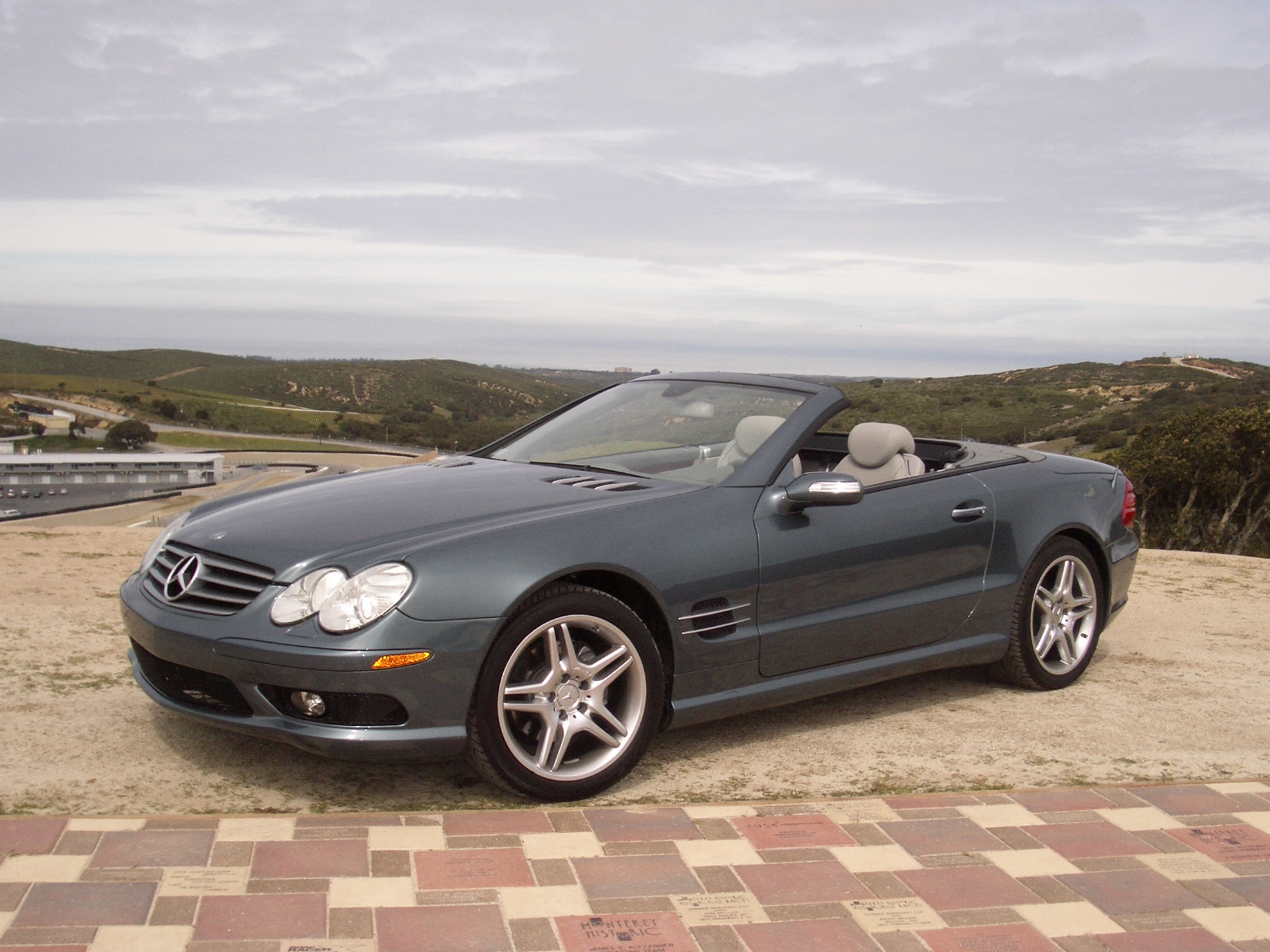
                        2006 Mercedes-Benz SL500

                        Living in LA, there’s no shortage of SL500s – or 55 AMGs for that matter – driving here and there on the busy streets and highways of this bustling city. Positively common, I tell you! But, after spending a week behind the wheel, I can see why so many in this car-crazy town, would choose this roadster as their daily driver, commonness be damned! It’s simply a joy to drive.

                        With a 420-mile road trip to Laguna Seca Raceway planned, and the surprisingly-fickle Spring weather cooperating, it’s retractable hard-top down(in around 30 seconds), hat on and let’s get on the road. The SL500 cuts a truly elegant swath through traffic. Low, sleek, with just the right amount of fender flares and, with the AMG Sport Package, front air dam, side s***ts, a rear apron and 18” AMG wheels, the car looks primed to pounce on whatever unfortunate, and lesser-powered obstacle might come between it and the open road.

                        The drive is a mix of major freeways, two-lane highways, and single lane roads and really allows me to experience the car at its best. It’s all too easy to potter around town – as I’m sure many of its owners do - and not realize the full potential of this car. On paper, a 302 horsepower 5.0 liter V8 with 339 ft-lbs of torque just doesn’t seem that, well, impressive. But out on the road…now that is a lot of fun! Climbing to 4,000 feet on the Grapevine, avoiding slower traffic, is a breeze. The car’s 7-speed electronic touch shift automatic always seems perfectly primed to pass the next slow-poke.

                        But it’s when I reach the single lane Route 46 that it’s really time to enjoy this car. RVs, tractor-trailers, trucks, buses – you name it, they’re crawling along this road. Downshifting and punching the accelerator to pass 1, 2, 4, 6 vehicles at once (on a long, open stretch of road with good visibility, I hasten to add) is simply fantastic. The SL500 makes a wonderful roar as it breezes past these slower road goers.

                        The pavement is mostly smooth but undulates, climbs, drops and turns, and the car’s independent 4-link front and 5-arm multi-link rear suspension is beautifully stiff and responsive. Coming over the peak of a hill, I realize a very large truck is overtaking, uphill, in my lane. He’s nearly clear but the gap is closing. Fast. Hitting the brakes reduces my worry to nil and a nasty incident is easily avoided. The 12.3” ventilated and perforated front discs – with 4-piston calipers – plus the 11.3” rear brake, with 1-piston floating caliper – bite hard.

                        Adding to a general feeling of safety and security when driving the car are its multitude of electronic aids. Active body control, active suspension system, Electrohydraulic Braking System (SBC), ABS, Brake Assist, ESP and Automatic Slip Control. If you do still manage to get it wrong, and if you haven’t already raised it by a button on the console, the Roll Bar will flip up in 0.3 seconds if it detects the car may roll. Should this happen, there are no less than 5 airbags in the car, and the cabin is reinforced with high-strength steel.


                        iran

                        Comment

                        • Rasputin
                          Senior Member
                          • Jan 2005
                          • 63906

                          #567
                          2006 Mercury Milan Premier

                          Mercury, like all automakers, would like to attract new and younger customers. And that's a challenge. Many of the young, upscale potential Mercury customers are people who have grown up with imports, and have never considered an American-brand car. And many of those potential customers, if they think of Mercury at all, most likely think of an older relative's Grand Marquis. Not surprising - the Grand Marquis has been the best-selling Mercury for the past quarter-century or so. But a Grand Marquis is by no stretch of the imagination a youth-market vehicle.

                          In order to sell Mercurys to a new and younger group, a completely new and very different Mercury is required. Such as the new 2006 Milan. It's the first small Mercury sedan in several years, and the latest addition to the growing Mercury lineup. Market research convinced Mercury that a large proportion of potential customers in their 20s and 30s ``shop outside mainstream brands'' for clothing, furniture, and home accessories. Mercury, at this point in time, is definitely outside of the mainstream for many potential Milan buyers. Said Lincoln Mercury president Darryl Hazel, ``We are re-introducing Mercury to young adults - we think they'll enjoy driving the Milan much more than they enjoyed riding in the back seat of grandma's Grand Marquis as kids.''

                          Market research and marketing ultimately matter much less than product. In order to reach its intended customers, Mercury needs product, and the product needs to be competitive with some very good cars. After driving a Milan Premier for the past week, I think Mercury is on the right track. The Milan, like its fraternal twin, the Ford Fusion, is a front-wheel drive car offered with both four-cylinder and V6 engines. The 2.3-liter, 160-hp four comes with a choice of five-speed manual or automatic transmissions; the 221-hp 3.0-liter V6 is matched to a six-speed automatic. There are two trim levels with each powertrain, base and Premier.

                          In Premier V6 trim, the Milan fits in an interesting niche. It's smaller than what's considered ``mid-size'' today, but just barely, and much larger than compact. It's better-appointed than middle-class, if not quite as refined as near-luxury, with leather, a good audio system, and four-wheel antilock disc brakes standard. The price, however, at $23,495 base including destination, is much more middle-class than near-luxury. The Milan is comfortable on the road, with an excellent suspension tuning. Performance is good, fuel economy at around 20mpg in town and 28 on the highway according to the trip computer, is very good. It looks like Mercury is finding its groove.

                          APPEARANCE: A little sheetmetal makes a world of difference. Although the Milan and Fusion share roof and door panels, unique front and rear styling differentiates them and effectively hides any similarity. The two cars have very different visual characters. Mercury has developed its own distinctive design language, first introduced with the 2002 Mountaineer SUV. In front, the signature Mercury waterfall grille in satin chrome is prominently displayed amid rounded and sculpted forms that have a European look. Bodywork that rises toward the rear, and a high rear deck, give a suggestion of performance, with European-style elegance from just the right touch of chrome trim. The wheels fully fill the slightly-flared wheel arches. Interesting wraparound trapezoidal taillights with clear sections over red LED highlight the rear.

                          COMFORT: Neat trick - the Milan seems larger inside than out. The fresh, international styling, with a variety of soft-touch materials and upscale textures, and bright faux-aluminum trim across the instrument panel and on the center stack, contributes, but the feeling of space is no illusion. Seating is leather in the Premier. Front passengers get good sports-type seat; the driver' seat is power-adjustable for all cushion parameters, with the passenger's manual. The rear seat offers good head and leg room, and a useful spring-loaded split folding feature, with the releases in the trunk. Back up front, automatic climate control is part of the ``Comfort Package,'' as are a leather rim and cruise and auxiliary audio controls on the standard manually tilt- and reach-adjustable steering wheel. All Milan audio systems are MP3CD-compatible, with Premier models having a 6-CD in-dash changer. Around the cabin, there are a variety of useful storage spaces, including a covered box atop the dash, and cupholders and power outlets.

                          SAFETY: The Milan's structure is designed to meet or exceed all safety standards for the foreseeable future. Ford's ``Personal Safety System''(tm), with dual-deployment front airbags, and load-limiting safety belt retractors and pretensioners. Front side and full-length side-curtain airbags are standard in Premier models, as are antilock brakes and traction control.


                          iran

                          Comment

                          • Rasputin
                            Senior Member
                            • Jan 2005
                            • 63906

                            #568
                            2006 Mini Cooper S

                            Four years after its debut, driving a Mini Cooper is still just about the most fun to be had on four wheels. That may be the reason the Mini has succeeded where others have failed. The concept of a premium small car, one that is neither equipped in a bare-bones fashion nor sold at a rock-bottom price as a economy-first commute module, was virtually unknown, in the U.S. at least, until the Mini. There was no logical reason the Mini should have succeeded in the American marketplace, but succeed it did.

                            Emotion trumps logic. Because there is no way to keep from smiling and enjoying life while driving a Mini. That's the result of a combination of both the driving experience and the Mini's unique style. It's thoroughly modern in design and execution, although it does leverage a certain amount of ever-popular 1960s nostalgia - which is its right, as the original Mini was perhaps the most important car ever to be built in England, and one of the most influential vehicles ever built. It was the first car to successfully combine a transverse engine and front-wheel drive, and so is the spiritual ancestor of the majority of cars made today.

                            Because of its diminutive size - all of 10 feet long - and lack of power, the original Mini didn't make much of an impression in the US. At home in the UK, it was different. The Mini was a phenomenon that transcended social classes. Commoners bought them, royalty bought them, celebrities and rock stars bought them, and the Mini was an integral part of the English landscape in the early 1960s.

                            Performance sold then as now, and Formula One constructor John Cooper was retained to build high-performance Minis. The Mini Cooper was born, first with a 997cc, 55-horsepower engine, and eventually with 1275ccs and 76 horsepower. With excellent handling and about 1400 pounds to pull, the Mini Cooper S 1275 could show its heels to many a larger and allegedly faster car, including some two-seat sports cars.

                            The original Mini stayed in production from 1959 to 2000, although the Cooper was discontinued by 1971. The second generation was in development when BMW bought parent company Rover Group in the mid-1990s, and a commitment to the car from BMW ensured that the second-generation Mini made it to production. Since its debut in 2002, changes to the current Mini have been, well, minimal. Mini is now the brand name, with Cooper being the model. The regular Mini Cooper has a 1.6-liter four-cylinder engine with 115-horsepower; the Cooper S adds a supercharger and intercooler to extract 168 horses from that same displacement. Convertible models of both debuted in 2005.


                            iran

                            Comment

                            • Rasputin
                              Senior Member
                              • Jan 2005
                              • 63906

                              #569
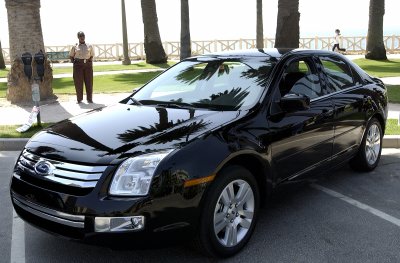
                              2006 Ford Fusion SEL V6

                              Once upon a time Ford ruled the mid-size sedan world with the original Taurus. And then change occurred. Then the second-generation Taurus debuted with styling that was very different and controversial, and the Japanese competitors got larger. And larger.

                              The Taurus was toppled from the throne, but Ford didn't seem too worried. At the same time, SUVs took off in popularity and profitability, with the Ford Explorer leading the way.

                              Fast forward to today. SUV sales are flat, even declining a bit, and there is a renewed interest in sedans. And Ford is ready to fight back and regain market share with its new Fusion.

                              The 2006 Fusion may be the most important Ford sedan since the first Taurus 20 years ago. It showcases Ford Motor Company's global orientation and way of doing business. It was developed digitally - the original design, engineering, and simulated construction and testing were done in computerized and computer simulation environments for rapid development. Rather than start from scratch for the Fusion's chassis, a time-consuming and expensive process, Ford looked to its partner Mazda, and modified the unibody structure and suspension of the Mazda6. The Fusion is slightly longer and wider, and engineering development has made its structure more rigid. It fits neatly between the compact Focus and the large Five Hundred.

                              As is the norm for mid-size sedans, the Fusion is offered with four-cylinder and V6 engines. Both are familiar Ford Duratec units with dual overhead cam, four valve per cylinder architecture, variable intake cam timing, and electronic throttle control. The 160-horsepower 2.3-liter four is matched to a five-speed manual or five-speed automatic transaxle; the 221-hp V6 is matched to a six-speed transaxle, the first in its class, for benefits to both performance and fuel economy.

                              At all trim levels - S, SE, and SEL for the four, and SE and SEL for the V6 - the Fusion is well-equipped, with power windows, mirrors, and doorlocks with remote keyless entry, a 60/40 folding rear seat, an AM/FM/CD sound system that can play MP3 CDs, a rear window defroster, a tilt and telescope-adjustable steering wheel, and quite a number of other convenience and safety features.


                              iran

                              Comment

                              • Rasputin
                                Senior Member
                                • Jan 2005
                                • 63906

                                #570
                                2006 Cadillac CTS-V Review

                                I’ve been looking forward to this one. I’m one of those guys who think you can’t have too much horsepower, torque or leather. Where can you use all that power, you might ask? Why worry. We’ll find a way, I say.

                                The Cadillac CTS, in my subjective view, can look a bit plain in some colors, and in the lesser trim levels, in spite of Cadillac’s exciting edgy new styling language. That language was first translated into production with this CTS after being previewed by the EVOQ concept roadster at the North American International Auto Show some years ago. With just a touch of added bling this brash design can go from tepid to hot. CTS-V does just that with big, sexy wheels, a shinny mesh grille, a bit of body cladding and those nicely understated ‘V’ badges. I’m sold already.

                                Our colleague, John Heilig, calls it a 4-door Corvette. (See his review of the first 2004 CTS-V on TheAutoChannel.com.) There have been a few updates to the car since his report, particularly a modest increase in displacement, torque and price, but not enough to change its character in the least. Displacement is upped from 5.7 to 6.0-litres, torque from 390 to 395 lb-ft and price from 49 grand to 51. I don’t think anyone will notice.

                                I slide easily into the black leather seats with suede inserts. A bit more bolster than the standard buckets provide some needed lateral support for those unavoidable times we need to corner a bit aggressively. The relatively short-throw stick shifter pokes invitingly out of the center console. The center stack, steering wheel, and all the interior amenities appear stylish and well designed. While the materials, ergonomics and surfaces are not quite in the same league with the finest Europeans, they are damn close.

                                Within moments of its delivery I’m on the road to town. Fortunately, that route consists of straight, smooth-topped country roads with a couple of 90-degree turns where there is seldom any oncoming traffic - not much trouble to get into while acclimating myself to all that power and crisp handling. The clutch is a tad light and the shifter sort of rubbery. Modulating the clutch, gas and 6-speed manual shifter smoothly is not easy at first but with practice I learn quickly. The accelerator is tied tightly to that 400 horsepower and 395 lb-ft of torque of the LS2 Corvette V-8, so that modulation is important if you don’t want to be jerky. Thrust is amazing. Cadillac claims a zero-60 time of 4.6 seconds and I certainly have no reason to doubt. Large 4-piston Brembo brakes with vented rotors bring it back to zero very decisively as well.

                                Suspension is tuned for high performance driving. It’s just stiff enough. Both front and rear independent suspension feature coil-over monotube dampers and antisway bars calibrated more than 25% stiffer than the standard CTS. Our purpose, of course, is to go quickly, enthusiastically and safely. (Yes, Mother, those are compatible.) Contributing to our control are the 18-inch, 245/45 Goodyear Eagle RS-A performance tires that come standard on the CTS-V.


                                iran

                                Comment

                                Working...