Announcement

Collapse
No announcement yet.

Science Special News

Collapse
This is a sticky topic.
X
X
 
  • Filter
  • Time
  • Show
Clear All
new posts

  • Earliest known Mayan writing discovered

    Archeologists excavating a pyramid complex in the Guatemalan jungle have uncovered the earliest example of Mayan writing ever found, 10 bold hieroglyphs painted on plaster and stone. The 2,300-year-old glyphs were excavated last April in San Bartolo and suggest the ancient Mayas developed an advanced writing system centuries earlier than previously believed, according to an article published on Thursday in the journal Science.The glyphs date from between 200 BC and 300 BC and come from the same site in the Peten jungle of northern Guatemala where archeologist William Saturno found the oldest murals in the Mayan world in 2001. Radiocarbon tests prove the writing is 100 years older than the murals depicting the Mayan creation myth.The glyphs, thin black paintings on off-white stucco, lay in a plastic tub in a laboratory in an old house in the colonial city of Antigua on Thursday as archeologists cleaned and cataloged other stones from the San Bartolo site.While the writing is mostly indecipherable, Saturno and his team claim one glyph could be an early version of the word "ajaw" or "ruler."


    Comment


    • midonid to faranse daran peivande sorat mizanan
      خواهی که جهان در کف اقبال تو باشد؟ خواهان کسی باش که خواهان تو باشد

      Comment


      • 'Hyperspace' engine: Our ticket to the stars?

        An extraordinary "hyperspace" engine that could make interstellar space travel a reality by flying into other dimensions is being investigated by the United States government. The hypothetical device, which has been outlined in principle but is based on a controversial theory about the fabric of the universe, could potentially allow a spacecraft to travel to Mars in three hours and journey to a star 11 light years away in just 80 days, according to a report in today's New Scientist magazine. The theoretical engine works by creating an intense magnetic field that, according to ideas first developed by the late scientist Burkhard Heim in the 1950s, would produce a gravitational field and result in thrust for a spacecraft. Also, if a large enough magnetic field was created, the craft would slip into a different dimension, where the speed of light is faster, allowing incredible speeds to be reached. Switching off the magnetic field would result in the engine reappearing in our current dimension. The US air force has expressed an interest in the idea and scientists working for the American Department of Energy - which has a device known as the Z Machine that could generate the kind of magnetic fields required to drive the engine - say they may carry out a test if the theory withstands further scrutiny.


        Comment


        • Irish bog man used hair gel

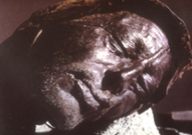
          Submitted by Rick Hamell: The preserved remains of two prehistoric men discovered in an Irish bog have revealed a couple of surprises --- one used hair gel and the other stood 6 foot 6 inches high, the tallest Iron Age body discovered. "He would have been a giant...the other man was quite short, about 5 foot 2 inches," said Ned Kelly, head of antiquities at the National Museum of Ireland."The shorter man appeared to attempt to give himself greater stature by a rather curious headdress which was a bit like a Mohican-style with the hair gel, which was a resin imported from France," Kelly told BBC radio.Bacterial conditions found in the peat bogs preserved the remains so that even fingerprints were clearly visible.The fashion-conscious gel wearer has been named Clonycavan Man and Kelly said the fact he was able to buy imported cosmetics suggests he was a wealthy member of Irish society about 2,300 years ago. The other was dubbed Oldcroghan Man.

          Kelly said both men had murdered."Oldcroghan Man was stabbed through the chest. He saw that attack coming because there is a defensive injury on his arm."He was then decapitated and his body cut in half while Clonycaven Man had his head split open with an axe before he was disemboweled.


          Comment


          • NASA gambles all for a shot at the Moon

            For the past three years, NASA's launch pads at the Kennedy Space Center in Cape Canaveral, Florida, have mostly sat idle, with technicians working to battle corrosion rather than prepare space shuttles for blast-off. And later this year, when one of the launch pads is shut down for routine maintenance, it may never return to service. To save $30 million, NASA managers are recommending that the agency scale back to just one launch pad for the remaining shuttle flights. This is just one of the measures NASA is considering in order to realise President Bush's "Vision for Space Exploration", which envisages an end to shuttle flights after September 2010 and the establishment of a base on the moon by 2020 as a stepping stone for a human mission to Mars. On 30 December, President Bush signed into law a bill that endorses this vision for NASA. But though Bush has said that NASA should resume shuttle flights and finish building the International Space Station (ISS) before returning astronauts to the moon, the reality for NASA's chief Michael Griffin is not that simple. He is under pressure to ensure a one-way transition from the old focus on flying space shuttles to the ISS to the new goal of building vehicles for the moon and Mars. "New programmes have very high infant mortality rates in the United States," says Howard McCurdy, a space historian and space policy expert at the American University in Washington DC. "Griffin has another two or three years to get the vision set down solidly enough that it can't be pulled out of the ground by the next administration." What's more, Griffin has to do it with scant assurance that he will actually get the money to implement the vision; the bill that became law last month does not guarantee funds.

            Exactly how much NASA will get for this fiscal year will become clear in February when President Bush presents his budget to the US Congress for approval. And it is unlikely that the agency will get all it wants, given that the US is reeling from the costs of the war in Iraq and Hurricane Katrina. "There is no pixie dust in this Congress," says McCurdy. So, despite no guarantee of funds for the new vision, NASA is embarking on a path of no return by dismantling a programme that has been the agency's foundation for more than two decades, namely to build and permanently inhabit a microgravity research laboratory in low-Earth orbit. "We have not at this point done anything that is irreversible," said Michael Wetmore, director of shuttle processing at the Kennedy Space Center. "But as time goes by, we are not doing some things that we should be doing if we were going to fly longer than 2010."

            Comment


            • Shrouded in controversy

              Sylvana Gribaldi has seen the Shroud of Turin twice, during public expositions in 1998 and 2000. Both occasions were overpowering emotional experiences. "During the 1998 exhibition, I used to go into the church (where the shroud was on display) in the evenings and sit there and pray for an hour or so," says Sylvana. "I could sense a real presence." At the next exhibition, in the jubilee year of 2000, she was able to get even closer to Turin's most famous artifact. "I was very happy during the last exposition because I was selected to read prayers during the procession as thousands of people passed the shroud. It was quite moving," she says. Such expressions are apt to draw a skeptical squint from people uncomfortable with such devotion, and the shroud, which bears the double image of a bearded man whose body exhibits the scars of crucifixion, certainly has just such a polarizing effect on people. Some say that the 4.5-metre-long, 1.1-metre-wide piece of linen is the burial cloth of Jesus Christ, miraculously branded with his image at the moment of his resurrection. Others denounce that as superstitious nonsense and say the shroud is a medieval counterfeit. The debate has simmered ever since the shroud first appeared in the historical record some 6 1/2 centuries ago. The shroud was definitely identified in 1353 as the property of Geoffrey de Charny in France (but some proponents claim to have found mention of it in earlier sources). Even then, some clerics denounced it as a device to extort money from pilgrims.


              The de Charny family sold it to Duke Louis of Savoy in 1453, who kept it at Chambery, France, until 1578 when his descendant Emanuele Filiberto moved it to Turin. The Savoy family retained ownership of the shroud until 1983 when it became the property of the Vatican in accordance with the will of Umberto II, the last king of Italy. Pope John Paul II decreed that the shroud would remain in Turin. It has survived three fires, including one in 1997, despite suffering some scorching and water damage. It has been examined by scientists and subjected to an array of tests including carbon-14 dating, microscopy, chemical analysis, photography and computer imaging. But that has only intensified the debate as just about everybody with an opinion, scholarly or otherwise, has tried to out-debunk each other. Fact or forgery, the shroud continues to fascinate.

              Comment


              • Tooth marks link Vikings, Indians

                A scientist who found deep grooves chiselled into the teeth of dozens of 1,000-year-old Viking skeletons unearthed in Sweden believes the strange custom might have been learned from aboriginal tribes during ancient Norse voyages to North America -- a finding that would represent an unprecedented case of transatlantic, cross-cultural exchange during the age of Leif Ericsson. The marks are believed to be decorations meant to enhance a man's appearance, or badges of honour for a group of great warriors or successful tradesmen. They are the first historical examples of ceremonial dental modification ever found in Europe, and although similar customs were practised in Asia and Africa over the centuries, the Swedish anthropologist who studied the Viking teeth is exploring the possibility that trips to Newfoundland and other parts of the New World a millennium ago introduced the Norsemen to tooth-carving styles being carried out at that time in the Americas."The cases from the North American continent are from the time period," Caroline Arcini, a researcher with the National Heritage Board in Lund, Sweden, told CanWest News Service. "So it is within the same timespace as the Swedish ones that are dated from 800-1050 A.D."


                In a paper published by the American Journal of Physical Anthropology, Ms. Arcini details the horizontal etchings across the front teeth of about 25 young men whose remains were found at several Viking Age burial sites in Sweden and Denmark. The "furrows" -- some teeth have several parallel grooves -- "are so well made that it is most likely they were filed by a person of great skill," Ms. Arcini writes.But "the reason for, and importance of, the furrows are obscure. The affected individuals may have belonged to a certain occupational group, or the furrows could have been pure decoration."Examples of tooth modification have been found at archeological sites around the world -- with the exception, until now, of Europe.The study notes a similarity in style between the Scandinavian specimens and dental markings common about 1,000 years ago in parts of North America, including Mexico and the present-day United States as far north as Illinois.

                Comment


                • Debate rages over pre-Columbus Chinese map

                  The Chinese are said to have discovered gunpowder, paper and the compass, but it may be too early to claim they discovered America. A map purported to date from 1418 suggesting a Chinese fleet sailed to America decades before Christopher Columbus was displayed in Beijing on Monday, but the piece of yellowing paper is the centre of a storm of criticism over its authenticity.The map, which is said to be an 18th-century copy of the 1418 original, shows both North and South America in unusual details.

                  Comment


                  • Comment


                    • The mysteries of restored vision

                      The unexpected restoration of Joyce Urch's eyesight following a heart attack remains a mystery to her doctors. By her own account she suffered from glaucoma, a condition in which abnormal pressure in the eye damages the optic nerve. But she also said there was a family history of blindness and, despite many tests, there had been no firm explanation for her loss of sight.Specialists said yesterday that a reversal of glaucoma was not likely since the damage caused was irreversible."The only rational explanation would be that very dense cataracts dislodged spontaneously, but that is a bit outlandish," said Kerry Jordon, consultant ophthalmologist and a member of council of the Royal College of Ophthalmologists. There were, he said, only anecdotal accounts of "psychological blindness" and of sight regained following trauma.


                      In 2000 there were reports of a 76-year-old man, also from Coventry, regaining vision after being blind for 12 years. One day, in his armchair, he realised that he could see colours and his sight returned. Again there was no medical explanation.Four years ago a young woman from New Zealand, blind for 10 years, banged her head on a table as she stooped to kiss her guide dog. The next day she could see.Guide dogs and "short sharp shocks" feature in several anecdotes. Tripping over guide dogs and being injured were cited in reports of restored sight in 1977, 1979, 1981 and 1988.Another story, possibly an urban myth, relates to a blind Indian who, in 1985, hit his head against a door and regained his sight, but lost his hearing at the same time.

                      Comment


                      • Comment


                        • Study suggests why Neanderthals vanished

                          The disappearance of Neanderthals is frequently attributed to modern humans' greater intelligence, making them more efficient as hunters. But anthropologists from Harvard University, the University of Connecticut, the University of Haifa and Hebrew University argue the hunting practices of Neanderthals and early modern humans were largely indistinguishable. That conclusion leads to a different hypothesis, also based on archaeological data, to explain the disappearance of the Neanderthals. "Each population was equally and independently capable of acquiring and exploiting critical information pertaining to animal availability and behavior," write the anthropologists.


                          The researchers used archaeological data from a Middle- and Upper-Paleolithic rock shelter in the Georgian Republic dated to 60,000-20,000 years ago to contest some prior models of the perceived behavioral and cognitive differences between Neanderthals and modern humans. The researchers suggest social developments that led to more routine use of distant resources, and a more extensive division of labor, might better explain the disappearance of Neanderthals than simply their hunting practices.

                          Comment


                          • Miracle cures shown to work

                            Doctors have found statistical evidence that alternative treatments such as special diets, herbal potions and faith healing can cure apparently terminal illness, but they remain unsure about the reasons. A study of patients with incurable lung cancer who were given weeks to live and received only low-dose radiotherapy to make their final weeks more comfortable found a small number recovered completely.Researchers who followed 2,337 patients whose disease was too advanced for curative treatment found that 25 had survived five years and 18 had achieved "an apparent cure". They appeared to have been cured by treatment that "would not normally be considered to have any curative potential whatsoever".

                            The researchers, led by Michael MacManus, a consultant radiation oncologist in Melbourne, say: "Our data indicate that a chance for prolonged survival and possibly even cure exists for approximately 1 per cent of patients with non small cell lung cancer who receive palliative radiotherapy.

                            Comment


                            • NASA official joins the hunt for alien life

                              G. Scott Hubbard, who has led a NASA research center since 2002 and investigated the space shuttle Columbia tragedy, is stepping down to accept a position with an organization that studies the possibility of life beyond Earth, he said Monday. Hubbard, 57, will occupy the Carl Sagan Chair for the Study of Life in the Universe at the SETI Institute, effective Feb. 15."My new position at the SETI Institute allows me to return to the research arena and pursue a lifelong interest in the search for life in the universe and its origins on Earth," he aid.SETI, which stands for the "search for extraterrestrial intelligence," houses research into the origin of life and how it might be found on other planets and moons. The institute, in Mountain View, Calif., is a nonprofit organization and home to dozens of researchers.Hubbard joined the nearby NASA Ames Research Center in 1987 and as director worked to increase collaboration with neighboring universities and companies.

                              In 2003, he was named to the board that helped determine the cause of the Columbia's disintegration that January.Earlier, he was the first Mars program director at NASA headquarters, where he worked to correct problems that doomed two spacecraft in 1999.Hubbard's new position is named for Carl Sagan, a planetary researcher who popularized science and the search for life through his work on NASA missions, books and the PBS television series "Cosmos." Sagan died in 1996.

                              Comment


                              • Black hole puts dent in space-time

                                A spinning black hole in the constellation Scorpius has created a stable dent in the fabric of spacetime, scientists say. The dent is the sort of thing predicted by Albert Einstein's theory of general relativity. It affects the movement of matter falling into the black hole.The spacetime-dent is invisible, but scientists deduced its existence after detecting two X-ray frequencies from the black hole that were identical to emissions noted nine years ago. The finding will allow scientists to calculate the black hole's spin, a crucial measurement necessary for describing the object's behavior.Black holes form when very massive stars runs out of fuel. Their cores implode into a point of infinite density and their outer layers are blown away in a powerful supernova explosion. Within a theoretical boundary called the event horizon, the black hole's gravity is so strong that nothing, including light, can escape.The X-ray frequencies detected by the team of researchers came from outside the event horizon of GRO J1655-40, a black hole located roughly 10,000 light-years from Earth. It is about seven times more massive than the Sun and siphoning gas from a nearby companion star.


                                GRO J1655-40 undergoes short periods of intense X-ray emissions, followed by longer periods of comparative quiet. Scientists think this blinking pattern of X-ray activity is related to how matter accumulates around the black hole.Gas siphoned from the companion star builds up steadily in an accretion disk around the black hole. This process continues for several years. While the accumulation is taking place, the black hole consumes very little gas from the disk.Every few years, however, something--scientists aren't sure what--triggers a sudden binge fest on the part of the black hole, causing it to guzzle down most of matter in the disk within a period of only a few months.Black holes emit millions of times more X-rays during these periods of increased activity than when they're quiet.

                                Comment

                                Working...
                                X