Announcement

Collapse
No announcement yet.

Science Special News

Collapse
This is a sticky topic.
X
X
 
  • Filter
  • Time
  • Show
Clear All
new posts

  • MoD UFO docs reveal Harborough UFO case

    Spooked residents have reported seeing mysterious UFOs in the skies above Harborough and Lutterworth, the Ministry of Defence has revealed. A large black triangular aircraft with three bright lights was spotted above Harborough's skies at 2pm on Friday, January 9, 2004, according to MoD documents disclosed under the Freedom of Information Act (FoI).The strange object was also said to have made a rumbling noise.It is not the first time mysterious objects have been spotted in Harborough's heavens, but it is the first time the existence of such sightings being logged in Government files has come to light.In 1996 and 1997 scores of people reported seeing strange objects in Harborough in nine separate incidents. About three years later, in 2000, there were three more reports of UFO sightings.The MoD said a witness also spotted a UFO with flashing lights in Lutterworth on Monday, September 20, 2004. UFO enthusiast Gary Anthony (40), of East Yorkshire, who submitted the initial FoI requests to the MoD, said: "In 95 per cent of cases UFO reports can be put down to a natural or explainable phenomenon.

    In other incidents, there seems to be no rational explanation. I am not saying it's alien spaceships or flying saucers but these people have obviously felt scared enough to report the incidents to the MoD." Insp Mick Norman, of Harborough police, said: "People do occasionally report this type of incident to the police as a first port of call."Our response is very much dictated by what the individual thinks they have seen. "People can be confused sometimes when aircraft is heading in their direction because it can appear as if the lights are remaining static, when in fact they are moving very quickly."

    Comment


    • Comment


      • Buddha on the brain

        The 14th incarnation of the Living Buddha of Compassion approaches the podium, clears his throat, and blows his nose loudly. "So now I am releasing my stress," he says. The audience dissolves into laughter.The Dalai Lama is here to give a speech titled "The Neuroscience of Meditation." Over the past few years, he has supplied about a dozen Tibetan Buddhist monks to Richard Davidson, a prominent neuroscience professor at the University of Wisconsin-Madison. Davidson's research created a stir among brain scientists when his results suggested that, in the course of meditating for tens of thousands of hours, the monks had actually altered the structure and function of their brains. The professor thought the Dalai Lama would make an interesting guest speaker at the Society for Neuroscience's annual meeting, and the program committee jumped at the chance. The speech also gives the Tibetan leader an opportunity to promote one of his cherished goals: an alliance between Buddhism and science. But the invitation has sparked a noisy row within the neuroscience community. To protest the talk, some scientists set up an online petition, which was immediately hacked by the pro-Dalai Lama faction. Others are boycotting the event or withholding their conference papers. Still others have demanded - unsuccessfully - time for a rebuttal.

        All of which may explain the lama's ailment. "His Holiness' cold is a manifestation of the opposition of some scientists to his coming to the conference," a young Chinese Buddhist explains to me.The protesters complain that the Tibetan leader isn't qualified to speak about brain science. They fret that he'll draw media attention away from important findings presented at the conference. Worst of all, his presence muddles the distinction between objective inquiry and faith. "We don't want to mix science and religion in our children's classrooms," says Bai Lu, a researcher at the National Institutes of Health, "and we don't want it at a scientific meeting."

        Comment


        • Earth-like extrasolar planet discovered

          A planet similar to Earth has been found orbiting a distant star by astronomers who believe they are getting closer to discovering an alien world inhabited by extraterrestrial life. The new planet is five times the size of Earth but is itself unlikely to harbour life because it is probably covered in frozen oceans with average temperatures of around minus 220C. However, the scientists behind the discovery believe the find marks a breakthrough in the search for relatively small, rocky planets such as Earth where temperatures are neither too hot nor too cold for life.The scientists said that the discovery showed it was technically possible to discover a planet in a temperate "habitable zone" around a far-away sun that would permit the existence of liquid water, which is believed to be necessary for life.The new planet, designated OGLE-2005-BLG-390Lb, is the smallest and the coldest planet yet discovered beyond the solar system. It orbits a star towards the centre of the Milky Way galaxy located 20,000 light years away in the constellation Sagittarius.


          "This has huge implications for finding life," said Stephen Kane of the University of Florida, one of the 73 astronomers from the 32 institutions around the world involved in the study, published today in the journal Nature. "The good thing about this is it shows that planets this size might be quite common in habitable zones," Dr Kane said.More than 150 planets are known to exist outside our solar system but the vast majority are large, gaseous planets, like Jupiter. The latest planet has an orbit three times the distance between the Earth and the Sun, meaning its temperatures are similar to those of permanently-frozen Pluto.

          Comment


          • Peru's battle for its history

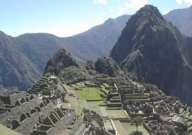
            Geri Smith: Machu Picchu is a magical, mysterious place that for nearly a century has intrigued archaeologists and visitors alike. Perched atop a steep, emerald green peak 8,000 feet high in the Andes in southern Peru, it is reachable only by a long road that zigzags up the slope from the roaring Urubamba river, or by hiking four days along the challenging Inca Trail. One can imagine the excitement when intrepid Yale professor-explorer Hiram Bingham, led there by local peasants in 1911, first glimpsed the jungle-invaded citadel abandoned by the Incas four centuries earlier. Bingham eagerly surveyed the site over the next five years, clearing away brush and identifying palaces, temples, and a celestial observatory from what is believed to have been a summer palace or ceremonial center for the first Incan emperor, Pachakuteq. Most of its gold and other treasures had been looted around the time of the Spanish conquest, but he unearthed thousands of artifacts and carted them off to New Haven to study.My family and I spent two days exploring Machu Picchu in December. It's a place that invites profound contemplation as well as basic speculation. Watching as banks of clouds completely shrouded the ruins -- and us -- for a few minutes before retreating, we wondered, how did the Incas manage to build this complex city in such a remote place?


            As our local guide, Gloria, pointed out a spring-fed water supply that still flows through chiseled stone channels, we asked if there was a museum nearby where we could view some artifacts. "No," she said with some bitterness. "They're all at a university in the United States. We're trying to get them back."Indeed, the Peruvian government is threatening to sue Yale University for the return of all the artifacts found at Machu Picchu. There's no dispute that Peru gave Bingham permission to take the artifacts to Yale for further study. But Peruvian authorities say they have documents specifying that the material had to be returned within 18 months. It has now been more than 90 years. Yale says that Peruvian law in the 1900s "gave Yale title to the artifacts at the time of their excavation and ever since."

            Comment


            • What happened to the robot age ?

              Sony's decision to ditch its Aibo robotic dog, along with its entire robot development team, is a reminder that we are still a long way from the age of automated domestic servants. Architects of the Robot Age have been busy rethinking the future. In the 1980s you could hardly move for suggestions that the Robot Age was upon us. From Metal Mickey, the wisecracking, head-spinning star of his eponymous sitcom, to the stylishly choreographed Fiat advert in which the Italian carmaker smugly revealed how it had apparently dispensed with humans altogether in the production of one model. The tagline was an advertising classic: Handbuilt by Robots. Every other week, in those days, it seemed the Tomorrow's World team would unveil an exciting breakthrough in the world of robotics. Cool people in nightclubs even took to dancing like the things.


              We seemed to be teetering on a new era in which humans would play second-fiddle to computer-guided pneumatic creatures, which could doubtless play first fiddle better than the lead violinist of the Vienna Symphony Orchestra. Then what?

              Comment


              • Comment


                • Mars 'deep impact' mission planned

                  Scientists have had a smashing idea that could help them explore beneath Mars's dusty surface. Slamming a hefty chunk of copper into the planet should excavate enough material to reveal water ice or carbon-based chemicals lurking underground, according to a proposed NASA mission.The idea follows the success of Deep Impact, a mission that fired a copper 'impactor' into comet Tempel 1, while its delivery craft recorded the whole show with an array of sensors. The new mission takes exactly the same approach to Mars. Called THOR (Tracing Habitability, Organics and Resources), it would be the second of NASA's Mars scout missions, low-cost probes that are designed and built in just a few years. The first scout, Phoenix, is due to launch in August 2007.


                  THOR has been proposed by Phil Christensen, a planetary scientist at Arizona State University, Tempe, and David Spencer of the Jet Propulsion Laboratory in Pasadena, California. Christensen estimates that the impactor should be about 100 kilograms or so, and hit the planet at more than 15,000 kilometres per hour. It is hoped this would make a crater roughly 50 metres in diameter, and up to 25 metres deep.Meanwhile, its mother ship would look for ice, minerals and organic compounds thrown out by the crash.

                  Comment


                  • Comment


                    • Comment


                      • Warrior found buried in attack position

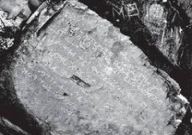
                        Archaeologists have unearthed a 3,000-year-old skeleton of a man who appears to be clutching a dagger and is posed as though he were about to thrust the weapon into something, or someone, according to a Cultural Heritage News report from Iran. The unusual burial is the first of its kind for Iran, and possibly for the rest of the world. "He is holding a 26-centimeter dagger and appears to be making a forward thrust," said archaeologist Ali Mahforuzi, who led the excavation at Gohar Tepe, where the skeleton was found. Gohar Tepe is located in northeastern Iran near the town of Behshahr and the Caspian Sea. "Beside the skeleton, a number of dishes have also been found which seem to have been presented to the warrior," Mahforuzi said. "One of the dishes has some holes in it containing the remains of coal. "


                        Archaeologists had discovered such dishes before, but they could not determine their practical application; but the traces of coal indicate that the dish has been used for burning agalloch (a soft, fragrant wood) or other types of incense." He added, "The skeleton was also wearing a beautiful coiled shell necklace." David Stronach is a world-renowned expert on ancient Iran and Iraq and is a professor of Near Eastern Studies at the University of California at Berkeley.

                        Comment


                        • Comment


                          • Supernatural selection

                            A Tufts philosopher and famed Darwinist wants us to study religion like any other human behavior - as a 'natural phenomenon.' Scientists, meanwhile, may be on the way to explaining how, and why, we got religion.When the philosopher Daniel Dennett was a teenager, he played the backwoods holy man Elijah in his prep school's production of ''Inherit the Wind." ''Bearded, wild-haired, dressed in a tattered burlap smock," Elijah comes down from the hills, on the eve of Bert Cates's trial for teaching evolution, to sell Bibles out of an old vegetable crate. ''Are you an evolutionist? An infidel? A sinner?" Elijah asks an out-of-town newspaperman.Until he went to graduate school, Dennett claims, the play, famously based on the 1925 Scopes ''monkey trial," was the source of most of what he knew about evolution and natural selection. Today Dennett has a prophet's beard, one corner of which he will sometimes fold into his mouth for a ruminative chew, and he is one of Darwinian theory's foremost promoters. He sees it not just as an explanation for the origin of species, but for the fundamental whys and hows of human habits, beliefs, thinking, and desires. The logic of evolution, Dennett wrote in his 1995 book ''Darwin's Dangerous Idea," is a ''universal acid," it ''eats through just about every traditional concept, and leaves in its wake a revolutionized worldview."


                            A month ago, when federal Judge John E. Jones III ruled that intelligent design could not be taught in a Pennsylvania school district, scientists and secularists celebrated the decision as a victory not only for the separation of church and state, but of church and science. A few editorials quoted Harvard evolutionary biologist Stephen Jay Gould's argument that science, concerned as it is with facts, and religion, concerned with human purposes and values, were ''Non-Overlapping Magisteria," separate sources of authority that could exist in ''respectful noninterference." Judge Jones himself took pains to emphasize that the theory of evolution ''in no way conflicts with, nor does it deny, the existence of a divine creator."

                            Comment


                            • Comment


                              • '10th planet' is larger than Pluto

                                When astronomers announced the discovery of UB313, the so-called tenth planet, a little more than a year ago, they had a hunch it might be bigger than Pluto because of its brightness. But despite several attempts to observe more closely the mysterious object orbiting the sun at a distance of more than 14 billion kilometers, accurate estimates of its size remained elusive. Now German astronomers working in Spain have determined that UB313 has a diameter of roughly 3,000 kilometers--roughly 700 kilometers larger than Pluto's. Frank Bertoldi of the University of Bonn in Germany and his colleagues used the IRAM 30-meter telescope in the Sierra Nevada mountains of southern Spain to observe UB313 in the infrared range. Because visual brightness alone is not an accurate indicator of size--it could result from the body's surface being either actually large or mirrorlike--the researchers made observations in wavelengths longer than those of visible light. Outside the range of visible light, the scientists could measure the amount of light the object absorbs and then radiates back as heat. By combining the infrared and visible measurements, they could then determine the object's size and its overall reflectivity, or albedo.


                                Based on observations made over nine nights in August 2005, the team reports, UB313 appears to have a diameter of between 3,094 and 2,859 kilometers. Even the smallest size in that range would make the candidate planet's diameter more than 500 kilometers larger than Pluto's. These calculations rely on several assumptions, however, such as UB313 lacking an atmosphere that would either reflect more light or trap more heat even though Pluto has such a covering. The astronomers estimate that the planet reflects roughly the same amount of light as Pluto, perhaps thanks to an icy methane surface. Their research appears in today's issue of Nature.

                                Comment

                                Working...
                                X