Announcement

Collapse
No announcement yet.

Science Special News

Collapse
This is a sticky topic.
X
X
 
  • Filter
  • Time
  • Show
Clear All
new posts

  • UFO mind-melting in government report

    Did you see these headlines this week? "Secret report says UFOs DO exist", screamed one. "UFOs don't exist, says MoD", said another. It turns out to have all stemmed from a 'secret report' by the UK's Ministry of Defence (MoD), which was unearthed by sleuthing academic David Clarke, a lecturer in investigative journalism at Sheffield Hallam University, UK. Clarke spent 18 months using the Freedom of Information Act to extract the report, authored in 2000, partly as a test-case exercise in exploiting the Act, he says. The main upshot of the report is that 'unidentified flying objects' technically do exist, but are mostly sightings of aircraft or odd weather phenomena. Fair enough.

    But the media flurry over the report has struck me as at least a little odd. Many of them unquestioningly stated that MoD "scientists" have explained how balls of glowing plasma in the upper atmosphere could be mistaken for flying saucers, and that these plasma balls could in turn interfere with the brain, somehow conjuring up vivid abduction memories. This stems from a bit of the report's summary, which says: "Local fields of this type ... have been medically proven to cause responses in the temporal lobes of the human brain".So is this a solid, scientific explanation for UFO sightings? Sadly, no.

    Comment


    • Comment


      • Proposals to recreate Stonehenge

        An ambitious project to recreate Stonehenge as it would have looked 4,000 years ago is being planned. Fragments of only three circles remain, but quarry firm Preseli Bluestone wants to build all seven from scratch. It is hoped the circles will be completed by 2009. The new site would be open to visitors. An exact location is yet to be decided, but the Cotswold Water Park, which straddles Wiltshire and Gloucs, is one of several sites being considered. Preseli Bluestone owns the quarry in Wales where the stones for the ancient Wiltshire monument originally came from. Colin Shearing, from the company, said: "We don't want to replicate Stonehenge as it stands today, but rather as how it would have looked when completed about 4,000 years ago." The new Stonehenge would be built using both modern and ancient methods which the public would be invited to watch.

        The plans are in the very early stages, but the aim is to create a 21st Century 'landmark architectural heritage sculpture' which allows visitors to walk among, and touch, the stones.

        Comment


        • Comment


          • What happened to the Minoans ?

            single olive branch may have solved one of ancient history's most enduring mysteries: when and why did the great Minoan civilisation of the Mediterranean come to a sudden end? The branch was buried during a cataclysmic volcanic eruption on the Aegean island of Thera - now known as Santorini - and scientists believe they can date the precise moment of the tree's death. Knowing when the Thera eruption happened is important because the explsion was so powerful that it almost certainly caused the collapse of the Minoan civilisation, centred on the island of Crete, 60 miles away. Vulcanologists believe the explosion generated violent tsunamis that destroyed Crete's ports, threw thousands of tons of ash and pumice into the atmosphere and created a "nuclear winter" that led to successive crop failures in the region.Scientists have detected ash from the explosion as far away as Greenland, the Black Sea and Egypt.

            They have also discovered signs of frost damage caused by the volcano on preserved plant material excavated in Ireland and California.Walter Friedrich, of the University of Aarhus in Denmark, and his colleagues have analysed the olive branch's growth rings and combined the findings with radiocarbon dating to show the tree must have died between 1627BC and 1600BC."It is important to have a very precise date for the explosion because this eruption is a global time marker. If we can date it precisely we have an important tool to correlate the times of different cultures," Dr Friedrich said.

            Comment


            • DNA test confirms wild "polargrizz"

              A DNA test has confirmed what zoologists, hunters and aboriginal trackers in the far northern reaches of Canada have dreamed of for years: the first documented case of a grizzly-polar bear in the wild. Roger Kuptana, an Inuit tracker from the Northwest Territories, suspected the American hunter he was guiding had shot a hybrid bear after noticing its white fur was spotted brown and it had the long claws and slightly humped back of a grizzly.Territorial officials seized the bear's body and a DNA test from Wildlife Genetics International, a lab in British Columbia, confirmed the hybrid was born of a polar bear mother and grizzly father."It's something we've all known was theoretically possible because their habitats overlap a little bit and their breeding seasons overlap a little bit," said Ian Stirling, a biologist with the Canadian Wildlife Service in Edmonton, Alberta. "It's the first time it's known to have happened in the wild."He said the first person to realize something was different about the bear _ shot and killed last month on the southern end of Banks Island in the Beaufort Sea _ was Kuptana, the guide."These guides know their animals and they recognized that there were a number of things that didn't look quite right for a polar bear," Stirling told The Associated Press. The bear's eyes were ringed with black, its face was slightly indented, it had a mild hump to its back and long claws.

              Stirling said polar bears and grizzlies have been successfully paired in zoos and that their offspring are fertile, but there had been no documented case in the wild.Kuptana, a guide from Sachs Harbour in the Northwest Territories, was tracking with Idaho big-game hunter Jim Martell, who paid $45,450 for a license to hunt polar bears.The DNA results were good news for the 65-year-old hunter, who was facing a possible $909 fine and up to a year in jail for shooting a grizzly. The Northwest Territories Environment and Natural Resources Department now intends to return the bear to Martell."It will be quite a trophy," Martell told the National Post last week, even before the DNA results were in. He returned to Yellowknife for another hunt, this time for a grizzly bear. He told the newspaper he has dubbed the creature "polargrizz."

              Comment


              • Comment


                • Comment


                  • Big meteorite creates big mysteries

                    Submitted by Marvy: Scientists have discovered a beach ball-sized meteorite a half-mile below a giant crater in South Africa. The 145-million-year-old meteorite, found in the Morokweng crater, has a chemical composition unlike any known meteorite. It is also an unusual find because it was largely unaltered by the extreme heat from the impact.The study is detailed in the May 11 issue of the journal Nature.Scientists have collected thousands of various meteorites over the years and tell them all apart by their various structural, chemical, and mineralogical compositions. The specific concentrations of platinum group elements in the newfound 10-inch (25 centimeter) meteorite place it in the "LL-ordinary chondrite" group of meteorites.But other characteristics set it apart from the group, such as having silicate and sulfide minerals rich in iron, but no metallic iron-nickel phase.

                    "So it is 'another kind' of LL-ordinary chondrite that we do not have in our collections," said study co-author Alexander Shukolyukov of the Scripps Institution of Oceanography and the University of California, San Diego.A potential implication of this odd meteorite, he said, is that the bombardment of meteorites 145 million years ago was different than those crashing into Earth more recently. The researchers can't say for sure why this fragment is preserved. Current models indicate that no unaltered fragments can survive large impacts, which, Shukolyukov suggests, implies the models are incomplete.It is also clear that it was much, much larger than 10 inches in diameter when it smacked the surface.

                    Comment


                    • "Intelligence gene" identified

                      Submitted by Kratos: Psychiatric researchers at The Zucker Hillside Hospital campus of The Feinstein Institute for Medical Research have uncovered evidence of a gene that appears to influence intelligence. "A robust body of evidence suggests that cognitive abilities, particularly intelligence, are significantly influenced by genetic factors. Existing data already suggests that dysbindin may influence cognition," said Katherine Burdick, PhD, the study's primary author. "We looked at several DNA sequence variations within the dysbindin gene and found one of them to be significantly associated with lower general cognitive ability in carriers of the risk variant compared with non-carriers in two independent groups."The study involved 213 unrelated Caucasian patients with schizophrenia or schizoaffective disorder and 126 unrelated healthy Caucasian volunteers. The researchers measured cognitive performance in all subjects. They then analyzed participants' DNA samples.

                      The researchers specifically examined six DNA sequence variations, also known as single nucleotide polymorphisms (SNPs), in the dysbindin gene and found that one specific pattern of SNPs, known as a haplotype, was associated with general cognitive ability: Cognition was significantly impaired in carriers of the risk variant in both the schizophrenia group and the healthy volunteers as compared with the non-carriers.

                      Comment


                      • Two Books on Johor Bigfoot confirmed

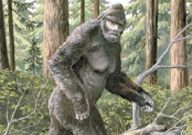
                        Two books containing colour pictures of "Bigfoot" or Orang Lenggor and written by separate groups will be published in a few months in an attempt to prove the existence of the creature which has created worldwide interest. Biodiversity expert Vincent Chow, who is writing one of the books with two others, said their book would answer questions about the elusive creature."It resembles a pre-historic human, not ape," he told Bernama on Friday."The body is covered by a layer of long hair except on the face, which is bare. It has a fierce-looking face, big body and walks with a hunch. It resembles a sturdy man," he added.He said the book would shake the scientific world and the thinking of conventional scientists.Chow said that from the pictures he had seen, the creature had probably lived in solitude for thousands of years without being detected.When asked where and when the pictures were taken, he said he did not know but he was sure they were taken in a Johor forest.He said the owner of the pictures was an elderly man who refused to reveal his identity and had left for Thailand recently to escape from possible harassment.

                        "From what we know, he is a former communist guerilla who spent a long time in the jungle," he said.The owner had asked for the creature not to be disturbed and considered it a treasure of Johor which needed to be protected, he said.Chow said the book would prove that the creature existed but it might not be able to satisfy the skeptics."They will say the pictures are phony and will believe it only if they were to touch it, smell its odour and so on," he said.A Johor Wildlife Protection Association officer told Bernama that the association also planned to launch a book written in Chinese in July on the creature it calls Orang Lenggor."Yes, the book will have pictures as evidence of Orang Lenggor's existence. We are sure all along that the creature exists and the pictures will prove it," he said.

                        Comment


                        • www.psychicanada.com

                          Comment


                          • British teams compete to unlock Mars secrets

                            From the first two failed Soviet missions in October 1960 to Britain's ill-fated Beagle 2 that crash-landed on Christmas Day 2003, Mars has a history of devouring space missions for breakfast. But despite its cursed reputation, British scientists are vying for funding to unlock the secrets of the red planet. This summer three British projects will compete for money from the European Space Agency to send an unmanned mission into space to garner data on the planet that has fascinated astronomers for decades because of its potential to harbour rudimentary life. The first enterprise is designed to tackle Mars's mysterious moons Deimos and Phobos - named after the sons of Mars, the Greek god of war. Phobos is also Greek for fear. "All the focus has been on Mars itself. We don't know much about these two," said Professor John Zarnecki of the Open University. "One big question is their origin. Where the hell did they come from? Were they formed in orbit around Mars or are they captured asteroids?" The mission's 310kg (50 stone) pool table-sized probe would take 20 months to reach Deimos before orbiting the moon for a further month while analysing its structure and mapping the surface.

                            It would then switch orbit to Phobos and could send down a lander to carry out more detailed measurements. "Technically this is quite demanding. You've got to go there and get in orbit around them or orbit around Mars so that you come close to the moons," Prof Zarnecki said. The second option is to send four satellites launched by the same rocket to spy on the Martian climate. The 120kg probes would make the journey to Mars together but then split up and orbit separately 1,000km from the surface. The probes would compare temperature, atmospheric composition and wind speed at different points in the atmosphere.

                            Comment


                            • Comment


                              • Comment

                                Working...
                                X