
-
-
Glimpse of 'ghost' sparks speculation
A sighting of a mysterious woman walking through a room and disappearing has sparked speculation that Spalding's Ayscoughfee Hall is haunted. Helen Grant (34) caught a glimpse of a woman wearing a period dress through one of the hall's windows as she and partner David Nicholls walked around the gardens on Wednesday afternoon last week.Within seconds of Helen seeing the woman, David ran to look through a window but she had disappeared.This has left museum staff baffled as no-one wearing similar clothing was in the hall at the time.An intriguing coincidence is that a painting of the late Isabella Johnson was taken from storage and hung in the room within a week or two of Helen's sighting.Helen, of Stonegate, Spalding, said: "It did spook me. It didn't look like a ghostly figure. She just looked like a normal person."I think it was a ghost because of the dress she was wearing and the way she had her hair."I would like to find out who she was."People reading this might think that I am making it up but I swear on my life that I did definitely see it."
She described the woman as in her 30s or 40s and wearing a cream dress with blue flowers. It had a high neckline with a scallop effect. The woman had long dark hair and wore an Alice band.South Holland District Council leisure and tourism manager Mark Croston said: "There is a feeling about the hall. It is quite a surreal, calm feeling. We do feel there is a lot of history and a lot of important things have happened here."Comment
-
Comment
-
Comment
-
Terrifying haunting or clever hoax ?
In 1662 English landowner John Mompesson began telling the world that his household was haunted by an evil and mischievous spirit. In a letter to William Creed, Regius professor of Divinity at Oxford and a relation by marriage, he said that he had initially thought that the disturbances were the work of burglars, before being forced to conclude that they could only be supernatural. He blamed the visitations on the witchcraft of William Drury, a drummer he had caused to be arrested in March for claiming money under false pretences. The alleged events began in April, shortly after Drury's confiscated drum had been sent to Mompesson's house. However this is not the only reason why he held the drummer responsible. The haunting included unpleasant smells, increases in temperature, strange lights, moving objects and mysterious noises; but its defining feature was the loud beating of a drum.In the same letter to Creed, Mompesson described the haunting in frightening terms. He said that the spirit shook his children's bed and drummed the tune to a popular song, then made scratching noises on the floor and further upset the youngsters.
"It returned with mighty violence and applied it self wholly to my youngest children, whose bedsteeds it would beat, when there have been many strangers as well as ourselves present in the roome, that we did at every blow expect, they would have fallen in pieces, and we hold our hands upon those bedsteeds all the while and could feel no blowes but feele them shake extremely, and for an houre together play the tune called Roundheads and Cuckolds goe digge, goe digge, and never misse one stroke, as sweetly as skillfully as any Drummer in the World can beat . . . Then it will run under the bed-teeke [under the bed], and scratch as if it had iron talons, and heave up the children in the bed, and follow them from roome to roome, and come to none else but them."
Mompesson suggested that the spirit was particularly attracted to the children because the devil was drawn to innocence. The events at Mompesson's house were widely publicised and even discussed at the royal court. The Earl of Chesterfield and the Earl of Falmouth were sent by King Charles II to investigate, but they did not see or hear anything. Chesterfield later claimed that when Mompesson met the King he confessed that the haunting was a hoax.Comment
-
www.bfro.net. The expeditions are scheduled for June 22-25 and June 29 to July 2. The first expedition is booked, but the second still has space available, according to the Web site. The expedition was spurred in part by the accounts of a local man who claims to have seen a bigfoot on two different occasions in the Lugerville area. Don Young told THE-BEE that the eyewitness sasquatch accounts, which are featured on the BFRO Web site but are not attributed, are his.
Young says his most recent sasquatch siting was in September 2003 in a cedar swamp near Rock Creek Road. Young claims that he and a 6- to 7-feet tall bigfoot creature engaged in a sort of cat-and-mouse game for almost an hour. He had another encounter in a swamp three miles away about a year earlier, he says. The BFRO Web site also includes a report of bigfoot tracks and "vocalizations" observed by a couple near Park Falls in December 2004. The report does not identify the couple.Comment
-
Amazon stonehenge: an advanced culture
The discovery of an ancient astrological observatory in Brazil lends support to the theory that the Amazon rainforest was once home to advanced cultures and large sedentary populations of people. Besides the well-known empires of the Inca and their predecessors, millions of people once lived in the forests and shaped the environment to suit their own needs. Archaeologists with the Amapa Institute of Scientific and Technological Research said they uncovered the ruins near Calcoene, 390 kilometers (240 miles) from Macapa, the capital of Amapa state, near Brazil's border with French Guyana. "Only a society with a complex culture could have built such a monument," archaeologist Mariana Petry Cabral, of the Amapa Institute of Scientific and Technological Research (IEPA), told O Globo newspaper in Brazil.
The pre-colonial observatory was built of 127 blocks of granite each three meters (10 feet) high, arranged upright and evenly spaced in circles in an open field. The archaeologists do not know yet when the structure was built, but ceramic fragments found nearby suggest that it is between between 500 and 2,000 years old.Comment
-
Apes shown to be able to plan ahead
They don't bring along an umbrella or sunglasses that might be needed later, but researchers say apes, like people, can plan ahead. Both orangutans and bonobos were able to figure out which tool would work in an effort to retrieve grapes, and were able to remember to bring that tool along hours later, researchers report in Friday's issue of the journal Science.In a series of laboratory tests the apes were shown the tools and grapes, allowed to retrieve grapes, and then removed from the area where the treats were available.They were allowed back from one to 14 hours later and most were able to bring along the correct tool to get the treats, report Nicholas J. Mulcahy and Josep Call of the Max Planck Institute for Evolutionary Anthropology in Leipzig, Germany.The researchers said the finding suggests that planning ahead arose at least 14 million years ago, when the last common ancestor of bonobos, orangutans and humans lived.While the findings do not necessarily imply that the apes are able to anticipate a future state of mind, they are nonetheless groundbreaking, Thomas Suddendorf of the University of Queensland in Australia said in a commentary.
"By identifying what capacities our closest living relatives share with us, we can get a glimpse at our evolutionary past," Suddendorf said.In a separate paper in ScienceExpress, the electronic version of Science, researchers report that scrub jays look over their shoulders when hiding food for future use and, if they think another bird saw where they put it, will relocate their cache.The report by Nicola S. Clayton and colleagues at the University of Cambridge in England noted that relocating food was common when a bird thought it had been observed by a more dominant bird, but not when a partner was present.The findings indicate that the birds act to avoid the possibility that a non-partner will raid their stored food, and remember who was around when they hid it, the researchers say.Comment
-
Giant slab of Earth's crust found near core
A huge slab of folded Earth that scientists think used to be part of the ocean floor has been detected near the planet's core. The discovery supports the theory that Earth's crust is constantly recycled deep into the planet as molten material from below simultaneously pushes up to refresh the surface.The structure is about 125 miles deep and at least 125 miles wide and 370 miles in the north-south direction. In consistency, it is more like a giant, folding mush of taffy, researchers said today. "If you imagine cold honey pouring onto a plate, you would see ripples and folds as it piles up and spreads out, and that's what we think we are seeing at the base of the mantle," said Alex Hutko, a graduate student University of California, Santa Cruz and lead author of a paper describing the discovery in the May 18 issue of the journal Nature. The slab began its plunge toward the center of the Earth about 50 million years ago.
It is denser than surrounding material, which is why it sinks. Its lower reaches are near the core, about 1,740 miles down. Yet it is still attached to the surface, much like a conveyor belt."It's like a carpet sliding off the dining room table," said study team member Edward Garnero of Arizona State University. "If it is more than half way off, it just goes taking everything with it."Comment
-
UFO 'crashes' into KZN sea
The National Sea Rescue Institute (NSRI) is monitoring a mysterious situation on the KZN south coast. "Numerous" eye-witnesses reported an unidentified flying object crashing into the sea on Saturday. NSRI Shelley Beach station commander, Eddie Noyons, said eye-witnesses had reported an unidentified object - possibly an aircraft - crashing into the sea behind the breaker line off-shore of the Port Shepstone High School. Police, rescue craft and a fixed wing aircraft were alerted to the scene to investigate. Noyons said: "Following a full-scale search of the area covering 12 square nautical miles nothing has been found. "There are no reports of activity in the area that may be related to this incident and there are no aircraft reported overdue or missing." He said numerous eye-witnesses - including teachers and pupils attending a sports event at the high school, by-standers and local fishermen - were convinced they had seen an aircraft go into the water.
They said they saw smoke and described "water exploding". Some also reported seeing flames. Noyons said: "Some reported seeing something, an unidentified object, splash into the sea causing a ripple effect of waves."Comment
-
Comment
-
Comment
-
40th anniversary of UFO sighting
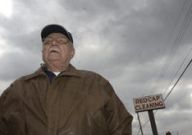
As far as the federal government is concerned, the incident is over and done. "The case was closed and never reopened," said Brian Seese, a paranormal researcher from Hopewell Township, who includes the incident in his new book, "Unexplained Events in Beaver County." In late 1966, Weitzel, the NICAP investigator assigned to the case, delivered his final report to his Washington, D.C., supervisor, Richard Hall."I personally hand-carried a copy of Weitzel's very thick and extremely well-documented report to Dr. Edward Condon," Hall recalled last month.Condon, a scientist, was in charge of a UFO study conducted by the University of Colorado under the sponsorship of the Air Force."Years later, I learned to my astonishment that he never turned over the case to his staff, and it gathered dust in his personal files," Hall said.And so when the Air Force turned the Colorado report over to Congress, the Ohio-to-Conway incident wasn't mentioned."Maj. Hector Quintanilla tried to pass it off as a sighting of the planet Venus and an earth satellite, which was quite preposterous," said Hall, who wrote "The UFO Evidence, Vol. II; A Thirty-Year Report," published in 2001. "I think he may have changed it to an unexplained case later on."According to the files of a leading UFO researcher, Brad Sparks, the Air Force ultimately did categorize the case as "unexplained" and probably left it at that, Hall said.Project Blue Book files would show the final status of the incident, Hall said.But trying to get someone to share Project Blue Book details isn't easy.The feds closed Project Blue Book in 1972, ending at least publicly the Air Force's role as a UFO investigation agency.
Comment
-
Religious experts slate Da Vinci Code film
The Da Vinci Code movie is like a jogging brontosaurus: it can't get any momentum because of the weight of its internal contradictions. That's the view of an Age panel of religious experts, who mostly found the film turgid, too long, and hopelessly inaccurate.The most serious problem according to the panel - a theologian, Catholic film critic, Opus Dei priest and a pagan - is that the basic premise is incoherent. The quest is to find the descendants of Jesus, but because the film portrays him as human, not divine, it simply doesn't matter."Sophie (the heroine) is just descended from a Jewish rabbi, and so are thousands of others," said Opus Dei priest Joe Martins. "If a high school student produced that as a history assignment, he would fail.""All you are left with is the bones of Mary Magdalene . . . Big deal! I didn't understand the significance at all," said pagan Caroline Tully. "If Christ's not supernatural, what's the point of being a descendant?"
According to The Da Vinci Code (film and book), Jesus was married to Mary Magdalene, who bore his child and founded a dynasty. For author Dan Brown, the Holy Grail is not the cup used at the last supper but Mary Magdalene's womb. He says the church has suppressed this truth over the centuries.The Age's panel could not accept this thesis, which Brown has claimed is fact, a claim New Testament Professor Dorothy Lee said was "very dishonest".They also cited dozens of other theological and historical errors, big and small."The research has been sloppy," said Jesuit Richard Leonard, director of the Catholic Film Office. "And once you notice this in any film, you mistrust anything it says."Comment
-
How optical illusions trick the mind
Surrealist paintings may never be the same again. Scientists have deciphered the secret behind how the brain can be tricked by optical illusions. Psychologists at Glasgow University used advanced brain-imaging technology to map the brainwaves of volunteers as they looked at surreal images. They found that the participants' brains absorbed all the information from a painting by breaking it down into separate "brainwaves", tiny electrical impulses in the brain. But the researchers claim that while all the brainwaves occur at once, the brain is only able to decode one at a time, meaning the volunteers could only concentrate on a single aspect of the painting. Dr Phillipe Schynes, who led the project, claims this explains why the brain is so easily fooled by optical illusions featuring hidden images that seem difficult to miss once they are noticed. Examples include the picture where viewers will either see two faces opposing each other or a vase. Schynes believes the brain has to switch between these brainwaves in order to "see" another part of the image, explaining why people experience a sudden moment of clarity.
He now hopes to use the research to understand why people can recognise faces. He believes that familiar faces trigger brainwaves that are easier for the brain to decode than unfamiliar ones, giving a feeling of recognition. "We are really examining how the brain processes information and interprets images," he said. "In ambiguous paintings, people will see two possible interpretations of a painting but they will not see both at once. "The brainwaves associated with one part of a painting may be slow, while another part may be fast. Although both sets of waves are created at the same time, the brain is only sensitive to one at a time, so it has to switch between them in order to see each, but cannot see both at once."Comment

 Tweet
Tweet
Comment