
-
-
Emerald - the vanishing island
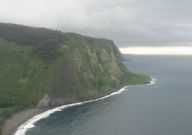
Tony Lucas: Due south of Macquarie Island in the sub-Antarctic seas there is an island which has become an enigma since its discovery. Emerald Island was discovered in 1821 by Captain Nockells and named after his vessel the Emerald, since its discovery this Island has resulted in a lot of controversy. Does it exist or doesn't it?Numerous searches for the Island have resulted in sightings of it; others that have gone to the same location have proclaimed only empty sea where it should have been.There are those that say Emerald is a haunted Island that moves from place to place, never remaining in one spot.Those who have occasionally seen Emerald Island give conflicting accounts of it, some claim it to be a Mountainous Island with steep and rugged cliff faces, others talk of green fields, and rolling hills, however, no one has ever reported making a landing on the Island; all reports are in most cases from a distance.
Comment
-
In search of the real Dracula
Such is the enduring power of Bram Stoker's classic horror story, first published in 1897 and never out of print, that modern-day Transylvania in Northern Romania has become a tourist Mecca. Fans of the fictional count flock there by the coachload persuaded that in the land of mist-shrouded mountains, they will find clues to the source of the greatest vampire of them all: the Transylvanian nobleman who left his remote homeland to spread his evil plague.For the true believer, the boundaries between Stoker's creation and historical fact have become blurred, like all great legends. Many people believe that the immortal count was based on a real person: a medieval Romanian warlord called Vlad Tepes, also know as "Vlad the Impaler" and "Vlad Dracula."Bram Stoker's Dracula was by no means the first vampire story. It was the culmination of a writing tradition of Gothic horror stories that had begun nearly eighty years earlier with "The Vampyre," by John Polidori. Others followed, like "Varney the Vampire" (1847), a serial that ran in magazines called "penny dreadfuls" for more than two years, and J. Sheridan Le Fanu's "Carmilla" (1871), which centered around a lesbian vampire.

Comment
-
Comment
-
Comment
-
Fossils fill gap in human lineage
Fossil hunters have found remains of a probable direct ancestor of humans that lived more than four million years ago. The specimens of this ancient creature are helping bridge a long gap during a crucial phase of human evolution. Professor Tim White of the University of California, Berkeley, and colleagues unearthed the cache of fossils in the Middle Awash region of Ethiopia. They describe the finds, which belong to the species Australopithecus anamensis, in the journal Nature. Australopithecus is an important ancient genus of humanlike creatures, or hominids. Our own genus, Homo, is widely thought to have evolved from this group. So the relationship of Australopithecus to even earlier bipedal hominids is crucial to understanding where we all ultimately come from. When placed together with other fossils from the same general area of Ethiopia, the 4.1-million-year-old anamensis specimens appear to establish an evolutionary succession between earlier and later species.
"The fact anamensis is sandwiched between earlier and later hominids is what is really significant about this Ethiopian sequence," Tim White told the BBC News website. The finds close the gap between a more ancient species known as Ardipithecus ramidus, which is found at 4.4 million years and a later species known as Australopithecus afarensis, which is present in the Middle Awash 3.4 million years ago. Australopithecus anamensis is intermediate between the two not only chronologically but also in terms of its anatomy.

Comment
-
'Tenth planet' is slightly larger than Pluto
NASA's Hubble Space Telescope has resolved the "tenth planet," nicknamed "Xena," for the first time and has found that it is only just a little larger than Pluto. Though previous ground-based observations suggested that Xena was about 30 percent greater in diameter than Pluto, Hubble observations taken on Dec. 9 and 10, 2005, yield a diameter of 1,490 miles (with an uncertainty of 60 miles) for Xena. Pluto's diameter, as measured by Hubble, is 1,422 miles. "Hubble is the only telescope capable of getting a clean visible-light measurement of the actual diameter of Xena," said Mike Brown, planetary scientist at the California Institute of Technology in Pasadena, Calif. Brown's research team discovered Xena, and their results have been accepted for publication in the Astrophysical Journal. It only required a couple of Hubble images to nail Xena's diameter. Located 10 billion miles away, but with a diameter that is a little more than half the width of the United States, the object is 1.5 picture elements across in Hubble's view. That's enough to precisely make a size measurement. Because Xena is smaller than earlier thought, but comparatively bright, it must be one of the most reflective objects in the solar system. The only object more reflective is Enceladus, a geologically active moon of Saturn whose surface is continuously recoated with highly reflective ice by active geysers. Xena's bright reflectivity is possibly due to fresh methane frost overlying the surface. It is possible that Xena had an atmosphere when it was closer to the Sun, but "froze out" at its current large distance, and material settled on its surface as frost.

Comment
-
Near-death tales are eerily similar
It's easy to scoff at people who say they have had a near-death experience during a serious illness. Stories of travelling through tunnels and hearing strange voices have been around for more than 1000 years.But for the people who experience them, the episodes are so real they often have a life-changing effect.Now scientists have suggested that near-death experiences could be something biological, rather than spiritual.By studying 55 people who have had such experiences compared with 55 who had not, neurologists at the University of Kentucky showed that differences in sleep patterns could be responsible.They found that for people with near-death experiences, the boundaries between being asleep and being awake could often be blurred - and that this could explain many of the symptoms which such people report.But as these examples show, science still isn't able to explain everything connected to the spooky phenomenon...Trying to prove you've had a near-death experience is just about impossible, but at least Mike Richards had something to show for his.The 60-year-old was in hospital recovering from cancer when he suffered a relapse and fell unconscious.He found himself in a pink room with no floor or ceiling. In the room were his father, his wife's mother and a scruffy man in a white cloak who told him he wasn't ready and to go back.Comment
-
Ghost hunters hold class to teach curious
The Forever Bronze Tanning Salon is a cheery white-stucco building with hardwood floors, potted plants and overflowing magazine racks. Business is brisk, but eight women in the basement aren't here to work on that perfect glow. In fact, what they're looking for is more likely to turn them pale. Welcome to Ghost Hunting 101, a five-week course that covers the nuts and bolts of seeking out spirits. For $45, students learn ghost-hunting basics, including the typical types of entities (poltergeist, intelligent and residual) and the necessary equipment (flashlight, notebook, tape recorder and 35 mm camera), and they attend four field trips to haunted locations along the Wasatch Front. The class also provides plenty of opportunities for students to share their own encounters with the paranormal. "In my house, I often smell a scent of heavy men's cologne when no one is around," one woman said. "My husband and I used to live in a house where we could hear footsteps in the attic at night," said another. The group is relaxed and comfortable, though most of the students wished to remain anonymous.
"My son probably wouldn't want to know that I'm coming here," one said with a laugh. Instructors Tifany Jorgensen and Marie Jackson are used to the combination of fascination and embarrassment their class generates. In fact, breaking down ghost-hunting stereotypes is one of their primary goals. "In our group, we have a scientist and an archeologist," Jorgensen said. "It's not like we're spending the night in cemeteries or anything," Jackson said. "We're pretty normal, everyday people." For Jackson, being a normal, everyday ghost hunter means fitting in investigations between caring for her 3-year-old daughter and 5-year-old son and appearing in community theater productions.

Comment
-
Comment
-
Comment
-
Jumpy eggs caught on camera
After two years of work, with a purpose-built steel machine wired up to high-speed cameras, microphones and electronic sensors, a team of Japanese researchers has finally proved that a hard-boiled egg can jump. All it takes, according to Yutaka Shimomura and colleagues of Keio University, is a good spin. A spinning egg will spontaneously rise up from lying on its side to standing on its end. Shimomura, along with physicists at the University of Cambridge, had previously worked out why this is so, and predicted that the forces involved could also make an egg leap a tiny bit into the air2. You wouldn't be able to see it leaping in your kitchen, though; the jumps are expected to be less than a tenth of a millimetre high and last for only a few thousandths of a second.But does it really happen? To check, Shimomura's team had to make a device capable of spinning an egg perfectly, so they could be sure that the effect wasn't due to an upwards motion introduced by a spin done by hand.
They also had to hit a spin rate of 1,800 revolutions per minute. So as not to be too messy and to ensure easy measurements, they used an ovoid-shaped metal egg in the experiments.The team placed their egg horizontally on a slab of polished copper, started it spinning, and filmed it. Three different methods of detection all showed that the egg made tiny jumps before rising to a fully upright position.A little bit of light was spotted shining through between the egg and the plate. More persuasively, microphones picked up the quiet cracking sounds of the metal egg hitting the plate in a series of impacts less than a second after the spin's initiation. And a break in physical contact between the two bits of metal caused a change in the electrical capacitance of the copper plate.

Comment
-
Mouse sheds light on regeneration
Regeneration - the ability to recreate lost or damaged cells, tissues, organs or even limbs - has a limited capacity in mammals. While skin and hair cells constantly renew themselves, unlike a newt, if a human loses a leg, there is no second chance. But the discovery of a strain of mouse, the Murphy Roths Large (MRL), with remarkable regenerative capabilities has opened up the possibility that those properties could be transferred to other mammals. Professor Ellen Heber-Katz, a scientist from the Wistar Institute in Philadelphia, US, was part of the way through an immunological study when she first stumbled across the MRL mouse's amazing abilities. She was looking at the effects of a drug, and had marked the mice that had received the drug by punching a small hole in their ear to distinguish them from those who had not. "I went upstairs and I looked in the cage, but none of the mice were marked," she said. "I looked at them and thought: 'what's happened?' I thought the post doc hadn't done the experiment. "So we did it again, and we watched them, and there it was - the holes had closed up.
I thought, 'Oh my God, this is just amazing'." When they looked closer they saw that there had been DNA synthesis, cell proliferation and both cartilage and new hair follicles had also grown. The MRL mouse has been used in research for years - mostly as a model for autoimmune diseases because the genetic mutations they carry mean they have a lupus-like disease. But the accidental discovery by Professor Heber-Katz of this rapid regrowth opened up a new avenue of research. After talking to colleagues and realising that this kind of healing had never been seen before in a mouse, Professor Heber-Katz's team switched from immunology to regeneration and began to look at the mouse to see the extent of these regenerative properties.

Comment
-
Comment
-
Ghost hunters society conference planned
With names like Shades of Death Road and Ghost Lake, it's no wonder the New Jersey Ghost Hunters Society chose Warren County to be the site of its annual conference. Set for Saturday at the Hackettstown Community Center, the conference is expected to draw about 50 ghost chasers to the region -- the most the conference has seen to date. "This past year has seen more paranormal-based programs pumped into the mainstream. It's definitely contributed to membership," said New Jersey Ghost Hunters Society founder L'Aura Hladik. Started in 1998, the society has 346 members. Hladik said about 140 of those members joined within the past 18 months. Many of those new members are coming out of northwestern New Jersey, she said. The conference will feature presentations representing all of ghost hunting's related fields such as technology, legends and investigation methods. "The presentations will give people a crash course in what it's taken members five or six years to learn," Hladik said. Among those slated to speak is Jeff Belanger, author of "The World's Most Haunted Places: From the Secret Files of GhostVillage.com" and "Communicating with the Dead: Research from Beyond the Grave." Also on the agenda is a talk by Donna Kent, founder and president of the Cosmic Society of Paranormal Investigation.
Society members will also have a chance to investigate Charlie Brown's Steakhouse in Hackettstown, where the ghosts of a little boy and young woman have been reported. Society members will attempt to gather information by using equipment ranging from digital and thermal- imaging cameras to electromagnetic field detectors and electromagnetic voice phenomena recorders. In using the high-tech equipment, researchers said they've recorded voices when nothing was heard by investigators and have later found images on film when eyes saw nothing. Often times this kind of evidence can prove something is happening in a location that isn't quite of this world, Hladik said.

Comment

 Tweet
Tweet
Comment